US Military Strike in Eastern Pacific: Death Toll Hits 99, Critics Call It War Crime
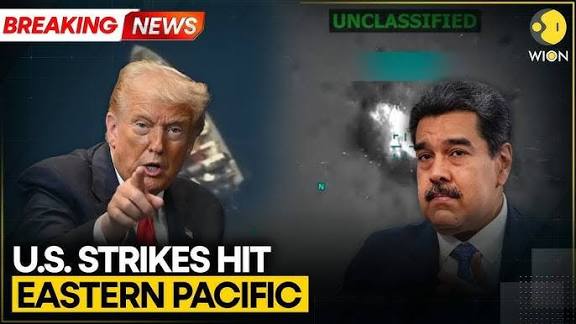
The attack brings the total number of known boat attacks to 26, while at least 99 people have been killed, according to the announced numbers. Today we will discuss about US Military Strike in Eastern Pacific: Death Toll Hits 99, Critics Call It War Crime
US Military Strike in Eastern Pacific: Death Toll Hits 99, Critics Call It War Crime
The United States’ recent military strikes in the Eastern Pacific have triggered one of the most intense international controversies in recent years. What began as a declared campaign against alleged drug-smuggling vessels has escalated into a global debate on legality, ethics, and the limits of military power. With the confirmed death toll now reaching 99 people, critics across the world are calling the operation a potential war crime, while U.S. officials insist it is a necessary step to protect national security.
The strikes, carried out far from American shores, have blurred the line between law enforcement and warfare. As details continue to emerge, governments, human rights organizations, legal scholars, and ordinary citizens are questioning whether the United States has crossed a dangerous threshold in its approach to combating transnational crime.
Background: Why the Eastern Pacific Became a Battlefield
For decades, the Eastern Pacific has been a major transit route for narcotics trafficking, especially cocaine and synthetic drugs destined for North America. Smugglers often use small, fast boats to evade patrols, exploiting the vastness of international waters.
Traditionally, the United States has relied on coast guard operations, intelligence sharing, and international cooperation to intercept such vessels. However, the latest campaign represents a sharp departure from these methods. Instead of boarding or disabling suspect boats, the U.S. military employed lethal force, including air-launched munitions, to destroy vessels outright.
This shift reflects a broader change in policy, where drug trafficking is increasingly framed as a national security threat rather than a criminal issue.
The Strikes: What Happened at Sea
The military campaign began quietly, with officials confirming isolated strikes on boats described as “narco-terrorist vessels.” Over time, the frequency and intensity of attacks increased.
According to official statements:
Multiple boats were struck in separate operations over several weeks.
Each strike resulted in total destruction of the targeted vessel.
Survivors were rarely reported, raising concerns about rescue efforts.
The cumulative death toll eventually rose to 99 people.
The Pentagon released short video clips of some strikes, showing explosions at sea, but declined to release full footage or detailed intelligence assessments. This lack of transparency has fueled suspicion and criticism.
Official Justification: National Security and the Drug Crisis
U.S. leaders argue that the strikes are justified by the severity of the drug crisis, particularly the opioid epidemic that has claimed tens of thousands of lives domestically.
According to the administration:
Drug trafficking organizations are violent, well-armed, and transnational.
These groups destabilize entire regions and undermine governments.
Stopping drugs at sea prevents harm before it reaches American cities.
Lethal force is necessary because smugglers may be armed and dangerous.
Officials have described the campaign as part of an “armed conflict” against criminal networks, a classification that allows the use of military force rather than standard law enforcement measures.
Critics Push Back: “This Is Not a War”
Human rights organizations and legal experts strongly dispute the government’s framing.
Their main arguments include:
Drug trafficking, while serious, does not automatically constitute armed conflict.
The individuals targeted were never formally identified, charged, or tried.
Killing suspects without due process violates fundamental human rights.
Many victims may have been low-level workers rather than cartel leaders.
Critics emphasize that international law does not permit summary execution, even of suspected criminals, outside an active battlefield.
Legal Questions: Is This a War Crime?
At the heart of the controversy is whether these strikes violate international law.
Armed Conflict or Law Enforcement?
Under international humanitarian law, lethal force is permitted only during recognized armed conflicts. Most legal experts argue that:
There is no declared war between the U.S. and drug trafficking groups.
Cartels, while violent, are not armies engaged in sustained hostilities with the U.S.
Therefore, human rights law—not the laws of war—should apply.
Under human rights law, lethal force is allowed only as a last resort to protect life, not as punishment.
Extrajudicial Killings
The strikes may qualify as extrajudicial killings, defined as state-sanctioned killings without judicial oversight. If proven, this would place the operations in violation of international treaties the United States has long supported.
Some legal scholars warn that if such actions become normalized, they could set a precedent allowing any country to kill suspected criminals beyond its borders.
International Reaction: Outrage and Alarm
The global response has been swift and critical.
United Nations and Human Rights Groups
International human rights bodies have expressed grave concern, urging the United States to:
Immediately halt lethal maritime strikes.
Conduct independent investigations into each incident.
Release full information about targeting decisions.
Ensure accountability for unlawful killings.
Several experts warned that failure to do so could erode global respect for international law.
Regional Response in Latin America
Countries in Latin America, especially those near the Eastern Pacific routes, have reacted angrily. Many leaders argue that:
The strikes violate regional sovereignty.
They risk civilian casualties, including fishermen and migrants.
They undermine cooperative anti-drug efforts.
Some governments fear the policy could expand into broader military intervention in the region.
Domestic Debate in the United States
The issue has deeply divided American politics.
Supporters’ View
Supporters argue:
The opioid crisis justifies extraordinary measures.
Traditional strategies have failed for decades.
Strong action sends a deterrent message to traffickers.
Protecting American lives must come first.
They praise the administration for taking decisive action rather than relying on what they see as ineffective diplomacy.
Opposition and Oversight Demands
Opponents counter that:
The Constitution grants Congress authority over war.
Military action without clear authorization is dangerous.
Lack of transparency prevents democratic accountability.
Civilian casualties could fuel anti-American sentiment.
Several lawmakers have demanded hearings, reports, and limits on future strikes.
Ethical Concerns: Morality Beyond Legality
Even beyond legal debates, ethical questions loom large.
Who Were the Victims?
Little is publicly known about the 99 people killed. Critics stress that:
Many may have been coerced into smuggling by poverty.
Some may not have known the full nature of their cargo.
None were given a chance to surrender.
This raises uncomfortable questions about collective punishment and moral responsibility.
Normalizing Lethal Policy
Ethicists warn that redefining criminal activity as warfare risks:
Lowering the threshold for killing.
Expanding military roles into civilian policing.
Encouraging other nations to do the same.
Once such norms are broken, restoring restraint becomes far more difficult.
Strategic Effectiveness: Does It Even Work?
There is also doubt about whether the strikes will achieve their stated goals.
Drug trafficking networks are:
Highly adaptable.
Structured to replace losses quickly.
Driven by persistent demand.
Destroying boats may temporarily disrupt supply, but critics argue it does little to address the root causes of drug production, demand, and organized crime.
Some analysts fear the campaign may even increase violence by forcing traffickers to adopt riskier methods.
Long-Term Consequences for Global Order
The Eastern Pacific strikes could have lasting implications beyond the immediate crisis.
They challenge long-standing distinctions between war and crime.
They weaken international consensus on the use of force.
They risk damaging alliances and regional cooperation.
They may invite legal action in international courts.
For a country that has historically promoted rule-based global order, these consequences could prove significant.
Conclusion: A Dangerous Precedent?
The U.S. military strikes in the Eastern Pacific mark a dramatic escalation in the fight against drug trafficking. With 99 lives lost, the operation has ignited fierce debate over legality, morality, and strategy.
Supporters see decisive action against a deadly threat. Critics see unlawful killings that undermine international law and human rights. As pressure mounts for transparency and accountability, the world is watching closely.
Whether these strikes will be remembered as a bold defense of national security or a troubling violation of global norms remains an open question—but their impact on international relations and the future use of military force is undeniable.
How useful was this post?
Click on a star to rate it!
Average rating 0 / 5. Vote count: 0
No votes so far! Be the first to rate this post.
About the Author

usa5911.com
Administrator
Hi, I’m Gurdeep Singh, a professional content writer from India with over 3 years of experience in the field. I specialize in covering U.S. politics, delivering timely and engaging content tailored specifically for an American audience. Along with my dedicated team, we track and report on all the latest political trends, news, and in-depth analysis shaping the United States today. Our goal is to provide clear, factual, and compelling content that keeps readers informed and engaged with the ever-changing political landscape.