US-China clash deepens: Taiwan deal sparks fear
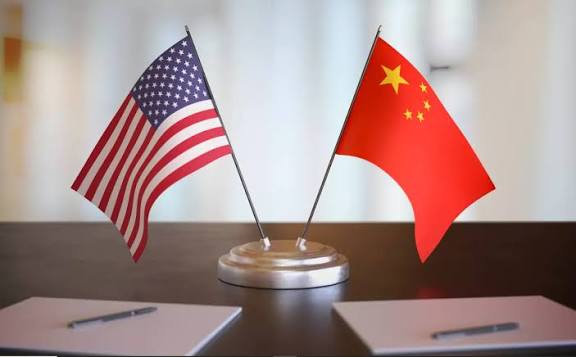
The recent US$11 billion arms sales package to Taiwan has significantly deepened the US-China confrontation with China. Today we will discuss about The recent US$11 billion arms sales package to Taiwan has significantly deepened the US-China confrontation with China.
US-China clash deepens: Taiwan deal sparks fear
Tensions between the United States and China have entered a dangerous new phase, with Taiwan once again at the center of global concern. A massive U.S. arms deal with Taiwan has ignited sharp reactions from Beijing, intensified diplomatic friction, and raised fears of a wider geopolitical confrontation. What was once a carefully managed rivalry is now showing signs of turning into a sustained strategic clash, with consequences that could ripple across Asia and the global economy.
The Taiwan issue has long been one of the most sensitive flashpoints in international politics. The latest developments signal that both Washington and Beijing are hardening their positions, making compromise increasingly difficult. As military posturing grows and rhetoric sharpens, the risk of miscalculation is becoming a serious concern for policymakers and observers worldwide.
Why Taiwan Is Central to the US-China Rivalry

Taiwan’s importance goes far beyond its size. Historically, the island has existed in a unique political position since 1949, when the Chinese civil war resulted in separate administrations on the mainland and Taiwan. While Taiwan has developed its own democratic system and economy, China continues to view it as an inseparable part of its territory.
For China, Taiwan represents national unity, historical legitimacy, and political authority. For the United States, Taiwan is a strategic partner, a democratic ally, and a critical element in maintaining balance in the Asia-Pacific region. This fundamental clash of perspectives makes Taiwan the most dangerous point of friction between the two powers.
The Arms Deal That Triggered New Fears
Scale and Significance
The recently approved U.S. arms package to Taiwan is the largest in history. It includes advanced missile systems, long-range rockets, artillery units, drones, and logistical support designed to strengthen Taiwan’s defensive capabilities. The scale of the deal signals a major shift from symbolic support to concrete military reinforcement.
This move reflects Washington’s growing concern over China’s expanding military presence and frequent exercises near Taiwan. U.S. officials argue that strengthening Taiwan’s defenses is necessary to deter aggression and preserve peace in the region.
China’s Strong Reaction
Beijing responded with anger and warnings. Chinese officials described the deal as a direct violation of their sovereignty and accused the United States of interfering in internal affairs. According to China, the arms sale encourages separatist tendencies in Taiwan and increases the risk of conflict.
Chinese leaders have reiterated that Taiwan is a “red line” that cannot be crossed. The rhetoric suggests that further U.S. military support could trigger countermeasures, including diplomatic retaliation, economic pressure, or intensified military activity.
Escalating Military Pressure in the Taiwan Strait
In response to growing U.S. involvement, China has increased military drills near Taiwan. Fighter jets, naval vessels, and missile units are being deployed more frequently, signaling readiness and resolve. These actions are meant to send a clear message to both Taiwan and the United States.
At the same time, Taiwan has been modernizing its own military strategy. Rather than matching China weapon for weapon, Taiwan is focusing on asymmetric defense — using mobility, technology, and precision to make any invasion costly and difficult.
This growing military activity on all sides has heightened the risk of accidents or miscalculations, which could quickly spiral into a larger crisis.
Impact on US-China Diplomatic Relations
The Taiwan arms deal has further strained already fragile diplomatic ties between Washington and Beijing. While both countries continue to communicate through official channels, trust has eroded significantly.
China views U.S. actions as evidence that Washington is attempting to contain its rise. The United States, on the other hand, sees China’s military buildup and assertive behavior as a threat to regional stability. This mutual suspicion is making cooperation on other global issues — such as climate change, trade, and security — increasingly difficult.
Economic and Trade Implications
Global Supply Chains at Risk
Taiwan plays a critical role in global manufacturing, particularly in advanced technology and semiconductors. Any conflict or blockade involving Taiwan would severely disrupt supply chains, affecting industries from consumer electronics to defense systems.
As tensions rise, companies around the world are already reassessing risks and exploring alternative production strategies. However, replacing Taiwan’s technological capacity would take years, if not decades.
Worsening Economic Decoupling
The Taiwan crisis is accelerating economic decoupling between the United States and China. Tariffs, export controls, and restrictions on technology transfers are becoming more common. The arms deal adds another layer of complexity to an already fragile economic relationship.
Investors and markets are responding with caution, aware that geopolitical tensions can quickly translate into economic instability.
Taiwan’s Domestic Perspective
Public Support and Anxiety
In Taiwan, public opinion reflects a mix of relief and concern. Many citizens welcome stronger U.S. support as a necessary safeguard against Chinese pressure. At the same time, there is widespread anxiety that Taiwan could become the battleground for a confrontation between superpowers.
Taiwan’s leadership has emphasized its commitment to maintaining peace while strengthening its self-defense. Officials stress that military preparedness is meant to deter conflict, not provoke it.
Political Challenges
The arms deal also plays into Taiwan’s domestic politics. Different political groups debate how closely Taiwan should align with the United States and how to manage relations with China. Balancing security needs with economic ties to the mainland remains a complex challenge.
Regional and Global Reactions
Asia-Pacific Allies
Countries in the Asia-Pacific region are closely monitoring the situation. Japan and other regional partners share concerns about China’s growing influence but are wary of being drawn into a conflict. Many nations are quietly strengthening their own defense capabilities while urging restraint from both sides.
Europe and the International Community
European nations generally support peaceful dialogue and stability in the Taiwan Strait. However, growing awareness of security risks in Asia has prompted some governments to reconsider their stance toward China and increase cooperation with the United States.
International organizations have called for calm and diplomacy, but their ability to influence events remains limited.
Strategic Calculations on Both Sides
Washington’s Strategy
The United States aims to deter China without triggering war. By supplying arms rather than deploying troops, Washington hopes to strengthen Taiwan’s defenses while maintaining strategic ambiguity. This approach allows the U.S. to signal commitment without making explicit guarantees.
However, critics argue that ambiguity may no longer be enough and that mixed signals could increase uncertainty.
Beijing’s Dilemma
China faces its own strategic challenges. While it wants to prevent Taiwanese independence and reduce U.S. influence, it must also consider the economic and political costs of escalation. A conflict over Taiwan would be enormously expensive and risky, both domestically and internationally.
As a result, China appears to be pursuing a strategy of sustained pressure rather than immediate action — using military drills, economic leverage, and diplomatic messaging to shape outcomes over time.
Risk of Miscalculation
One of the greatest dangers in the current situation is miscalculation. With increased military activity and heightened rhetoric, even a minor incident could escalate rapidly. History shows that great-power conflicts often begin not by design, but by accident.
Managing this risk requires clear communication, crisis-management mechanisms, and restraint — all of which are becoming harder to maintain amid rising mistrust.
Possible Future Scenarios
Several paths lie ahead:
Managed Tension: Continued rivalry without open conflict, marked by arms sales, military exercises, and diplomatic disputes.
Escalation: Increased pressure leading to a blockade, limited clashes, or severe economic retaliation.
Renewed Dialogue: A return to structured talks aimed at stabilizing relations and preventing conflict.
Which path emerges will depend on leadership decisions, domestic pressures, and international responses.
Conclusion
The deepening U.S.-China clash over Taiwan represents one of the most serious geopolitical challenges of our time. The latest arms deal has intensified fears, hardened positions, and underscored how fragile the current balance has become.
Taiwan stands at the center of a global power struggle, while the world watches anxiously. Avoiding conflict will require careful diplomacy, mutual restraint, and recognition that the cost of escalation would be catastrophic for all involved.
As tensions continue to rise, the coming months may prove decisive in shaping the future of U.S.-China relations — and the stability of the entire Asia-Pacific region.
How useful was this post?
Click on a star to rate it!
Average rating 0 / 5. Vote count: 0
No votes so far! Be the first to rate this post.
About the Author

usa5911.com
Administrator
Hi, I’m Gurdeep Singh, a professional content writer from India with over 3 years of experience in the field. I specialize in covering U.S. politics, delivering timely and engaging content tailored specifically for an American audience. Along with my dedicated team, we track and report on all the latest political trends, news, and in-depth analysis shaping the United States today. Our goal is to provide clear, factual, and compelling content that keeps readers informed and engaged with the ever-changing political landscape.