US sends $11bn weapons to Taiwan: China angry, tension high
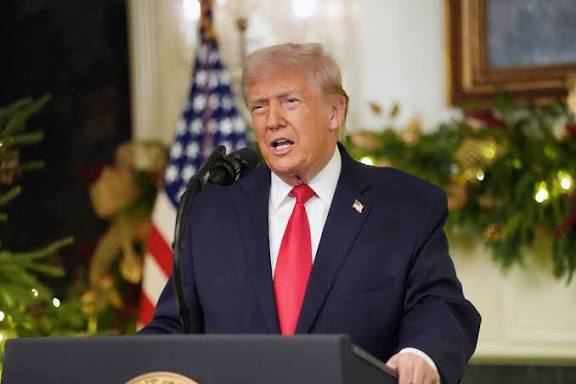
The Trump administration has approved one of its largest-ever packages of arms sales – worth around $11bn (£8.2bn). Today we will discuss about US sends $11bn weapons to Taiwan: China angry, tension high
US sends $11bn weapons to Taiwan: China angry, tension high
The United States has approved a massive $11 billion weapons package for Taiwan, triggering strong reactions from China and intensifying tensions in the Indo-Pacific region. The move marks one of the largest arms sales to Taiwan in modern history and underscores Washington’s growing concern over China’s expanding military power and assertive posture toward the self-governed island.
The decision has once again placed Taiwan at the center of global geopolitics, highlighting the fragile balance of power in East Asia and the increasingly complex relationship between the United States and China.
A Historic Arms Package
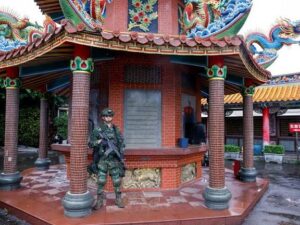
The newly approved arms package, valued at approximately $11.1 billion, is among the largest single military assistance deals the US has ever offered Taiwan. It significantly exceeds many past defense packages and reflects a major escalation in Washington’s commitment to Taiwan’s security.
The package reportedly includes:
High Mobility Artillery Rocket Systems (HIMARS)
Advanced self-propelled artillery systems
Long-range tactical missile systems
Anti-tank missiles and ammunition
Unmanned aerial vehicles and loitering drones
Military software, training, and logistical support
These systems are designed to enhance Taiwan’s ability to deter and respond to potential military threats, particularly amphibious landings or missile attacks.
Why the US Is Supporting Taiwan
Legal Foundations
Although the United States does not officially recognize Taiwan as a sovereign state, it is legally bound under the Taiwan Relations Act of 1979 to provide the island with defensive weapons. This law has guided US-Taiwan security cooperation for more than four decades.
American officials argue that providing Taiwan with defensive capabilities helps maintain peace and stability in the region by discouraging any unilateral attempts to change the status quo through force.
Strategic Objectives
From Washington’s perspective, the arms sale serves several goals:
Strengthening deterrence against potential aggression
Supporting democratic governance in Taiwan
Preserving freedom of navigation in key trade routes
Countering China’s growing military influence in Asia
US policymakers emphasize that the weapons are defensive in nature and are intended to prevent conflict rather than provoke it.
Taiwan’s Defense Strategy
Taiwan has increasingly adopted an asymmetric defense strategy, focusing on mobile, precision-based weapons rather than large conventional forces. This approach aims to make any invasion costly and difficult for a stronger adversary.
Weapons like HIMARS and advanced drones are particularly suited to this strategy, offering mobility, accuracy, and survivability. Taiwan’s leadership believes that such systems significantly enhance its ability to defend critical infrastructure and delay or repel hostile forces.
Taipei has also announced plans to raise defense spending substantially over the next decade, reflecting growing public awareness of regional security challenges.
China’s Furious Reaction
China responded with sharp condemnation, calling the arms sale a serious violation of its sovereignty and a threat to peace in the Taiwan Strait.
Chinese officials accused the United States of:
Undermining regional stability
Violating commitments under the One China principle
Encouraging separatist forces in Taiwan
Interfering in China’s internal affairs
Beijing warned that it would take “firm and resolute measures” in response, though it did not specify the exact nature of those actions.
The One China Issue
At the heart of China’s anger lies the One China principle, under which Beijing claims Taiwan as part of its territory. China views any foreign military support for Taiwan as a direct challenge to this claim.
While the United States acknowledges the One China policy, it maintains a separate position that opposes the use of force to resolve cross-strait disputes. This strategic ambiguity has long defined US policy but has become increasingly strained as China’s military capabilities grow.
Military Pressure Around Taiwan
In recent years, China has intensified military activity around Taiwan, including:
Frequent air and naval patrols
Large-scale military exercises
Missile tests and simulated blockade drills
Cyber and information warfare operations
Analysts believe the latest US arms sale could prompt China to further increase military pressure, raising the risk of miscalculation or accidental confrontation.
Regional and Global Implications
Impact on the Indo-Pacific
The Taiwan Strait is one of the world’s most strategically important waterways. Any conflict in the area could disrupt global trade, semiconductor supply chains, and energy routes.
Countries such as Japan, South Korea, and Australia are closely monitoring developments, as instability could directly affect their security and economic interests.
US-China Relations
The arms sale adds another layer of strain to already tense US-China relations, which are marked by disputes over trade, technology, human rights, and global influence.
While both sides continue diplomatic engagement, Taiwan remains the most sensitive and potentially explosive issue between the two powers.
Debate Within the United States
The decision enjoys broad bipartisan support in the US Congress, with many lawmakers arguing that strengthening Taiwan’s defenses reduces the likelihood of direct US military involvement in a future conflict.
However, critics warn that large-scale arms sales risk escalating tensions and narrowing diplomatic options. Some analysts argue that military deterrence must be balanced with sustained dialogue to avoid unintended escalation.
What It Means for Taiwan’s Society
Public opinion in Taiwan remains divided between those favoring closer ties with the United States and those concerned about becoming a flashpoint in a major power rivalry.
Nevertheless, surveys consistently show strong support for maintaining the island’s self-defense capabilities. Many Taiwanese view US military support as essential to preserving their democratic system and way of life.
Possible Next Steps
The arms package still requires final procedural approvals before full implementation. Delivery timelines may stretch over several years, depending on production capacity and political developments.
Potential consequences include:
Increased Chinese military drills near Taiwan
Diplomatic retaliation by Beijing
Greater defense coordination between the US and regional allies
Heightened global attention on Taiwan Strait security
Risk of Escalation vs Deterrence
Supporters argue the arms sale strengthens deterrence and reduces the likelihood of war by raising the cost of aggression. Opponents fear it could accelerate an arms race and push the region closer to confrontation.
The reality may lie somewhere in between, with both deterrence and risk increasing simultaneously.
Conclusion
The US decision to send $11 billion in weapons to Taiwan represents a defining moment in modern geopolitics. It reflects Washington’s determination to counter China’s growing influence while supporting Taiwan’s defense, even at the cost of heightened diplomatic tensions.
For China, the move is seen as a direct challenge to its sovereignty claims and long-term reunification goals. For Taiwan, it is a critical boost to its security amid mounting pressure.
As tensions rise, the Taiwan Strait remains one of the world’s most dangerous geopolitical flashpoints. The actions taken by Washington, Beijing, and Taipei in the coming months will play a crucial role in shaping the future of regional stability — and potentially the global order.
How useful was this post?
Click on a star to rate it!
Average rating 0 / 5. Vote count: 0
No votes so far! Be the first to rate this post.
About the Author

usa5911.com
Administrator
Hi, I’m Gurdeep Singh, a professional content writer from India with over 3 years of experience in the field. I specialize in covering U.S. politics, delivering timely and engaging content tailored specifically for an American audience. Along with my dedicated team, we track and report on all the latest political trends, news, and in-depth analysis shaping the United States today. Our goal is to provide clear, factual, and compelling content that keeps readers informed and engaged with the ever-changing political landscape.