$200 Billion Tariff Boom : US Customs Breaks Historic Record
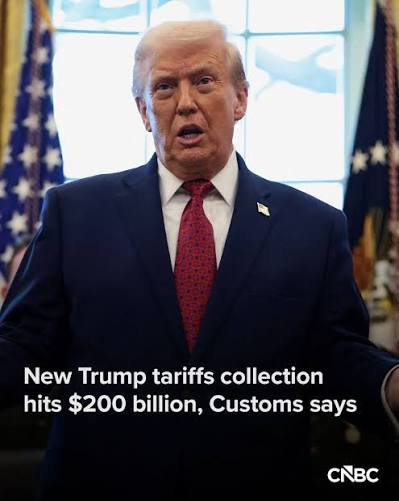
Between January 20 and December 15, 2025, U.S. Customs and Border Protection collected more than $200 billion in tariffs thanks to more than 40. Today we will discuss about $200 Billion Tariff Boom : US Customs Breaks Historic Record
$200 Billion Tariff Boom : US Customs Breaks Historic Record
The United States has entered a new chapter in its trade and economic policy as U.S. Customs and Border Protection (CBP) records more than $200 billion in tariff collections, marking the highest tariff revenue in American history. This unprecedented figure signals a dramatic shift in how the U.S. government approaches trade enforcement, revenue generation, and global economic influence.
The $200 billion tariff boom is not merely a financial statistic—it reflects deeper changes in trade policy, executive power, enforcement mechanisms, and global supply chains. From domestic industries to international markets, the ripple effects are already reshaping economic behavior at every level.
This article explores how the tariff boom happened, why it matters, its economic and political impact, and what the future may hold.
Understanding the $200 Billion Tariff Boom

Tariffs are taxes imposed on imported goods. While traditionally a modest revenue stream in modern times, tariffs have suddenly surged to historic prominence. In 2025, CBP confirmed that tariff collections crossed the $200 billion threshold, a figure never before achieved in the contemporary U.S. economy.
This sharp rise stems from a combination of:
Higher tariff rates across a broad range of imports
Expansion of tariff coverage to additional products and countries
Aggressive enforcement against tariff evasion
Increased use of antidumping and countervailing duties
The result is a dramatic transformation of customs duties into one of the most significant sources of federal revenue.
Historical Perspective: Why This Record Is Significant
Historically, tariffs played a central role in U.S. government financing during the 18th and 19th centuries. Before the introduction of federal income tax, tariffs funded much of the government’s operations.
However, during the 20th century, globalization and free-trade agreements reduced tariff levels substantially. For decades, tariffs accounted for only a small fraction of federal revenue.
The recent surge reverses this long-standing trend. The current tariff boom represents:
The highest collections in nearly a century
A return to tariffs as a major fiscal tool
A fundamental shift away from low-tariff globalization policies
This change marks a turning point in U.S. economic history.
Policy Decisions Behind the Surge
Expanded Executive Authority
The tariff boom is largely driven by assertive executive actions. The U.S. administration issued dozens of trade directives expanding tariff authority under national security, emergency economic, and trade enforcement laws.
These measures allowed tariffs to be:
Applied more broadly
Increased in magnitude
Implemented quickly without lengthy legislative approval
Such actions significantly accelerated revenue growth.
Stronger Enforcement by US Customs
CBP played a critical role in achieving the $200 billion milestone. The agency enhanced enforcement through:
Advanced data analytics
Improved cargo screening technology
Targeted investigations into tariff evasion
Common evasion tactics such as undervaluation, misclassification, false country-of-origin labeling, and illegal transshipment were aggressively pursued. Recovering unpaid duties contributed billions to total collections.
Antidumping and Countervailing Duties
Beyond standard tariffs, the U.S. imposed substantial antidumping and countervailing duties on imports sold below fair market value or subsidized by foreign governments.
These penalties not only protected domestic producers but also added billions in additional customs revenue.
Economic Impact of the Tariff Boom
Boost to Federal Revenue
The most visible effect of the tariff boom is its fiscal impact. Tariffs now contribute an unprecedented share of federal income, helping to:
Offset budget deficits
Reduce reliance on borrowing
Fund government operations without direct tax hikes
For policymakers, tariffs have become an attractive alternative revenue source.
Impact on Businesses
While the government benefits, businesses face mixed consequences:
Challenges include:
Higher costs for imported raw materials
Increased production expenses
Reduced profit margins
Some domestic manufacturers benefit, as higher import prices make locally produced goods more competitive.
Industries such as steel, electronics, automotive parts, and consumer goods are among the most affected.
Consumer Price Effects
Ultimately, many tariffs are passed down to consumers. As import costs rise, prices for everyday goods often follow. Items affected include:
Electronics
Clothing
Household appliances
Vehicles and spare parts
Economists warn that prolonged tariff pressure can increase inflation and reduce purchasing power, especially for middle- and lower-income households.
Impact on Global Trade and Supply Chains
The tariff boom has disrupted global trade patterns:
Exporters redirected shipments to avoid high U.S. duties
Companies relocated manufacturing to tariff-friendly countries
Supply chains became more regionalized
Some firms adopted “tariff engineering,” altering product designs or classifications to reduce duty liability.
While tariffs encouraged some reshoring of production, critics argue that global supply chain disruption increased inefficiency and uncertainty.
Political Debate and Controversy
Supporters’ View
Proponents of the tariff strategy argue that it:
Protects American jobs
Punishes unfair trade practices
Strengthens national economic security
Generates revenue without raising income taxes
Supporters view tariffs as a necessary corrective to decades of trade imbalances.
Critics’ Concerns
Opponents counter that tariffs:
Act as indirect taxes on consumers
Increase business uncertainty
Trigger retaliatory trade actions
Risk long-term economic inefficiency
Critics also argue that tariff dependence could harm innovation and global competitiveness.
Legal and Institutional Challenges
Several tariff measures face legal scrutiny. Questions have been raised about:
The scope of executive authority
Use of emergency powers
Compliance with international trade obligations
Court rulings could shape the future of tariff enforcement, though alternative legal frameworks may allow tariffs to remain in place.
Comparison With Past Tariff Eras
The current tariff boom draws comparisons to early U.S. history when customs duties funded most government activity. However, today’s economy is vastly different:
Highly globalized supply chains
Complex multinational production
Service-driven domestic economy
The scale of modern trade makes today’s tariff revenue levels particularly remarkable.
What Lies Ahead
Future Revenue Outlook
If current tariff policies remain unchanged, analysts expect customs revenue to remain elevated. Over time, total collections could reach trillions of dollars, significantly shaping federal budgeting decisions.
Trade Negotiations
Tariffs also function as negotiation tools. Future trade deals may:
Reduce tariffs in exchange for concessions
Introduce targeted exemptions
Reshape bilateral and multilateral agreements
Global reactions will influence the sustainability of the tariff boom.
Domestic Policy Shifts
As tariffs grow in importance, they may influence:
Tax reform debates
Industrial policy planning
Manufacturing incentives
Balancing revenue gains with economic stability will be a key challenge.
Conclusion
The $200 billion tariff boom represents a historic shift in U.S. trade and economic policy. What was once a minor revenue source has become a powerful fiscal instrument, reshaping government finances, global trade flows, and domestic prices.
While the financial gains are undeniable, the broader consequences—ranging from consumer costs to international relations—remain the subject of intense debate. Whether this tariff surge becomes a permanent feature of the U.S. economy or a temporary response to global pressures will depend on political decisions, legal outcomes, and evolving economic conditions.
One thing is certain: the era of low-impact tariffs is over, and the $200 billion milestone has permanently changed the conversation around trade, revenue, and economic strategy in the United States.
How useful was this post?
Click on a star to rate it!
Average rating 0 / 5. Vote count: 0
No votes so far! Be the first to rate this post.
About the Author

usa5911.com
Administrator
Hi, I’m Gurdeep Singh, a professional content writer from India with over 3 years of experience in the field. I specialize in covering U.S. politics, delivering timely and engaging content tailored specifically for an American audience. Along with my dedicated team, we track and report on all the latest political trends, news, and in-depth analysis shaping the United States today. Our goal is to provide clear, factual, and compelling content that keeps readers informed and engaged with the ever-changing political landscape.