US tech layoffs return: AI hiring booms, workers panic
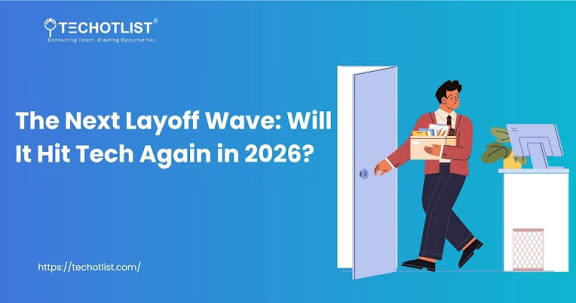
US tech companies will continue to experience significant layoffs in 2024 and 2025, a trend driven by the post-pandemic market. Today we will discuss about US tech layoffs return: AI hiring booms, workers panic
US tech layoffs return: AI hiring booms, workers panic
The United States technology sector is once again facing a wave of job cuts, reviving fears that had briefly eased after earlier rounds of layoffs. From Silicon Valley to emerging tech hubs, companies are shedding workers even as they aggressively hire for artificial intelligence roles. This sharp contrast—mass layoffs alongside record investment in AI—has left thousands of employees anxious, uncertain, and questioning the future of work in the digital economy.
Once viewed as one of the safest and most lucrative career paths, tech employment is now marked by instability. Engineers, product managers, designers, recruiters, and support staff are confronting a job market that has fundamentally changed. The return of tech layoffs is not just another cyclical slowdown; it reflects a deeper structural shift driven by automation, cost discipline, and a new corporate focus on efficiency over expansion.
A New Wave of Tech Layoffs Takes Hold
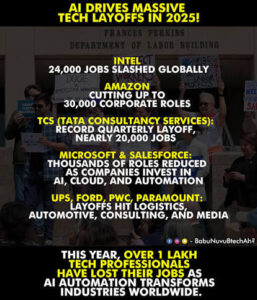
After a brief pause, layoffs across the US tech industry have surged again. Thousands of employees have lost their jobs in recent months as companies restructure operations, cut costs, and reallocate resources. Unlike earlier downturns driven mainly by external economic shocks, the current layoffs are more strategic in nature.
Companies are trimming entire departments, consolidating roles, and eliminating positions considered non-essential. While layoffs are often justified as temporary adjustments, many workers fear this round reflects a longer-term transformation of the industry rather than a short-lived correction.
The scale of these cuts has reignited concerns that job security in tech—once assumed to be strong—is eroding rapidly.
Why Tech Companies Are Cutting Jobs Again
Several overlapping factors are driving the renewed wave of layoffs across the US technology sector.
Post-Pandemic Over-Hiring Correction
During the pandemic, tech firms hired aggressively to meet soaring demand for digital services, remote work tools, cloud infrastructure, and online commerce. Many companies expanded headcounts at historic rates, expecting growth to continue indefinitely.
As consumer behavior normalized and growth slowed, companies found themselves overstaffed. The current layoffs are, in part, an effort to reverse years of over-hiring and restore financial balance.
Cost Cutting and Profit Pressures
Investors are now demanding profitability rather than pure growth. Rising interest rates, tighter financial conditions, and shareholder scrutiny have pushed companies to control expenses more aggressively.
Labor costs represent one of the largest expenses for tech firms, making layoffs a fast and visible way to improve balance sheets. Even profitable companies are reducing headcount to boost margins and reassure markets.
AI-Driven Automation
Artificial intelligence has become both an opportunity and a threat for tech workers. Automation tools are increasingly capable of handling tasks once performed by humans, including coding assistance, customer support, data analysis, and content moderation.
As AI systems improve, companies are finding they can operate with smaller teams. This has accelerated job cuts, particularly in roles that involve repetitive or process-driven work.
Big Tech Leads the Layoff Trend
Major technology firms have played a central role in the latest layoffs. Industry giants that once symbolized stability are now frequently announcing workforce reductions.
Departments most affected include:
Human resources and recruitment
Middle management
Customer support
Non-core product teams
Legacy software divisions
For many employees, the psychological impact has been severe. Workers who survived earlier layoffs now fear future cuts, while those already laid off face intense competition in a crowded job market.
Workers Panic as Job Security Crumbles
The emotional toll of the layoffs is significant. Many tech workers built their lives around the assumption of long-term employment, strong salaries, and continuous demand for their skills. That confidence has been shaken.
Rising Anxiety and Career Uncertainty
Laid-off employees describe feelings of shock, stress, and fear about the future. Job searches are taking longer, interviews are more competitive, and salary offers are often lower than expected.
Even those still employed report growing anxiety. Internal reorganizations, hiring freezes, and shifting priorities have created an atmosphere of uncertainty inside many companies.
A Saturated Job Market
With thousands of experienced professionals seeking work at the same time, competition has intensified. Roles that once attracted a few dozen applicants now receive hundreds or even thousands.
This oversupply of talent has tilted power toward employers, making job hunting more difficult and prolonging periods of unemployment.
AI Hiring Booms Despite Layoffs
Paradoxically, while layoffs dominate headlines, hiring has not stopped entirely. Instead, it has become highly selective.
AI-Focused Roles in Demand
Companies continue to invest heavily in artificial intelligence, creating demand for specialized roles such as:
Machine learning engineers
AI researchers
Data scientists
AI infrastructure architects
Cybersecurity specialists
These positions are often well-paid and strategically important, but they require advanced skills that many laid-off workers do not possess.
A Two-Tier Tech Workforce
The result is a growing divide within the tech labor market. Highly specialized AI professionals remain in demand, while generalist roles face shrinking opportunities.
This imbalance has fueled frustration among workers who feel left behind by rapid technological change.
The Skills Gap Widens
As AI reshapes the industry, the gap between in-demand skills and existing workforce capabilities is widening.
Many displaced workers are attempting to reskill, enrolling in online courses or pursuing certifications in AI-related fields. However, the transition is not easy.
Barriers to Reskilling
Advanced AI roles require deep technical knowledge
Training can be expensive and time-consuming
Not all workers can pivot quickly or easily
Competition remains fierce even in AI fields
For some, the pressure to constantly adapt has become exhausting, contributing to burnout and disillusionment.
Layoffs Reflect a Structural Shift, Not a Temporary Dip
Unlike earlier downturns, the current layoffs suggest a more permanent change in how tech companies operate.
Lean Teams and Efficiency First
Firms are prioritizing smaller, more efficient teams supported by automation. Productivity gains from AI allow companies to do more with fewer employees.
This shift may permanently reduce demand for certain roles, particularly those that do not directly contribute to core innovation or revenue.
From Growth at All Costs to Strategic Expansion
The era of rapid, unchecked hiring appears to be over. Companies are focusing on targeted growth, investing only in areas with clear long-term value.
Impact Beyond the Tech Industry
The effects of tech layoffs extend beyond Silicon Valley. Local economies that depend on tech workers are experiencing reduced consumer spending, slower housing markets, and increased economic uncertainty.
Cities that once thrived on tech expansion are now adjusting to a new reality of slower growth and cautious investment.
What Policymakers and Companies Can Do
The scale of disruption has sparked debate about how to protect workers during technological transitions.
Policy Responses
Potential policy solutions include:
Expanded retraining and upskilling programs
Public-private partnerships for workforce development
Stronger unemployment support systems
Incentives for companies to retrain rather than lay off workers
Corporate Responsibility
Some companies are offering severance packages, career transition support, and internal mobility programs. However, these efforts vary widely in effectiveness.
Long-term solutions may require a cultural shift toward continuous learning and shared responsibility for workforce adaptation.
The Future of Tech Jobs in the US
Looking ahead, the tech job market is likely to remain volatile.
Possible Scenarios
Continued Polarization – High-skill AI roles grow, while traditional tech roles decline.
Reskilling-Driven Recovery – Workers adapt and new roles emerge, stabilizing employment over time.
Extended Uncertainty – Layoffs continue as companies refine AI-driven models.
Market Rebalancing – AI investment slows, leading to a more stable hiring environment.
No matter the outcome, adaptability will be crucial for both workers and companies.
Conclusion: A Defining Moment for the Tech Workforce
The return of US tech layoffs marks a turning point for the industry. As AI hiring booms and traditional roles disappear, workers are facing one of the most challenging transitions in decades.
While artificial intelligence promises innovation and efficiency, it also raises urgent questions about job security, fairness, and the future of work. The current panic among tech workers reflects a deeper uncertainty about how humans fit into an increasingly automated world.
The coming years will determine whether this transformation leads to a more resilient workforce—or leaves many behind in the race toward an AI-driven future.
How useful was this post?
Click on a star to rate it!
Average rating 0 / 5. Vote count: 0
No votes so far! Be the first to rate this post.
About the Author

usa5911.com
Administrator
Hi, I’m Gurdeep Singh, a professional content writer from India with over 3 years of experience in the field. I specialize in covering U.S. politics, delivering timely and engaging content tailored specifically for an American audience. Along with my dedicated team, we track and report on all the latest political trends, news, and in-depth analysis shaping the United States today. Our goal is to provide clear, factual, and compelling content that keeps readers informed and engaged with the ever-changing political landscape.