Washington Power Play: Executive Orders, Court Challenges, Political Storm
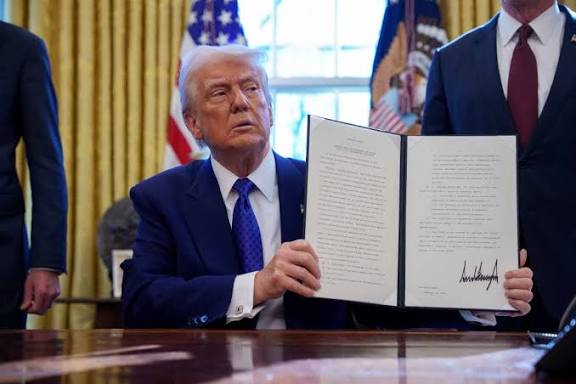
The President is forming a task force and a commission looking for ways to prosecute states for artificial intelligence laws they deem unfavorable. Today we will discuss about Washington Power Play: Executive Orders, Court Challenges, Political Storm
Washington Power Play: Executive Orders, Court Challenges, Political Storm
The political climate in the United States has entered a turbulent phase marked by aggressive executive action, rapid legal resistance, and deepening institutional conflict. At the center of this turbulence lies what many analysts describe as a Washington power play—a forceful use of executive orders that has triggered court challenges, mobilized state governments, and ignited a nationwide political storm.
As the White House relies increasingly on executive authority to implement policy, questions about constitutional limits, federalism, and democratic accountability have moved from academic debate to courtroom confrontation. The clash between executive ambition and judicial oversight is reshaping how power is exercised in modern American governance.
The Rise of Executive Orders as a Governing Tool

Executive orders were designed as administrative instruments, allowing presidents to manage federal agencies and implement laws passed by Congress. In recent years, however, they have evolved into powerful policy-making tools, often substituting for legislation stalled by partisan gridlock.
The current administration has embraced executive orders at an extraordinary pace, issuing directives that span immigration, healthcare, energy, technology, law enforcement, and federal funding. This rapid deployment reflects a strategic calculation: acting decisively through executive authority can deliver immediate policy results without the uncertainty of congressional negotiation.
Supporters argue that this approach is a practical response to a divided legislature incapable of addressing urgent national challenges. Critics counter that it represents a dangerous expansion of presidential power, blurring the constitutional separation between the executive and legislative branches.
Policy Areas at the Heart of the Power Struggle
The scope of recent executive orders is unusually broad, touching nearly every sector of public life. Several policy domains have emerged as focal points of conflict.
Healthcare and Social Policy
One of the most controversial sets of executive actions targets healthcare funding and medical practices. Orders affecting federal support for specific forms of care have sparked intense backlash from states, medical institutions, and civil rights advocates. Opponents argue that such directives intrude into areas traditionally regulated by states and medical professionals, while supporters claim they reflect national priorities and moral imperatives.
Immigration and Citizenship
Immigration has long been fertile ground for executive action, and the latest orders continue that trend. Measures aimed at tightening border enforcement, limiting refugee admissions, and redefining eligibility for citizenship have drawn swift legal challenges. Courts have been asked to determine whether these orders overstep constitutional boundaries or conflict with existing federal statutes.
Energy and Environmental Policy
Executive orders affecting energy development, particularly renewable energy projects, have triggered lawsuits from states and industry groups. Critics argue that abrupt federal intervention disrupts economic planning and violates statutory procedures. These disputes highlight tensions between environmental goals, economic interests, and administrative law.
Technology and Artificial Intelligence
As artificial intelligence becomes central to economic and national security concerns, executive efforts to regulate AI have raised alarms among states and private actors. Orders that condition federal funding on compliance with federal standards have reignited debates over states’ rights and regulatory authority in emerging technologies.
State Governments Push Back
State governments have become the most aggressive challengers to federal executive action. Attorneys general across the country, particularly in politically opposed states, have formed coalitions to contest executive orders they view as unconstitutional or unlawful.
Washington State has emerged as a leading voice in this resistance. Its legal actions reflect a broader strategy to defend state authority and protect residents from what it views as federal overreach. By coordinating with other states, Washington has amplified its legal influence and increased pressure on the federal government.
These multistate lawsuits argue that executive orders cannot override state law, rewrite congressional statutes, or impose conditions on federal funding without legislative approval. They also emphasize constitutional protections related to equal treatment, due process, and the limits of executive power.
The Role of the Federal Courts
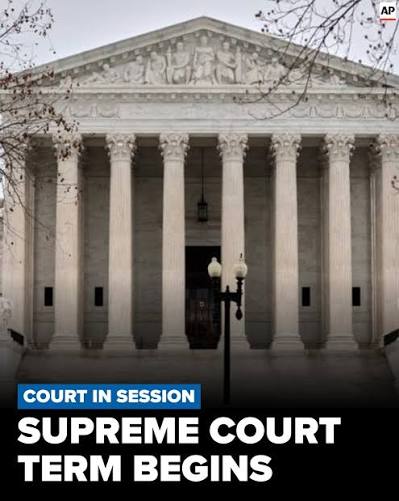
The judiciary has become the central arena for resolving the Washington power play. Federal judges have issued temporary blocks, nationwide injunctions, and critical rulings questioning the legality of certain executive actions.
Courts often rely on administrative law principles, particularly requirements that executive actions be reasoned, justified, and grounded in statutory authority. When orders are found to be rushed, vague, or unsupported by evidence, judges have not hesitated to intervene.
However, judicial responses have not been uniform. Some courts have allowed executive orders to proceed while litigation continues, creating a patchwork of enforcement across the country. This inconsistency has fueled uncertainty for states, businesses, and individuals affected by the directives.
Separation of Powers Under Strain
At the heart of the political storm lies a fundamental constitutional question: how much power should the executive branch wield in a democracy built on checks and balances?
Critics argue that excessive reliance on executive orders weakens Congress and undermines democratic deliberation. When major policy shifts occur through unilateral action, voters have fewer opportunities to influence outcomes through their elected representatives.
Supporters respond that executive authority is itself democratically grounded, as presidents are elected nationwide and accountable to voters. They contend that decisive leadership is necessary in moments of crisis or legislative paralysis.
This tension reflects a broader struggle over the future of American governance in an era of polarization and institutional distrust.
Political Fallout and Public Reaction
The Washington power play has intensified partisan divisions. Political leaders frame the issue in starkly different terms, portraying executive action either as bold leadership or authoritarian overreach.
Public opinion mirrors this divide. Some Americans express frustration with constant legal battles and governance by court order, while others view judicial intervention as an essential safeguard against abuse of power. Trust in institutions—Congress, the presidency, and the courts—remains fragile.
Media coverage and political rhetoric have further amplified the sense of crisis, often framing legal disputes as existential threats to democracy or national stability.
Long-Term Implications for American Democracy
The outcome of current court challenges will have lasting consequences. Judicial rulings could redefine the boundaries of executive authority, either reinforcing limits or effectively expanding presidential power for future administrations.
If courts consistently strike down executive orders, presidents may be forced to reengage with Congress and pursue compromise. If, however, courts defer broadly to executive discretion, future leaders may feel emboldened to govern primarily through unilateral action.
Either path will shape how power is exercised in Washington for decades to come.
Conclusion
The struggle over executive orders, court challenges, and political authority represents one of the most consequential power contests in modern U.S. history. The Washington power play is not merely a clash between political parties—it is a test of constitutional principles, institutional resilience, and democratic accountability.
As lawsuits proceed and courts weigh in, the nation confronts a defining question: can the balance of power envisioned by the Constitution withstand the pressures of modern governance? The answer will determine not only the fate of current policies, but the future structure of American democracy itself.
How useful was this post?
Click on a star to rate it!
Average rating 0 / 5. Vote count: 0
No votes so far! Be the first to rate this post.
About the Author

usa5911.com
Administrator
Hi, I’m Gurdeep Singh, a professional content writer from India with over 3 years of experience in the field. I specialize in covering U.S. politics, delivering timely and engaging content tailored specifically for an American audience. Along with my dedicated team, we track and report on all the latest political trends, news, and in-depth analysis shaping the United States today. Our goal is to provide clear, factual, and compelling content that keeps readers informed and engaged with the ever-changing political landscape.