Border Tensions Rising: Federal Action, State Pushback, Security Debate Heats Up
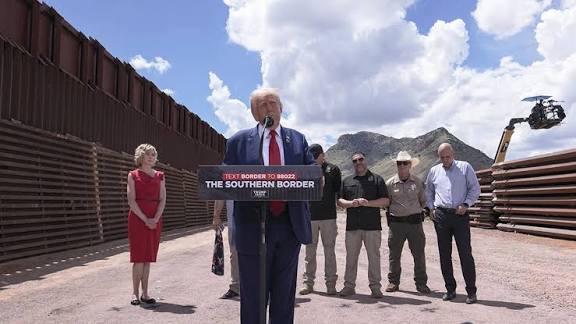
Former President Donald Trump has made efforts to redesign asylum, border and deportation policy at the center of his political movement. Today we will discuss about Border Tensions Rising: Federal Action, State Pushback, Security Debate Heats Up
Border Tensions Rising: Federal Action, State Pushback, Security Debate Heats Up
Border security and immigration policy have once again emerged as one of the most divisive and emotionally charged issues in the United States. What was once a debate centered largely on border infrastructure and visa systems has evolved into a far broader struggle involving federal authority, state resistance, civil liberties, and national identity. Across the country, rising tensions reflect a clash between Washington’s enforcement-driven agenda and state governments seeking to protect local autonomy and immigrant communities.
This escalating conflict is reshaping legal frameworks, public discourse, and political alliances, while fueling protests, court battles, and security concerns. As federal action intensifies and states push back, the nation finds itself at a crossroads over how to balance border control, constitutional authority, and humanitarian responsibility.
Federal Action Signals a Harder Line
A Sweeping Enforcement Push
The federal government has significantly intensified its border enforcement strategy, signaling a renewed commitment to strict immigration control. Recent legislative and executive actions have expanded funding for border infrastructure, increased detention capacity, and strengthened federal law enforcement agencies tasked with immigration enforcement.
Billions of dollars have been allocated to border security initiatives, including physical barriers, advanced surveillance technologies, and expanded staffing for immigration authorities. Federal leaders argue these measures are essential to curb illegal crossings, disrupt human trafficking networks, and restore confidence in the rule of law.
Central to this strategy is a dramatic expansion of Immigration and Customs Enforcement operations. Enforcement efforts now emphasize rapid detentions, expedited removals, and increased cooperation among federal agencies. Supporters of the approach maintain that strong enforcement deters unlawful entry and protects national security, while critics warn it risks widespread civil rights violations.
Militarization of the Border Debate
Beyond traditional law enforcement, the federal government has increasingly framed border security as a national defense issue. In certain regions, military resources and personnel have been deployed to support border operations, including surveillance, logistics, and infrastructure construction.
This militarized approach marks a notable shift in how immigration is addressed. While federal officials describe these deployments as support roles rather than direct enforcement, civil liberties groups argue that the presence of military forces near civilian populations blurs constitutional boundaries and heightens fear within immigrant communities.
The move has also intensified political opposition, particularly in states that view such actions as federal overreach or a misuse of national defense authority.
State Pushback Grows Louder
Resistance Through Legislation
As federal enforcement has expanded, several states have responded by passing laws designed to limit cooperation with immigration authorities. These measures aim to protect residents from aggressive enforcement tactics and preserve state control over local institutions.
Some states have enacted protections that restrict immigration arrests near courthouses, schools, and hospitals. Others have limited the sharing of personal data with federal agencies or established legal remedies for individuals who believe their constitutional rights have been violated during enforcement actions.
State leaders argue these laws are necessary to maintain public trust, ensure access to essential services, and prevent the criminalization of immigrant communities. Federal officials, however, contend that such measures obstruct lawful enforcement and undermine national immigration policy.
Sanctuary Policies at the Local Level
Cities and counties across the country have adopted sanctuary-style policies that further restrict cooperation with federal immigration authorities. These policies often prevent local law enforcement from participating in immigration enforcement or deny federal agencies access to city facilities.
Municipal leaders claim these measures enhance public safety by encouraging immigrant communities to cooperate with police without fear of deportation. Critics counter that sanctuary policies create legal confusion and shield individuals who may pose public safety risks.
The growing patchwork of local rules has intensified the clash between federal and local governments, creating uneven enforcement landscapes across the nation.
Legal Battles and Constitutional Questions
Federal Supremacy Versus State Authority
The conflict over border policy has increasingly moved into the courts. At the heart of these disputes lies a fundamental constitutional question: how far can states go in resisting federal immigration enforcement?
The federal government relies on the Supremacy Clause, which establishes that federal law generally overrides conflicting state laws. States, however, argue that the federal government has failed to effectively manage the border, justifying state-level action to protect residents and resources.
Courts have issued mixed rulings, sometimes siding with federal authority while in other cases affirming limits on federal power. These decisions continue to shape the evolving balance between national control and state sovereignty.
Detention Practices Under Scrutiny
Another major legal front concerns immigration detention. Lawsuits have challenged conditions within detention centers, length of confinement, and access to legal representation. State and local officials have also questioned whether federal facilities comply with health, safety, and zoning regulations.
These cases highlight growing concerns about transparency, accountability, and human rights within the immigration enforcement system. Advocacy groups argue that expanded detention undermines due process, while federal authorities insist detention is a necessary component of enforcement.
Public Reaction and Social Impact
Nationwide Protests and Demonstrations
Public response to intensified border enforcement has been swift and visible. Protests have erupted in major cities, border towns, and state capitals, with demonstrators calling for immigration reform, an end to mass deportations, and greater protections for asylum seekers.
Some protests have remained peaceful, while others have escalated into confrontations with law enforcement, prompting curfews and emergency measures. These demonstrations reflect deep divisions in public opinion and underscore the emotional weight of immigration policy.
Rising Security Concerns
At the same time, federal officials report increased threats against immigration officers and facilities. Incidents involving confrontations, assaults, and vandalism have raised alarm among law enforcement agencies and fueled arguments for enhanced security measures.
This cycle of enforcement, protest, and backlash has created a volatile environment where public safety, free expression, and government authority intersect in complex ways.
Economic and Community Consequences
Labor Market Disruptions
Aggressive immigration enforcement has had ripple effects across the economy. Industries such as agriculture, construction, and hospitality—many of which rely heavily on immigrant labor—have reported worker shortages and operational disruptions.
Business leaders warn that enforcement-driven labor losses could increase prices, slow production, and weaken local economies. Supporters of strict enforcement argue that it creates opportunities for domestic workers and restores fairness to the labor market.
Community Trust and Social Cohesion
Beyond economics, enforcement policies have reshaped community dynamics. Fear of detention or deportation has led some immigrants to avoid schools, hospitals, and public services, raising concerns about public health and education outcomes.
Local officials emphasize that maintaining trust between residents and institutions is critical for social stability. Federal authorities counter that lawful enforcement should not be compromised for the sake of comfort or convenience.
Political Stakes and the Road Ahead
Border tensions have become a defining issue in national and state politics. Immigration policy now plays a central role in elections, legislative agendas, and campaign messaging, often serving as a proxy for broader debates over governance, identity, and national priorities.
The divide between federal action and state resistance reflects deeper ideological differences about the role of government, individual rights, and the meaning of citizenship. With no clear consensus in sight, the conflict is likely to intensify as courts, voters, and policymakers continue to shape the future of border policy.
Conclusion
The rise in border tensions reveals a nation grappling with complex and deeply rooted challenges. Federal authorities are pushing for stronger enforcement and centralized control, while states and cities assert their right to protect local communities and civil liberties. Legal battles, public protests, and economic consequences underscore the far-reaching impact of immigration policy.
Ultimately, the debate is not just about borders—it is about how the United States defines security, justice, and compassion in an increasingly interconnected world. As the struggle between federal power and state pushback continues, the search for balanced, sustainable solutions remains one of the country’s most urgent and unresolved tasks.
How useful was this post?
Click on a star to rate it!
Average rating 0 / 5. Vote count: 0
No votes so far! Be the first to rate this post.
About the Author

usa5911.com
Administrator
Hi, I’m Gurdeep Singh, a professional content writer from India with over 3 years of experience in the field. I specialize in covering U.S. politics, delivering timely and engaging content tailored specifically for an American audience. Along with my dedicated team, we track and report on all the latest political trends, news, and in-depth analysis shaping the United States today. Our goal is to provide clear, factual, and compelling content that keeps readers informed and engaged with the ever-changing political landscape.