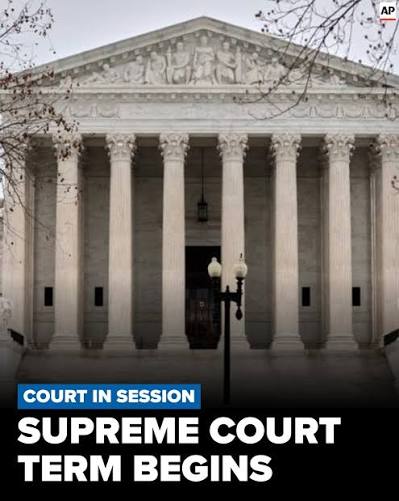
Supreme Court Shockwaves: New Decisions, Political Fallout, Nationwide Impact
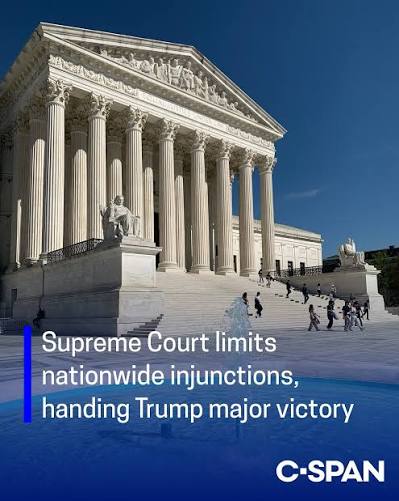
The Supreme Court recently ruled 6-3 that rogue district judges imposing universal nationwide injunctions “probably exceed the justifiable authority”. Today we will discuss about Supreme Court Shockwaves: New Decisions, Political Fallout, Nationwide Impact
Supreme Court Shockwaves: New Decisions, Political Fallout, Nationwide Impact
The United States Supreme Court has once again emerged at the center of national debate, delivering decisions that are reshaping law, politics, and public trust across the country. In an era marked by deep polarization, the Court’s rulings no longer remain confined to legal textbooks—they ripple through elections, state policies, economic systems, and everyday American life.
As the nation grapples with questions of executive power, civil rights, healthcare access, and federal authority, the Supreme Court’s recent actions have generated powerful shockwaves. This article explores the most consequential developments, the political fallout that followed, and the far-reaching nationwide impact of the Court’s evolving role.
I. The Supreme Court’s Expanding Influence

The Supreme Court was designed to interpret the Constitution independently of political pressure. Lifetime appointments were meant to insulate justices from partisan tides. However, recent years have shown how deeply judicial decisions can influence political outcomes, often mirroring ideological divisions within the country.
With a strong conservative majority, the Court has increasingly favored textualist and originalist interpretations of the Constitution. Supporters argue this restores constitutional discipline, while critics believe it overturns decades of settled precedent and undermines public confidence. As rulings touch on contentious social and political issues, the Court’s influence has never been more visible—or controversial.
II. Major Decisions That Shook the Nation
1. Presidential Power and Legal Accountability
One of the most impactful decisions in recent history addressed whether a sitting or former president can face criminal prosecution for actions taken while in office. The Court ruled that presidents enjoy broad immunity for official acts but may be held accountable for actions outside their official duties.
This decision fundamentally altered the balance between executive authority and legal accountability. Critics warn that it places the presidency above the law, while supporters argue it protects the executive branch from politically motivated prosecutions. Regardless of viewpoint, the ruling has reshaped how future presidents may exercise power—and how prosecutors approach executive conduct.
The political consequences were immediate. Lawmakers debated new legislation to clarify limits on presidential immunity, while constitutional scholars raised concerns about precedent and democratic accountability.
2. Campaign Finance and the Power of Money
The Supreme Court’s approach to campaign finance continues to generate intense debate. Recent cases suggest the Court may further loosen restrictions on coordinated spending between political parties and candidates. If such rulings stand, they could significantly increase the influence of wealthy donors and political organizations in federal elections.
These developments build upon earlier decisions that reshaped campaign finance law, allowing unprecedented levels of political spending. Critics argue this undermines democratic equality, while proponents insist it protects free speech. The result is a political landscape increasingly shaped by money—and judicial interpretation.
3. Healthcare Access and State Authority
In a critical healthcare ruling, the Court determined that federal Medicaid law does not grant individual beneficiaries the right to challenge state decisions regarding approved healthcare providers. This decision directly affected reproductive health services in several states, particularly those seeking to limit funding for certain providers.
By narrowing the legal pathways available to patients, the ruling reinforced state authority over federal healthcare programs. Supporters see this as respecting federalism, while opponents argue it restricts access to essential medical care for vulnerable populations.
The decision reignited national debates over healthcare equity, reproductive rights, and the role of federal oversight in social programs.
4. Environmental Regulation and Federal Power
Environmental policy has also been reshaped by Supreme Court decisions that limit or redefine federal regulatory authority. Recent rulings clarified how and where challenges to environmental regulations can be filed, altering the legal strategies used by industries and environmental groups alike.
These decisions reflect a broader judicial skepticism toward expansive regulatory authority. While supporters believe this curbs bureaucratic overreach, critics warn it weakens environmental protections at a time of increasing climate risk.
The long-term impact may be a regulatory environment where federal agencies face greater legal hurdles, shifting responsibility toward states with varying levels of commitment to environmental protection.
5. Free Speech, Education, and Cultural Battles
Not all Supreme Court impact comes from rulings issued. In several high-profile cases, the Court declined to hear appeals involving book bans, educational content, and First Amendment disputes. By allowing lower court rulings to stand, the Court effectively shaped policy without issuing national precedent.
This has led to a fragmented legal landscape where rights and restrictions vary widely by state. For educators, parents, and students, these decisions influence what materials are available in schools and libraries, intensifying ongoing cultural conflicts.
III. The Rise of Emergency Orders and the “Shadow Docket”
Beyond its regular schedule of argued cases, the Supreme Court increasingly relies on emergency orders to resolve urgent disputes. These decisions are often issued quickly, without detailed explanations or oral arguments.
Critics argue this lack of transparency undermines public understanding and accountability. Supporters counter that emergency rulings are necessary to address fast-moving legal conflicts, particularly those involving national security or immigration.
Regardless of perspective, the expanded use of emergency orders has fueled concerns about judicial process and fairness, adding to the broader debate over the Court’s legitimacy.
IV. Political Fallout and Institutional Tension
1. Legislative and Executive Pushback
Supreme Court rulings frequently provoke responses from Congress and the executive branch. Lawmakers have proposed reforms ranging from term limits for justices to expanding the number of seats on the Court. While such measures face significant obstacles, they reflect growing frustration with judicial power.
Executive officials have also criticized rulings they believe interfere with policy goals, creating tension between branches of government. These confrontations test long-standing norms of judicial independence and compliance.
2. Public Trust and Polarization
Public confidence in the Supreme Court has become sharply divided along partisan lines. Many Americans view the Court as politically motivated rather than impartial, a perception that threatens its moral authority.
When trust erodes, compliance with judicial decisions can weaken, especially among politically aligned groups who feel marginalized by rulings. This dynamic poses a serious challenge to the rule of law and democratic stability.
V. Nationwide Impact on Daily Life
1. Economic Consequences
Supreme Court rulings influence economic policy in profound ways. Decisions affecting tariffs, regulatory authority, and federal enforcement can cost—or save—billions of dollars. Businesses, consumers, and international trade partners all feel the ripple effects.
Legal uncertainty surrounding executive economic powers also affects markets, investment decisions, and global competitiveness, underscoring the Court’s role in shaping economic realities.
2. Civil Rights and Social Policy
From healthcare access to educational equity, Supreme Court decisions shape the daily experiences of millions. Rulings that narrow legal protections or defer authority to states can widen disparities, while others reinforce individual liberties.
These outcomes disproportionately affect marginalized communities, making judicial interpretation a key battleground for social justice and equality.
3. State-by-State Disparities
As the Court emphasizes states’ rights, legal protections increasingly depend on geography. While some states expand access and protections, others impose restrictions. This patchwork system raises fundamental questions about equal protection under the law.
VI. The Road Ahead
The Supreme Court stands at a crossroads. With major cases pending on voting rights, immigration, campaign finance, and executive authority, the Court’s future decisions will continue to shape the nation’s political and legal trajectory.
Whether the Court restores confidence or deepens division depends not only on outcomes but also on transparency, reasoning, and respect for democratic principles.
Conclusion
The shockwaves created by recent Supreme Court decisions reveal a judiciary deeply intertwined with America’s political and social fabric. From presidential power to healthcare access, environmental policy to free speech, the Court’s influence extends into nearly every aspect of national life.
As Americans debate the meaning and impact of these rulings, one reality remains undeniable: the Supreme Court is not merely interpreting the law—it is actively shaping the future of the nation.
How useful was this post?
Click on a star to rate it!
Average rating 0 / 5. Vote count: 0
No votes so far! Be the first to rate this post.
About the Author

usa5911.com
Administrator
Hi, I’m Gurdeep Singh, a professional content writer from India with over 3 years of experience in the field. I specialize in covering U.S. politics, delivering timely and engaging content tailored specifically for an American audience. Along with my dedicated team, we track and report on all the latest political trends, news, and in-depth analysis shaping the United States today. Our goal is to provide clear, factual, and compelling content that keeps readers informed and engaged with the ever-changing political landscape.