Trump’s White House Ballroom Lawsuit: Historic Preservationists Fight Back
The National Trust for Historic Preservation has filed a lawsuit aimed at stopping the construction of President Trump’s ballroom. Today we will discuss about Trump’s White House Ballroom Lawsuit: Historic Preservationists Fight Back
Trump’s White House Ballroom Lawsuit: Historic Preservationists Fight Back
The White House has long stood as a powerful symbol of American democracy, continuity, and history. Every brick, wing, and corridor carries the weight of centuries of governance and national memory. In recent months, however, this iconic structure has become the center of a fierce legal and cultural battle. President Donald Trump’s proposal to construct a massive ballroom on White House grounds has triggered a lawsuit from historic preservation groups, igniting a debate that stretches far beyond architecture into constitutional authority, public oversight, and the preservation of national heritage.
At the heart of the controversy is a simple but profound question: Can a sitting president unilaterally reshape one of the nation’s most historic landmarks without full legal review and public involvement? Preservationists argue the answer is no, and their legal challenge may redefine the limits of presidential power for generations to come.
The Ballroom Proposal That Sparked a Firestorm
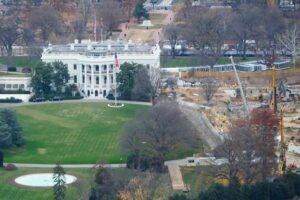
The controversy erupted when plans surfaced for a large, modern ballroom to be built on the White House grounds. The proposed structure, designed to host large-scale state dinners, diplomatic receptions, and ceremonial events, would significantly expand the White House complex. Supporters within the administration argued that existing spaces were insufficient for modern presidential needs and that the new ballroom would solve long-standing logistical challenges.
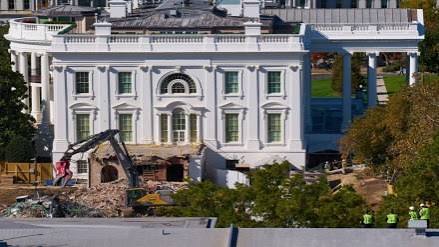
The project reportedly involved the demolition of parts of the East Wing, a historically significant section associated with the operations of first ladies and civic functions. Critics immediately raised alarms, warning that the scale and location of the project would irreversibly alter the historic character of the White House.
What might have otherwise remained an internal administrative decision quickly escalated into a national controversy once construction activity began without extensive public disclosure or review.
Historic Preservationists Step In
In response, a prominent historic preservation organization filed a lawsuit in federal court, seeking to halt the project. The group argued that the White House is not merely a residence or office of the president but a national landmark owned by the American people. Any major alteration, they contend, must follow strict legal processes designed to protect federal historic properties.
The lawsuit claims that the administration failed to comply with several key federal laws that govern construction and demolition on historic federal sites. Preservationists emphasized that these laws exist precisely to prevent irreversible changes made without careful study, expert input, and public participation.
According to the legal filing, allowing the project to proceed unchecked would set a dangerous precedent, effectively granting future presidents unchecked authority to alter nationally significant sites.
Alleged Legal Violations
The lawsuit outlines several alleged violations of federal law, focusing on both procedural and constitutional concerns.
Environmental and Historic Review Requirements
Preservationists argue that the administration bypassed mandatory environmental and historic impact reviews. Federal law requires that major construction projects on public land undergo assessments to evaluate environmental consequences and effects on historic resources. These reviews are designed to ensure transparency and prevent hasty or politically motivated decisions.
Critics claim that demolition and construction began before such evaluations were completed or made available for public scrutiny.
Lack of Public Input
Another central complaint is the absence of meaningful public participation. Federal planning laws typically require opportunities for public comment, especially when projects involve nationally significant landmarks. Preservation groups argue that the public was effectively shut out of a decision that affects a symbol belonging to the entire nation.
Bypassing Oversight Bodies
The lawsuit also alleges that the administration failed to seek review from key advisory and planning bodies responsible for overseeing federal architecture and urban planning. These bodies exist to ensure that new construction respects historical context and architectural integrity.
Skipping these reviews, critics argue, undermines decades of established safeguards.
Constitutional Authority Concerns
Beyond procedural issues, the lawsuit raises constitutional questions. Preservationists argue that Congress, not the president, holds authority over federal property. By proceeding without congressional approval, they claim the administration exceeded its constitutional powers.
This argument strikes at the core of the separation of powers and challenges assumptions about the scope of executive authority.
The White House Defense
The administration has firmly rejected the claims, asserting that the president possesses broad authority to manage and improve the White House complex. Officials point to historical precedent, noting that past presidents have overseen renovations, expansions, and structural changes.
Supporters of the project emphasize that the ballroom is intended to enhance functionality rather than diminish historical value. They argue that modernization is necessary for the White House to meet contemporary diplomatic and ceremonial demands.
The administration has also stressed that funding for the project does not rely on taxpayer money, portraying the effort as a privately supported enhancement rather than a public expense.
Why This Case Is Different
While it is true that many presidents have renovated the White House, preservationists argue that this case stands apart in several crucial ways.
Major renovations in the past were typically conducted with congressional authorization, expert oversight, and extensive planning. One of the most significant historical examples involved a full structural overhaul authorized by Congress after engineers deemed the building unsafe.
In contrast, critics say the ballroom project moved forward rapidly, without the level of transparency and oversight traditionally associated with alterations to the White House.
The scale of the proposed ballroom and the demolition involved have intensified concerns, particularly among architects and historians who warn that once historic sections are destroyed, they cannot be restored.
Cultural and Symbolic Implications
The White House is more than a building—it is a living symbol of American governance. Changes to its structure resonate deeply with the public, shaping how history is remembered and presented.
Preservation advocates argue that allowing a single administration to permanently reshape the White House risks turning a shared national symbol into a reflection of individual political legacy. They stress that decisions about such landmarks must transcend partisan agendas and short-term political goals.
For many Americans, the lawsuit represents a broader struggle over how history is respected in an era of rapid change and political polarization.
Public Reaction and Political Divides
Public response to the lawsuit has been sharply divided. Supporters of the president view the legal challenge as politically motivated obstruction, arguing that elected leaders should have latitude to modernize government institutions.
Opponents, however, see the lawsuit as a necessary defense of democratic norms and historic preservation. Architects, historians, and civic groups have voiced concern that bypassing established processes erodes public trust and weakens protections for national heritage.
The debate has spilled into social media, talk shows, and political forums, reflecting deeper divisions over executive power and cultural preservation.
What the Courts Must Decide
The federal court now faces a complex task. Judges must determine whether the administration violated federal statutes, whether preservationists have standing to sue, and whether construction should be halted pending further review.
A key issue is whether demolition alone constitutes a violation, even if full construction approvals have not yet been finalized. Preservationists argue that demolition is an irreversible step that should not proceed without compliance with all legal requirements.
The court’s decision on whether to issue a temporary halt could shape the future of the project—and possibly the scope of presidential authority nationwide.
Potential Outcomes and National Impact
Several outcomes are possible:
The court could halt construction and require full environmental and historic reviews before any work continues.
The court could allow the project to proceed, reinforcing broad presidential authority over the White House.
A compromise could emerge, requiring additional oversight while allowing a modified version of the project.
Regardless of the outcome, legal experts agree that the ruling will have implications far beyond this single project. It could influence how future presidents approach federal construction, historic preservation, and public accountability.
A Defining Moment for Historic Preservation
For preservationists, the lawsuit represents a critical stand. They argue that if protections fail at the White House—the most symbolic historic site in the country—then no landmark is truly safe from unilateral alteration.
The case highlights the tension between progress and preservation, modernization and memory. It forces the nation to confront how it balances respect for history with the evolving needs of governance.
Conclusion
Trump’s White House ballroom lawsuit is not merely a dispute over architecture. It is a legal, constitutional, and cultural confrontation over who controls America’s shared heritage. At stake are principles of transparency, the rule of law, and the idea that no individual—regardless of office—stands above established safeguards.
As the courts deliberate, the nation watches closely. The outcome will shape not only the physical landscape of the White House but also the enduring boundaries of presidential power and public trust in preserving history for future generations.
How useful was this post?
Click on a star to rate it!
Average rating 0 / 5. Vote count: 0
No votes so far! Be the first to rate this post.
About the Author

usa5911.com
Administrator
Hi, I’m Gurdeep Singh, a professional content writer from India with over 3 years of experience in the field. I specialize in covering U.S. politics, delivering timely and engaging content tailored specifically for an American audience. Along with my dedicated team, we track and report on all the latest political trends, news, and in-depth analysis shaping the United States today. Our goal is to provide clear, factual, and compelling content that keeps readers informed and engaged with the ever-changing political landscape.