Wall Street Mixed Rally Holds: Lululemon Soars, AI Sector Sags
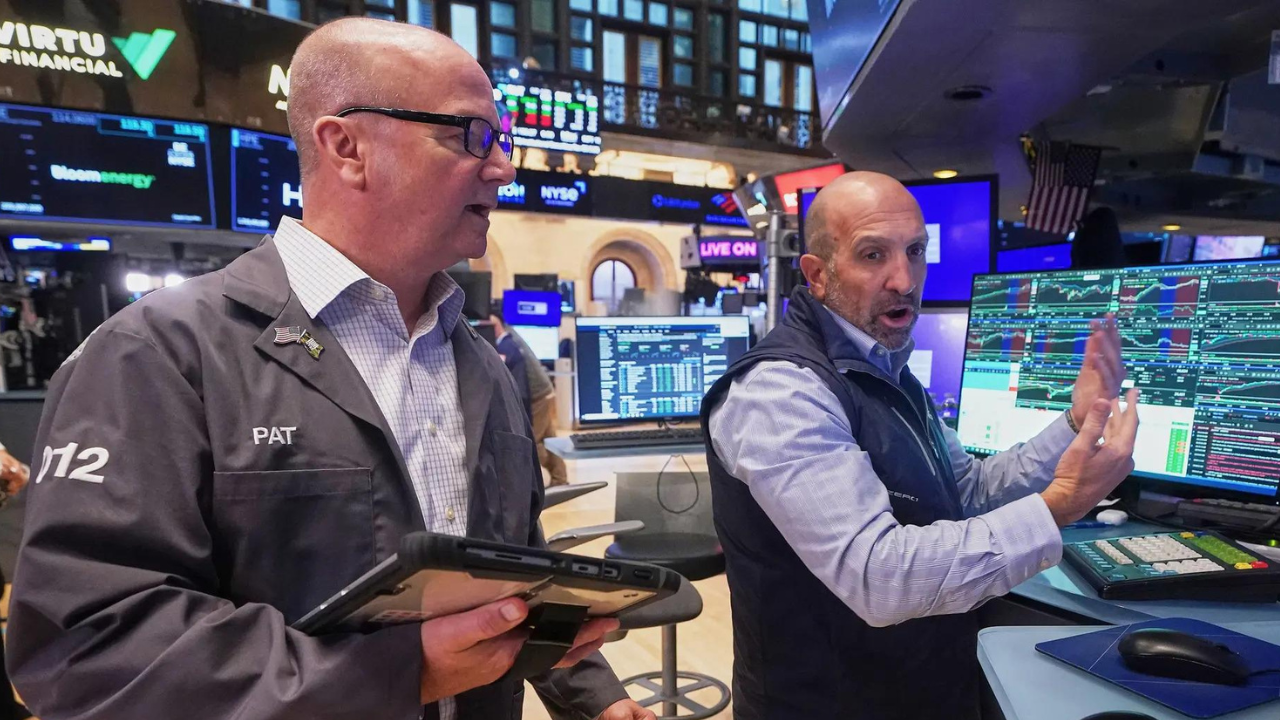
Mixed performance was seen in stocks on Friday. US markets today: Wall Street strong, Lululemon jumps CEO. Today we will discuss about Wall Street Mixed Rally Holds: Lululemon Soars, AI Sector Sags
Wall Street Mixed Rally Holds: Lululemon Soars, AI Sector Sags
Wall Street delivered a session marked by contrast, resilience, and shifting investor priorities as U.S. markets held near record territory despite uneven sector performance. While major indices showed modest movement, the underlying market action revealed a clear divide: consumer and retail stocks surged, led by a powerful rally in Lululemon Athletica, while artificial intelligence and high-growth technology stocks retreated, weighing on the Nasdaq.
This mixed rally reflects a broader transition underway in U.S. equities — one defined by sector rotation, valuation reassessment, and cautious optimism rather than unchecked enthusiasm. As investors recalibrate portfolios after months of tech-driven gains, the market is entering a phase where fundamentals, earnings strength, and balance matter more than hype.
Wall Street Holds Firm Despite Sector Divergence

During the latest trading session, U.S. stock markets showed stability rather than broad momentum. The Dow Jones Industrial Average managed to post gains, supported by strength in consumer, industrial, and value-oriented stocks. The S&P 500 hovered close to record highs, reflecting overall confidence but lacking strong directional conviction. Meanwhile, the Nasdaq Composite underperformed, pressured by declines in several major technology and AI-focused companies.
This divergence underscores a critical truth about today’s market: headline index performance no longer tells the full story. Beneath the surface, money is moving aggressively between sectors as investors seek safety, value, and sustainable earnings growth.
Lululemon Emerges as a Market Leader
One of the session’s standout performers was Lululemon Athletica, whose shares surged sharply and provided a strong lift to consumer discretionary stocks. The rally followed the company’s release of better-than-expected quarterly earnings, reinforcing confidence in the brand’s pricing power, loyal customer base, and global expansion strategy.
Why Lululemon Soared
Several factors contributed to Lululemon’s strong performance:
Earnings Beat: The company exceeded market expectations on both revenue and profit, signaling robust demand even amid inflationary pressures.
Operational Strength: Improved margins and disciplined cost management reassured investors about long-term profitability.
Leadership Transition: News of an upcoming CEO transition was received positively, with investors viewing it as an opportunity for strategic renewal and operational optimization.
Lululemon’s rally highlights a broader trend: investors are increasingly rewarding companies with clear earnings visibility, strong brand equity, and resilient consumer demand.
Consumer Confidence and Retail Resilience
Lululemon’s performance also reflects a larger story about the U.S. consumer. Despite elevated interest rates and lingering inflation concerns, discretionary spending has remained resilient — particularly in premium and lifestyle segments.
Retailers with strong brand identity, digital integration, and international reach are proving capable of navigating economic uncertainty. This resilience has encouraged investors to rotate capital into consumer stocks that were previously overshadowed by technology leaders.
AI Sector Sags as Valuation Concerns Grow
In sharp contrast to the strength in consumer names, AI and technology stocks faced notable pressure. Several prominent players in the semiconductor and AI infrastructure space declined, contributing to weakness in the Nasdaq and dampening broader market enthusiasm.
Why AI Stocks Pulled Back
The recent softness in AI stocks stems from multiple concerns:
Valuation Fatigue: After months of extraordinary gains, many AI-linked stocks are trading at elevated multiples, prompting profit-taking.
Guidance Uncertainty: Investors are increasingly scrutinizing forward guidance, particularly regarding AI revenue sustainability and capital spending.
Bubble Fears: Market participants are questioning whether expectations for AI adoption and monetization have outpaced near-term reality.
While AI remains a transformative force with long-term potential, the market is signaling that enthusiasm must now be justified by earnings growth rather than narrative alone.
Tech No Longer the Only Market Driver
The AI sector’s pullback does not necessarily signal the end of the tech rally — but it does suggest that technology is no longer the sole engine driving market gains. This shift is evident in the relative outperformance of:
Consumer discretionary stocks
Healthcare companies
Industrials and value-oriented names
Dividend-paying blue-chip stocks
This broader participation strengthens the overall market, making rallies more sustainable and less dependent on a small group of mega-cap tech companies.
Sector Rotation: A Healthier Market Signal
Market rotation is often viewed as a sign of maturity rather than weakness. Instead of indiscriminate selling, investors are selectively reallocating capital toward sectors with:
Stable cash flows
Reasonable valuations
Strong balance sheets
Predictable earnings growth
This transition reduces systemic risk and lowers the chances of sharp market corrections driven by overcrowded trades.
The Role of Monetary Policy and Interest Rates
Macroeconomic policy continues to play a central role in shaping investor behavior. While interest rates remain elevated, expectations of future rate cuts have supported equity valuations. However, uncertainty around the timing and pace of monetary easing has led to increased volatility — particularly in rate-sensitive sectors such as technology.
Higher rates disproportionately affect growth stocks by increasing the discount rate applied to future earnings. This dynamic partly explains why tech and AI stocks are facing pressure while sectors with near-term profitability are gaining favor.
Investor Sentiment: Cautious but Constructive
Investor sentiment currently reflects a balance between optimism and caution. While concerns about valuations and economic slowing persist, confidence in corporate earnings and consumer strength continues to support equities.
Key sentiment drivers include:
Strong labor market data
Moderating inflation trends
Corporate earnings resilience
Reduced recession fears
At the same time, investors remain alert to geopolitical risks, policy uncertainty, and potential earnings disappointments.
What This Mixed Rally Means for Investors
The current market environment presents both challenges and opportunities. A mixed rally rewards disciplined investors who focus on fundamentals rather than chasing momentum.
Key Investment Takeaways
Diversification Is Essential: Exposure across multiple sectors can reduce volatility and enhance long-term returns.
Earnings Matter More Than Hype: Companies delivering consistent profits are outperforming speculative growth stories.
Valuation Discipline Pays Off: Avoiding overextended stocks can help preserve capital during periods of rotation.
Long-Term Themes Still Matter: AI, clean energy, and digital transformation remain important — but patience is required.
Looking Ahead: What to Watch Next
As markets move forward, investors will focus on several critical developments:
Upcoming earnings reports from both tech and consumer leaders
Central bank commentary on interest rate policy
Inflation and employment data
Corporate capital spending trends
These factors will determine whether the current rotation accelerates or stabilizes.
Conclusion: A Market in Transition, Not Trouble
The phrase “Wall Street mixed rally holds” perfectly captures the present moment. Markets are not collapsing — they are evolving. The surge in Lululemon and the pullback in AI stocks illustrate a shift toward balance, selectivity, and sustainability.
Rather than signaling weakness, this environment suggests a healthier market structure where gains are distributed across sectors and supported by real economic activity. For investors willing to adapt, this phase offers opportunities to reposition portfolios for long-term success.
As Wall Street continues to navigate this transition, one message is clear: the era of easy gains driven by a single theme is giving way to a more thoughtful, fundamentals-driven market cycle.
How useful was this post?
Click on a star to rate it!
Average rating 0 / 5. Vote count: 0
No votes so far! Be the first to rate this post.
About the Author

usa5911.com
Administrator
Hi, I’m Gurdeep Singh, a professional content writer from India with over 3 years of experience in the field. I specialize in covering U.S. politics, delivering timely and engaging content tailored specifically for an American audience. Along with my dedicated team, we track and report on all the latest political trends, news, and in-depth analysis shaping the United States today. Our goal is to provide clear, factual, and compelling content that keeps readers informed and engaged with the ever-changing political landscape.