U.S. Brokered Ceasefire Renewed: Thailand, Cambodia Agreement, Tensions Still Flare
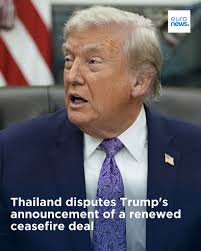
Trump says Thailand and Cambodia have agreed to restore peace and end hostilities after clashes flared up again this week. Today Today we will discuss about U.S. Brokered Ceasefire Renewed: Thailand, Cambodia Agreement, Tensions Still Flare
U.S. Brokered Ceasefire Renewed: Thailand, Cambodia Agreement, Tensions Still Flare
In December 2025, renewed fighting along the disputed border between Thailand and Cambodia reignited regional fears of a wider Southeast Asian conflict. After days of deadly clashes that displaced thousands of civilians and escalated military engagement, the United States stepped in once again. President Donald Trump announced that both countries had agreed to renew a ceasefire, reviving a peace framework previously brokered with U.S. involvement.
However, despite the announcement, reports from the ground painted a far more troubling picture. Shelling, airstrikes, and troop movements reportedly continued, raising serious doubts about whether the ceasefire was genuinely taking hold. This contradiction between diplomatic declarations and battlefield realities underscores the fragility of peace in one of Southeast Asia’s most enduring territorial disputes.
This article examines the renewed U.S.-brokered ceasefire, the historical roots of the Thailand–Cambodia conflict, the breakdown of previous agreements, the humanitarian toll, and why tensions continue to flare despite international mediation.
Historical Roots of the Thailand–Cambodia Border Dispute

The conflict between Thailand and Cambodia is deeply rooted in colonial-era boundary disputes. Much of the tension centers around ambiguous border demarcations drawn during French colonial rule in Cambodia. These historical inconsistencies left multiple areas contested, particularly near culturally and strategically significant sites.
Over the decades, nationalist sentiment, military posturing, and unresolved legal interpretations have fueled periodic confrontations. While international courts have weighed in on certain sections of the border, enforcement and acceptance of rulings have often remained politically sensitive.
Though long stretches of the border remained relatively calm for years, unresolved grievances ensured that any triggering incident could rapidly escalate into violence—a pattern repeatedly seen in past decades.
Escalation in 2025: From Tensions to Open Conflict
Early 2025 saw rising friction along the border, with reports of troop build-ups and sporadic exchanges of fire. By mid-year, these tensions escalated into full-scale military confrontations, including artillery strikes and ground offensives.
The violence peaked during mid-2025 clashes that killed dozens and displaced large civilian populations on both sides of the border. Villages were evacuated, schools shut down, and humanitarian agencies struggled to provide relief amid ongoing fighting.
Alarmed by the severity of the situation, regional actors and global powers intensified diplomatic efforts to prevent the conflict from spiraling further.
The Original U.S.-Backed Ceasefire Agreement
In response to the escalating crisis, the United States played a critical role in encouraging negotiations, working alongside regional mediators. These efforts culminated in a ceasefire agreement that aimed to halt hostilities and establish mechanisms to prevent further escalation.
The agreement included:
Withdrawal of heavy military equipment from sensitive border areas
Suspension of offensive military operations
Commitment to dialogue through diplomatic channels
Plans for international or regional monitoring
At the time, both governments publicly welcomed the agreement, expressing hope that it would mark a turning point toward long-term peace. International observers praised the deal as a significant diplomatic achievement.
Why the Ceasefire Failed
Despite initial optimism, the ceasefire proved fragile. Within weeks, accusations of violations emerged from both sides. A particularly controversial incident involving a landmine explosion that injured soldiers reignited anger and distrust.
Thailand accused Cambodian forces of violating the agreement, while Cambodia denied responsibility and blamed unexploded remnants from previous conflicts. Mutual recriminations soon replaced diplomatic engagement, and military deployments resumed.
By late 2025, the ceasefire had effectively collapsed, paving the way for renewed violence.
Renewed Fighting and Rising Casualties
As fighting resumed, the conflict took on a more dangerous character. Reports indicated:
Heavy artillery exchanges along multiple border zones
Airstrikes targeting suspected military positions
Civilian deaths and injuries
Mass displacement of border communities
Thousands of families fled their homes, seeking shelter in temporary camps. Infrastructure damage disrupted electricity, healthcare access, and food supplies. Humanitarian agencies warned of worsening conditions as winter approached.
The renewed fighting underscored how quickly the situation could deteriorate once diplomatic frameworks unraveled.
Trump’s Announcement: Ceasefire Renewed
Amid growing international concern, President Donald Trump announced that Thailand and Cambodia had agreed to renew the ceasefire, recommitting to the original peace framework.
The announcement emphasized:
Immediate cessation of hostilities
Restoration of earlier peace commitments
Continued U.S. engagement in diplomatic efforts
The declaration was framed as a breakthrough, signaling that U.S. mediation had once again helped pull both sides back from the brink.
Conflicting Signals From the Ground
Despite the announcement, events on the ground told a different story. Reports emerged suggesting that military operations continued even after the ceasefire declaration. Both sides accused each other of ongoing violations, including artillery shelling and air operations.
Officials in Thailand publicly stated that they had not halted military action, arguing that national security concerns justified continued operations. Cambodian authorities, meanwhile, accused Thailand of escalating attacks despite diplomatic assurances.
These contradictions revealed a fundamental challenge: a ceasefire without mutual trust and enforcement mechanisms is unlikely to hold.
Humanitarian Consequences
The human cost of the renewed conflict has been severe. Civilians have borne the brunt of the fighting, with many losing homes, livelihoods, and access to basic services.
Key humanitarian impacts include:
Large-scale displacement along the border
Overcrowded shelters and limited medical care
Disruption to agriculture and local economies
Psychological trauma among affected communities
Aid organizations have called for safe humanitarian corridors and urged both governments to prioritize civilian protection, regardless of political or military objectives.
Regional and Global Implications
The Thailand–Cambodia conflict poses broader risks beyond the immediate border region. ASEAN’s credibility as a regional stabilizing force is being tested, as internal conflicts among member states challenge unity.
For the United States, the renewed ceasefire highlights both the influence and limits of external mediation. While U.S. involvement can pressure parties toward dialogue, long-term peace depends on local political will and institutional follow-through.
The conflict also draws attention from other global powers with strategic interests in Southeast Asia, raising concerns about geopolitical competition intersecting with local disputes.
Why Peace Remains Elusive
Several factors continue to undermine lasting peace:
Deep historical mistrust rooted in unresolved territorial claims
Domestic political pressures that reward hardline positions
Lack of neutral enforcement mechanisms on the ground
Misinformation and nationalist rhetoric fueling public anger
Militarization of the border, making disengagement difficult
Without addressing these underlying issues, ceasefires risk becoming temporary pauses rather than durable solutions.
What Must Happen Next
For the renewed ceasefire to succeed, several steps are essential:
Clear, joint confirmation of ceasefire terms by both governments
Deployment of independent monitoring forces
Reopening of sustained diplomatic talks
Humanitarian access to affected regions
Long-term negotiations on border demarcation
Absent these measures, the region risks sliding back into cycles of violence that undermine stability and development.
Conclusion
The renewed U.S.-brokered ceasefire between Thailand and Cambodia represents a critical diplomatic effort, but one fraught with uncertainty. While high-level announcements suggest progress, continued fighting on the ground exposes the fragile nature of the agreement.
The situation highlights a fundamental truth of international conflict resolution: peace cannot be declared into existence. It must be built through trust, accountability, and sustained commitment from all parties involved.
As tensions continue to flare, the coming weeks will determine whether this ceasefire becomes a foundation for lasting peace—or another chapter in a long history of unresolved conflict.
How useful was this post?
Click on a star to rate it!
Average rating 0 / 5. Vote count: 0
No votes so far! Be the first to rate this post.
About the Author

usa5911.com
Administrator
Hi, I’m Gurdeep Singh, a professional content writer from India with over 3 years of experience in the field. I specialize in covering U.S. politics, delivering timely and engaging content tailored specifically for an American audience. Along with my dedicated team, we track and report on all the latest political trends, news, and in-depth analysis shaping the United States today. Our goal is to provide clear, factual, and compelling content that keeps readers informed and engaged with the ever-changing political landscape.