Epstein Files Drop: Democrats release new photos, questions explode
Democrats on the House Oversight Committee have released two tranches of photos from Jeffrey Epstein’s estate in December 2025. Today we will discuss about Epstein Files Drop: Democrats release new photos, questions explode
Epstein Files Drop: Democrats release new photos, questions explode
On December 12, 2025, political tensions in the United States escalated yet again as House Democrats released a new batch of photographs from the estate of the late financier Jeffrey Epstein. The images, released as part of a broader transparency push, have reignited national debate on Epstein’s network, the powerful figures who crossed paths with him, and the long-standing questions surrounding government handling of his case.
This latest release—dubbed the “Epstein Files Drop”—marks one of the most politically charged moments in Congress’ ongoing battle over unsealing Epstein-related documents. The public response has been explosive: renewed political clashes, legal debates, and widespread speculation about what further documents may reveal.
What Was Released — And Why It Matters

Democratic members of the House Oversight Committee released 19 photographs from a massive archive of more than 95,000 images retrieved from Epstein’s estate. Committee members stated that their purpose was transparency, but the lack of captions or context around the images has fueled intense public speculation.
Individuals visible in the new photo batch include:
President Donald Trump
Former President Bill Clinton
Microsoft co-founder Bill Gates
Former Trump advisor Steve Bannon
Film director Woody Allen
Richard Branson
Alan Dershowitz
Prince Andrew
Some photos depict casual social settings. Others show Trump with several women whose faces were deliberately blurred or redacted. While none of the photographs show illegal activity, they have reignited longstanding questions about the extent of Epstein’s social network and the nature of his relationships with powerful figures.
Democratic leaders argue that the public deserves transparency given Epstein’s decades-long criminal network. Republicans counter that Democrats are releasing photos selectively to damage Trump politically.
Why Democrats Released the Photos Now
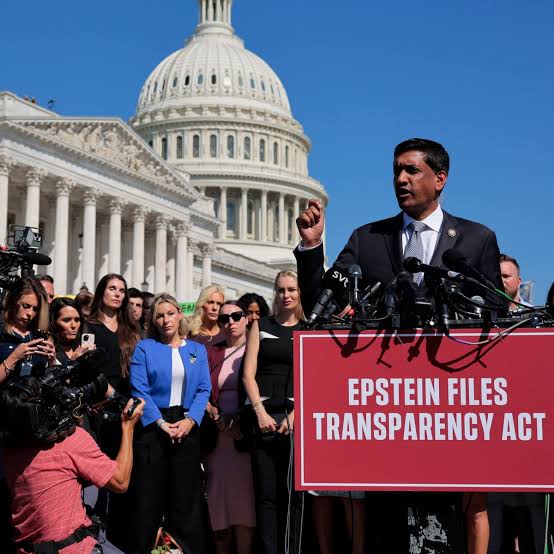
The timing is no coincidence. For months, Congress has been engaged in a political struggle over the Epstein Files Transparency Act, legislation requiring all unclassified Epstein documents to be released by the Department of Justice.
A federal judge recently ordered the release of grand jury transcripts linked to Epstein and Ghislaine Maxwell’s prior investigations. With the statutory deadline approaching, Democrats argue that the DOJ is dragging its feet. By releasing selected photographs themselves, they aim to increase pressure on federal authorities to comply fully with the law.
Democratic lawmakers claim:
The government has withheld too much information for too long.
Survivors deserve full transparency and accountability.
The public has a right to know the extent of Epstein’s influence.
Representative Robert Garcia stated that the release is intended to challenge what Democrats call “a cover-up” by the current White House and the DOJ. Their message is clear: if federal authorities do not release information, Democrats will continue releasing their own material.
Republican Response: “A Political Stunt”
Republicans quickly condemned the release, calling it irresponsible and politically motivated.
GOP objections focus on several points:
1. Selectivity
Republicans argue Democrats are cherry-picking photos that include Trump or individuals associated with conservative politics while ignoring photos of Democratic-aligned figures. They claim that withholding context allows misleading interpretations to spread.
2. Lack of Evidence
Republicans stress that social photographs prove nothing and do not demonstrate wrongdoing by any individual depicted. Many of the public figures in the photos—on both sides of the political aisle—have long acknowledged having met Epstein socially.
3. Political Timing
With a major election cycle underway, Republicans see the release as a targeted effort to damage Trump and other conservatives in the public eye. They accuse Democrats of manipulating sensitive materials to influence public opinion.
A Republican memo circulated within the Oversight Committee called the release “a partisan distraction” and criticized Democrats for sensationalizing photographs rather than pushing for full, context-rich transparency.
Public Reaction: Shock, Anger, and Intensifying Suspicion
The public response has been immediate and intense. Across social platforms and media outlets, Americans express deep frustration toward what many view as decades of secrecy and elite protection surrounding Epstein’s activities.
Polling shows that most Americans believe the government has withheld crucial details about Epstein’s network. The new photos have only reinforced that belief.
Three dominant public reactions have emerged:
1. Outrage Over Secrecy
Many Americans argue that the new photos demonstrate how widespread Epstein’s social reach was and demand that every file, log, transcript, and communication be made public.
2. Fear of Misinformation
Moderates and legal experts warn that releasing photos without dates or context can create false assumptions. They emphasize that appearing in a photo with Epstein does not imply criminal behavior.
3. Partisan Warfare
Political divisions have deepened.
Some on the left see the photo drop as evidence of powerful conservatives entangled with Epstein.
Some on the right view it as a smear campaign rooted in selective disclosure.
Meanwhile, survivors of Epstein’s network continue calling for the full unsealing of all documents—not partial or politicized releases.
Legal Ramifications: Pressure on the DOJ Intensifies
The political drama is unfolding alongside important legal developments.
1. Epstein Files Transparency Act Deadline
The DOJ is legally required to release thousands of documents connected to Epstein’s cases. The deadline is approaching, and delays have prompted accusations of institutional reluctance.
2. Court Orders
A federal judge has authorized the release of significant grand jury records from early Epstein investigations, suggesting more disclosures are imminent.
3. Redaction Challenges
Sensitive information—particularly details involving minors—must be carefully redacted. Balancing transparency with privacy protections has complicated the unsealing process.
Despite these challenges, public pressure is growing for complete disclosure.
Analysis of the High-Profile Figures in the Photos
The appearance of well-known individuals raises questions, but context matters. Here’s what their presence in the photos actually means—and doesn’t mean.
Donald Trump
Trump appears in several images, some with women whose faces are redacted. Trump has repeatedly stated that he severed ties with Epstein before Epstein’s criminal charges and has denied any involvement in wrongdoing. The photos do not prove otherwise.
Bill Clinton
Clinton has long acknowledged limited interactions with Epstein. Clinton’s team has maintained that he was unaware of Epstein’s illegal activities. The photos released add nothing substantially new beyond what has been publicly known.
Bill Gates
Gates has previously expressed regret for associating with Epstein. The new photos show him at events or meetings but do not reveal illegal conduct.
Prince Andrew
Andrew’s long-running controversy regarding Epstein is well known. While these photos do not introduce new allegations, they reinforce ongoing public scrutiny of his past relationship with Epstein.
Other Figures
Individuals such as Woody Allen, Richard Branson, Alan Dershowitz, and Steve Bannon similarly appear in social settings. None of the new images show criminal activities or clarify the nature of their interactions with Epstein.
Important Reminder
Photos alone cannot determine guilt, innocence, or involvement. Association does not equate to participation, especially without context.
Media Challenges and Public Confusion
The new images have created a complex landscape for journalists:
Reporters must balance public interest against the risk of amplifying speculation.
Editorial teams must explain what is known, what remains unclear, and what the photos do not show.
Social media platforms struggle to control a flood of conspiracy theories.
This information environment highlights how sensitive and volatile the Epstein case remains—and how partial disclosures can fuel both legitimate questioning and misinformation.
What Happens Next?
Several key developments are expected in the coming days and weeks:
1. More Photo Releases
Democrats indicate this is only the first in a series of drops. Additional batches could include hundreds of new images.
2. DOJ Document Release
The Justice Department is legally obligated to release thousands of pages of Epstein-related files soon. What information is unsealed—and what remains withheld—will be closely scrutinized.
3. Political Escalation
Both parties may use the Epstein Files as political tools:
Democrats will argue for transparency and accountability.
Republicans will frame the releases as unfair targeting.
4. Survivor Advocacy
Victims and advocacy organizations will continue pressing for complete disclosure and justice, calling for both parties to avoid turning the case into a political weapon.
Conclusion: A Historic Transparency Battle with National Implications
The Democrats’ release of new photographs from the Epstein estate marks a critical moment in America’s long struggle to understand the full scale of Jeffrey Epstein’s network. Far from a mere release of images, it exposes the deep tension between transparency and political maneuvering, accountability and privacy, truth and speculation.
As the DOJ prepares to release more documents and Congress braces for intensified political conflict, the Epstein Files Drop represents not just a clash over information—but a test of public trust. The coming weeks may reveal whether the nation receives clarity, further confusion, or a deeper reckoning with the vast network of power surrounding one of the most infamous criminal cases in modern American history.
How useful was this post?
Click on a star to rate it!
Average rating 0 / 5. Vote count: 0
No votes so far! Be the first to rate this post.
About the Author

usa5911.com
Administrator
Hi, I’m Gurdeep Singh, a professional content writer from India with over 3 years of experience in the field. I specialize in covering U.S. politics, delivering timely and engaging content tailored specifically for an American audience. Along with my dedicated team, we track and report on all the latest political trends, news, and in-depth analysis shaping the United States today. Our goal is to provide clear, factual, and compelling content that keeps readers informed and engaged with the ever-changing political landscape.