Denmark Warns: U.S. Military Shift Under Trump Alarms Allies
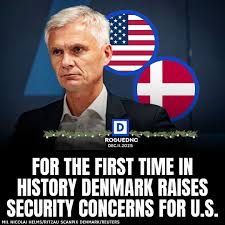
A report by a Danish intelligence agency warns that the United States is using its economic power to assert its will and threaten the military. Today we will discuss about Denmark Warns: U.S. Military Shift Under Trump Alarms Allies
Denmark Warns: U.S. Military Shift Under Trump Alarms Allies
In a stunning moment for transatlantic relations, Denmark’s Defence Intelligence Service issued a public warning in 2025 that the United States — historically Denmark’s closest security partner — could become a potential security threat due to major shifts in U.S. military and foreign policy under President Donald Trump.
This development sent shockwaves through Europe. Denmark is not just a NATO member; it has long been one of Washington’s most cooperative allies, especially in the Arctic and Baltic regions. For Copenhagen to voice such concern reflects a broader unease across the continent: traditional assumptions about U.S. leadership, reliability, and alliance behavior are no longer guaranteed.
The Danish statement does not mean a break in the alliance. Instead, it marks a crucial turning point — a moment when European nations must confront the possibility that America’s global priorities are shifting in ways that may not always align with Europe’s security needs.
The Danish Intelligence Assessment: A Wake-Up Call
A Warning Rooted in Behavior, Not Ideology
The Danish Defence Intelligence Service (DDIS) highlighted a pattern of increasing American assertiveness. It noted that the United States now frequently uses economic pressure, transactional diplomacy, and unilateral military posturing even when dealing with partners.
Such approaches differ sharply from traditional alliance norms based on consultation, compromise, and collective decision-making. Danish officials warned that this change could create situations where allies are pressured or coerced, rather than supported.
The Question of Reliability
Equally troubling, Denmark expressed uncertainty about America’s long-term security commitments. Under the Trump administration’s evolving strategic posture, the U.S. is focusing more on bilateral deals and hemispheric priorities rather than multilateral cooperation.
For Denmark — a small nation that relies on predictable partnerships — this uncertainty is a serious strategic challenge. Understanding and anticipating Washington’s intentions has never felt more difficult.
Greenland: The Center of Strategic Tension
Why Denmark Is Deeply Concerned
Greenland, a vast Arctic territory with immense military and economic value, lies at the heart of the tension between Washington and Copenhagen. Though geographically distant, Greenland is part of the Kingdom of Denmark and remains deeply tied to Danish national sovereignty.
The island’s strategic significance has surged due to:
Melting Arctic ice opening new shipping routes
Competition for rare minerals
Proximity to polar missile trajectories
Key U.S. early-warning and space-defense infrastructure
In the evolving Arctic geopolitical landscape, Greenland is indispensable.
Renewed U.S. Interest Sparks Alarm
President Trump’s revived interest in acquiring Greenland reignited long-standing diplomatic friction. While the concept of “buying” the island may sound unusual, it symbolizes a deeper U.S. ambition to expand its influence in the Arctic.
Danish leaders reaffirmed that Greenland is not for sale and that any change to the island’s political status must respect the will of the Greenlandic people. Greenland’s own self-government strongly opposed any shift in sovereignty or increased outside interference.
For Danish intelligence, the renewed American assertiveness toward Greenland is not merely symbolic — it represents a potential challenge to Danish sovereignty and regional stability.
European Leaders Share Denmark’s Concerns
A United but Anxious Continent
Denmark’s warning echoes a wider sentiment in Europe. Many EU and NATO members increasingly feel that the U.S. approach to alliances has become unpredictable.
European leaders have expressed concerns that American rhetoric and strategic documents appear to undermine European unity, endorse nationalist movements, or interfere in internal political debates.
These developments have left European officials questioning whether the U.S. remains committed to its traditional role as the stabilizing force within NATO.
NATO at a Crossroads
NATO’s strength relies on trust — particularly the trust that the United States will prioritize collective defense. But as U.S. policies shift toward pursuing narrowly defined national goals, European members fear the alliance could weaken.
Even though the United States continues to express support for NATO, the tone has changed. Calls for greater burden sharing
You said:
How useful was this post?
Click on a star to rate it!
Average rating 0 / 5. Vote count: 0
No votes so far! Be the first to rate this post.
About the Author

usa5911.com
Administrator
Hi, I’m Gurdeep Singh, a professional content writer from India with over 3 years of experience in the field. I specialize in covering U.S. politics, delivering timely and engaging content tailored specifically for an American audience. Along with my dedicated team, we track and report on all the latest political trends, news, and in-depth analysis shaping the United States today. Our goal is to provide clear, factual, and compelling content that keeps readers informed and engaged with the ever-changing political landscape.