Federal Move: DOJ signals new action, states brace
The revised enforcement plan is consistent with the Administration’s “America First” priorities and seeks to create efficiencies along its focus. Today we will discuss about Federal Move: DOJ signals new action, states brace
Federal Move: DOJ signals new action, states brace
In late 2025, the U.S. Department of Justice (DOJ) entered a new era of assertive federal enforcement, launching a series of high-impact initiatives that have quickly altered the balance of power between Washington and the states. From legal battles over voter registration data to litigation targeting sanctuary jurisdictions, the DOJ’s expanded posture has triggered a wave of state resistance, emergency legislation, and a mounting constitutional debate about federal authority.
This roughly 2000-word analysis explores how the DOJ is signaling new action, why its recent structural and strategic moves matter, and how states across the political spectrum are bracing for the consequences.
1. A New Federal Posture: DOJ’s Expanding Enforcement Strategy

1.1 Creation of the Enforcement & Affirmative Litigation Branch
One of the clearest signals of the DOJ’s new approach is the creation of a dedicated Enforcement & Affirmative Litigation Branch within the Civil Division. This branch merges the department’s traditional regulatory enforcement responsibilities with a more aggressive commitment to proactive legal action.
It consists of two major sections:
The Enforcement Section, which focuses on consumer protection, public health, safety laws, and regulatory compliance.
The Affirmative Litigation Section, which pursues lawsuits against entities — including state and local governments — that, in the DOJ’s view, obstruct or undermine federal policy objectives.
This structural change marks one of the largest internal shifts in decades. For years, the DOJ tended to react to violations rather than seek out conflict. The new framework encourages forward-leaning litigation, often targeting governmental bodies resisting federal regulation or attempting to implement policies contradicting federal direction.
1.2 Broader Federal Ambition
Under this structure, the DOJ has expanded activity in:
Federal regulatory statute enforcement
Consumer product safety actions
Policing corporate misconduct involving healthcare, pharmaceuticals, and financial fraud
Litigation against states perceived as interfering with federal immigration or election policy
The cumulative effect is a DOJ that sees itself not only as an enforcer of existing law but as an active guardian of federal authority across multiple domains.
2. Election Law Flashpoint: DOJ Demands Voter Data, States Push Back
One of the most politically explosive developments has been the DOJ’s request for large-scale voter registration lists from dozens of states. These requests include sensitive voter details such as address histories and registration changes.
2.1 The Wave of Federal Lawsuits
When states refused to hand over protected personal information, the DOJ responded with lawsuits. More than a dozen states have been sued for declining to provide voter registration data. The federal government argues that such data is necessary to enforce national election laws, prevent fraud, and ensure compliance with federal statutes governing voter registration and voting procedures.
The federal stance is that states cannot refuse to provide information relevant to enforcing national voting laws. The DOJ claims authority under legislation such as:
The National Voter Registration Act
The Help America Vote Act
Federal civil rights and election integrity provisions
These suits are unprecedented in scope, representing the largest federal push for voter data in modern American history.
2.2 States Cite Privacy, Constitutional Limits
States have sharply criticized the DOJ’s demands, citing privacy laws that restrict the disclosure of personal voter information. Election officials argue that providing the requested data would violate state statutes and expose millions of voters to privacy risks, identity theft, or political misuse.
Officials in multiple states have stated:
They already provide publicly accessible voter lists.
They are prohibited by law from releasing protected data such as partial Social Security numbers, driver’s license details, and confidential addresses.
The DOJ may be attempting to centralize voter data in ways that exceed its legal authority.
Critics also warn of chilling effects: if voters fear personal data will be broadly shared or misused, participation could decline.
2.3 Partisan Reactions and Democracy Concerns
The controversy has drawn intense political reactions.
Many Democratic-leaning states view the lawsuits as an attempt to manipulate or intimidate state election systems.
Republican-leaning states are divided — some support federal oversight, while others believe the requests violate state sovereignty.
Election law scholars warn that these suits could reshape how voter information is handled nationwide.
This conflict highlights a deeper struggle: who ultimately controls voter data — states or the federal government?
3. Immigration Enforcement: The Return of Anti-Sanctuary Actions
At the same time, the DOJ has revived a familiar legal battlefield: immigration policy.
3.1 Federal Targeting of Sanctuary Jurisdictions
The DOJ published a list of states, counties, and cities it considers “sanctuary jurisdictions” — places where local policies restrict cooperation with federal immigration enforcement. The list includes major metropolitan areas and several entire states.
The DOJ argues that these sanctuary policies:
Obstruct federal immigration law
Endanger public safety
Limit the ability of federal agencies to enforce deportation or detention orders
The department has signaled readiness to sue jurisdictions with laws or policies contradicting federal immigration enforcement priorities.
3.2 State Defiance and the Anti-Commandeering Principle
States with sanctuary policies argue that their actions are lawful under the Constitution. They frequently cite the anti-commandeering doctrine, which prohibits the federal government from forcing states to carry out federal regulatory programs.
State governments maintain that:
They are not required to enforce federal immigration laws.
Federal threats or punitive actions against them may be unconstitutional.
Sanctuary laws protect community trust, reduce crime reporting fears, and limit state liability.
Legal scholars broadly expect federal sanctuary challenges to face major hurdles in court, as previous attempts to mandate state compliance have often failed.
4. Additional Federal Actions Signaling a New Direction
The DOJ’s posture extends far beyond election and immigration issues.
4.1 Trade Fraud and Economic Enforcement
In a significant move, the DOJ launched a trade fraud task force targeting tariff evasion, customs violations, and fraudulent import practices. This initiative aims to strengthen the federal government’s economic enforcement capabilities, especially against corporations engaged in international trade schemes.
4.2 Civil Rights Rule Rollbacks
The DOJ recently altered longstanding civil rights standards by rolling back certain “disparate impact” discrimination rules. For decades, disparate impact allowed civil rights agencies to take action when policies had discriminatory effects, regardless of intent.
The rollback sparked heated debate:
Supporters claim it restores fairness and clarity by focusing only on intentional discrimination.
Critics argue it weakens protections for marginalized communities and undermines civil rights enforcement.
These changes signal a shift toward narrower interpretations of federal civil rights authority.
4.3 Cybersecurity and International Criminal Enforcement
The DOJ remains active in cybercrime enforcement, issuing multiple indictments against foreign nationals and state-aligned cybercriminal groups. These actions emphasize national security concerns and highlight the DOJ’s role in confronting international digital threats.
5. State Responses: Legal, Legislative, and Political Countermoves
States are not merely resisting federal actions; they are actively preparing coordinated responses.
5.1 Strategic Litigation Against the Federal Government
State attorneys general have filed countersuits, motions, and coordinated legal challenges aimed at:
Blocking federal demands for voter data
Protecting states from being forced into immigration enforcement
Challenging rule changes they claim violate federal statutes or constitutional principles
A growing number of states are forming multistate alliances to strengthen their legal positions.
5.2 Emergency Legislation and Data Protection Laws
In response to federal demands, several states are drafting or passing new laws that:
Strengthen privacy protections for voter data
Limit the scope of information that can be shared with federal agencies
Reinforce state authority in election administration
Provide clearer guidelines for cooperation with federal immigration enforcement
These legislative efforts show states are preparing for long-term conflict with Washington.
5.3 Political Messaging and Public Mobilization
Governors, secretaries of state, and attorneys general have taken to public platforms to frame the DOJ’s actions as:
Federal overreach
A threat to privacy
A danger to democratic processes
An attempt to nationalize voter information systems
The political framing varies by region and party, but nearly all states acknowledge that a significant realignment in federal-state relations is underway.
6. The Constitutional Battleground: Federalism on Trial
6.1 Tension at the Heart of the U.S. System
The disputes emerging between the DOJ and state governments strike at the core of American federalism. The Constitution divides power between the national government and the states, but the precise boundaries are often contested.
Key questions include:
Can the federal government compel states to provide detailed voter information?
Can states legally refuse to cooperate with immigration enforcement?
How much authority does the DOJ have to investigate or sue states over regulatory disputes?
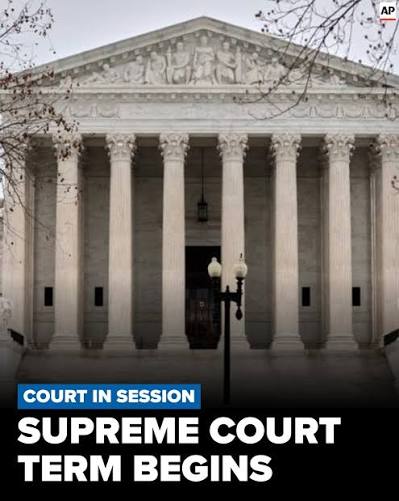
These issues will likely reach the federal courts, and some cases may ultimately be heard by the Supreme Court.
6.2 Courts as Referees
Federal courts are poised to become the primary battleground where the scope of federal versus state authority will be defined. Past precedents favor states in certain areas, particularly immigration cooperation. However, the unprecedented nature of the voter data demands introduces new legal complexities.
As cases progress, courts will interpret statutory limits, constitutional rights, and the delicate balance of federal-state power.
Conclusion: A Defining Moment for Federal-State Relations
The DOJ’s recent moves represent a profound shift in how the federal government asserts its authority. By launching sweeping actions on voter data, immigration cooperation, civil rights policy, and regulatory enforcement, the department has set off what may become a defining era in federal-state relations.
States are responding with litigation, legislation, and public messaging aimed at preserving autonomy and constitutional boundaries. The conflict is far from over — and its outcomes will shape the country’s legal and political landscape for years to come.
America now enters a period where the battle lines between state sovereignty and federal power are clearer — and sharper — than they have been in decades.
How useful was this post?
Click on a star to rate it!
Average rating 0 / 5. Vote count: 0
No votes so far! Be the first to rate this post.
About the Author

usa5911.com
Administrator
Hi, I’m Gurdeep Singh, a professional content writer from India with over 3 years of experience in the field. I specialize in covering U.S. politics, delivering timely and engaging content tailored specifically for an American audience. Along with my dedicated team, we track and report on all the latest political trends, news, and in-depth analysis shaping the United States today. Our goal is to provide clear, factual, and compelling content that keeps readers informed and engaged with the ever-changing political landscape.