DHS Power Move: Security Rules Expand, Rights Groups Alarmed
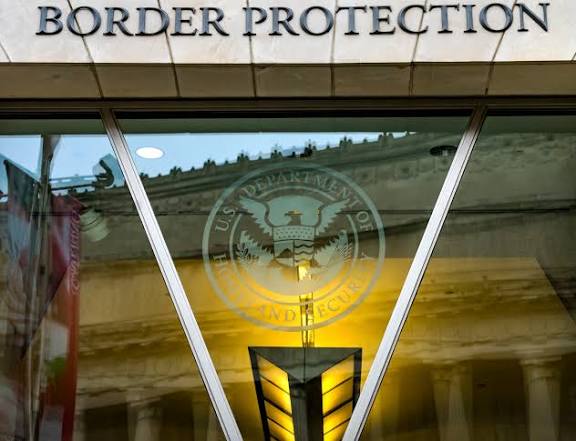
DHS policy has expanded the categories of records collected to include “social media handles, aliases, related identifiable information.” Today we will discuss about DHS Power Move: Security Rules Expand, Rights Groups Alarmed
DHS Power Move: Security Rules Expand, Rights Groups Alarmed
The United States Department of Homeland Security (DHS) has initiated one of its most sweeping regulatory changes in recent years, expanding its authority beyond federal buildings into surrounding public spaces. The move has ignited intense debate across the political spectrum, with civil-rights advocates warning of serious implications for free speech, protest rights, and government accountability. While DHS argues the new measures are necessary to address rising threats, critics describe the shift as a power grab that could fundamentally reshape civic space in America.
The issue sits at the intersection of national security, public protest, and constitutional freedoms — and its consequences are far-reaching.
A Major Regulatory Shift: What DHS Just Did
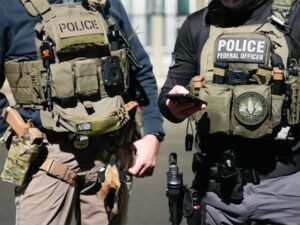
For decades, federal rules governing conduct on government property applied strictly “in or on” federal buildings and land. The boundaries were clear: federal protective officers could enforce rules only within the physical limits of the property managed by the government.
The newly expanded DHS rules change that entirely.
These updated regulations grant the Federal Protective Service (FPS), a division of DHS, the power to enforce federal rules not only on federal property but also in adjacent public areas if conduct is considered to “affect, threaten, or endanger” federal operations or personnel. That includes sidewalks, streets, parking lots, plazas, and other shared public spaces that were previously outside federal jurisdiction.
Additionally, the rules broaden what counts as federal property. It now includes vehicles, equipment, and movable assets. That means someone interacting with a parked federal vehicle — even unintentionally — could fall under the expanded regulations.
The list of prohibited activities has also widened. It includes:
Obstructing entrances, exits, or operations
Making loud or unusual noise
Interfering with government workers or visitors
Using drones near federal buildings
Wearing disguises or masks during any illegal act
Distributing materials that could be interpreted as obstructive
Filming, recording, or photographing in restricted ways
Tampering with digital systems or equipment
Penalties for violations include fines up to several thousand dollars and the possibility of jail time.
The most controversial change is the rule’s extra-territorial reach, allowing FPS officers to arrest or penalize individuals off federal property based on interpretations of “impact” or “interference.” That language, say critics, is vague enough to be applied broadly — and abusively.
Why Now? DHS Explains the Acceleration
Originally, DHS planned to introduce the new rules in early 2026. However, the department accelerated the implementation by nearly two months, citing an increasing number of disturbances, violent incidents, and security threats near federal buildings.
According to DHS statements, recent years have seen:
Larger and more aggressive protests around immigration detention centers
Multiple threats to federal employees
Use of drones around sensitive facilities
Destruction of government property
Physical attacks or attempted attacks on federal officers
Crowds obstructing operations or access routes
DHS argues that current enforcement tools were outdated and insufficient for responding to modern threats. The department claims the new rules allow officers to intervene earlier, preventing confrontations before they escalate.
Their message is clear: security must come first.
But opponents argue that security should not come at the cost of constitutional rights.
Civil-Rights and Advocacy Groups Raise Red Flags
Immediately after the rules were announced, civil-rights organizations, immigrant-rights advocates, and free-speech groups issued strong warnings. Many believe the expanded authority threatens fundamental American freedoms.
Here are their main concerns:
1. First Amendment Rights Are at Risk
Public sidewalks and streets have historically been treated as “traditional public forums” — places where free expression is at its strongest. People routinely protest, leaflet, chant, record, or demonstrate near federal buildings precisely because they want to be seen and heard by government institutions.
The new rules disrupt that long-standing tradition.
If someone participates in a peaceful protest on a public sidewalk but is accused of “interfering” or making “excessive noise,” they could face federal penalties. Advocacy groups fear the vagueness of the rules will result in arbitrary enforcement — allowing officers to target speech or gatherings they find inconvenient or politically unfavorable.
Many observers warn that the broad language effectively discourages peaceful protest, even when entirely legal.
2. Vague Terms Enable Selective Enforcement
The new rule repeatedly uses broad, undefined terms such as:
“Affecting federal property”
“Threatening operations”
“Interfering with duties”
“Obstructing passage”
“Loud or unusual noise”
What counts as “unusual noise”? Does chanting qualify? What if a protest draws a large crowd and slows down building access — is that now a federal offense?
Civil-rights groups argue that such vague wording grants officers too much personal discretion. Vague laws, they say, are inherently dangerous because they can be enforced inconsistently — or used to suppress groups the government disagrees with.
3. Filming and Oversight Are Collateral Damage
One of the most controversial aspects of the new rule is what it means for journalists, legal observers, and community monitors.
Recording law enforcement in public is protected by the First Amendment. Yet the rules now limit photography and videography in ways that critics say could inhibit documentation of federal actions. If an officer claims filming is “interfering,” the person behind the camera could be charged.
This raises major concerns because:
Documenting protests helps expose abuse or misconduct
Journalists depend on filming public actions of government agents
Community monitors track treatment of immigrants and detainees
Restricting recording reduces transparency in sensitive operations
In recent years, journalists and legal observers covering protests have already experienced detentions, physical force, and equipment seizure by federal agents. Many fear that the new rules make such encounters more likely — and more legally justified.
4. Immigrant-Rights Groups Are Especially Alarmed
While the rules apply broadly, immigrant-rights advocates say the expansion will disproportionately impact communities they serve. Many demonstrations occur near immigration courts, ICE detention centers, and processing hubs — all federal property.
Under the new rules:
Standing outside a detention center and chanting could be criminalized
Volunteers who film or monitor enforcement may risk penalties
People distributing legal rights information could be considered obstructive
Family members protesting deportation orders could face fines
Immigrants unsure of the law may avoid federal sites entirely
Given ongoing complaints of excessive force, misuse of authority, and lack of accountability inside immigration agencies, the fear is that fewer people will feel safe advocating for justice.
5. Expanded Powers + Reduced Oversight = Troubling Combination
Another layer to the concern is that several DHS oversight functions have recently been scaled back or reorganized. Critics argue that weakening internal accountability while expanding enforcement powers is a dangerous combination.
Some former officials and analysts worry that abuses or misconduct may become harder to investigate as transparency decreases.
Real-World Consequences: How the Rules Could Play Out
To understand the significance of the new rules, it helps to picture common scenarios.
Scenario 1: A Peaceful Protest Turns Criminal
A group of 30 activists gathers on a public sidewalk outside a federal building, holding signs and chanting. They do not block entrances, and their gathering is peaceful.
Under the new rules, an officer could argue that:
The chanting is “unusual noise”
The presence of bodies “affects access”
Filming officers “interferes” with duties
Even if no crime occurs, officers now have grounds to issue fines or make arrests.
Scenario 2: A Journalist Records a Federal Action
A journalist takes video of officers detaining someone outside a federal courthouse. Officers demand that recording stop.
If the journalist refuses, an officer could claim:
The filming is obstructive
It threatens officer safety
It interferes with duties
The journalist could be charged under the expanded rules.
Scenario 3: Volunteers Observe ICE Operations
Community observers who track immigration enforcement show up near a detention center to monitor treatment of detainees.
Under the new rules:
Standing near federal vehicles could trigger enforcement
Observers could be accused of interfering
Photography or note-taking could be penalized
These observers play a crucial role in exposing abuses — and now they may be sidelined.
Scenario 4: A Mask or Face Covering Leads to Penalties
Someone wearing a mask during cold weather or due to health concerns participates in a protest.
If any “violation” occurs during the event, the mask could be treated as “concealment” and grounds for harsher penalties.
The Larger Debate: Security vs. Civil Liberties
At the heart of the controversy is a familiar but difficult question:
How much freedom should Americans give up for security?
DHS argues that recent years have shown violent individuals exploiting protests to damage property or harm officers. They cite the need for stronger tools to stop threats before escalation.
Civil-rights advocates counter that:
Security concerns do not justify blanket restrictions
Vague rules invite abuse
Public space is essential for activism and dissent
Oversight must accompany increased enforcement
The Constitution does not bend whenever the government feels threatened
Both sides agree that safety is important — but they sharply disagree on where the line should be drawn.
Political Reactions: Pressure Builds on DHS
Some lawmakers have demanded greater transparency from DHS regarding the rules. They argue that:
The language is too broad
The acceleration bypassed public debate
The rules could target political opponents
Congress should review DHS’s regulatory powers
Others support the new measures, emphasizing the rising violence around government facilities and the need for strong deterrents.
The divide reflects broader national tensions over immigration, federal authority, and protest movements.
Looking Ahead: What to Expect
In the months ahead, several developments are likely:
1. Legal Challenges
Civil-rights organizations and advocacy groups are expected to file lawsuits challenging the constitutionality of the rules. Courts will have to weigh security concerns against First Amendment protections.
2. Congressional Oversight
Some lawmakers have pushed for hearings examining how the rules will be enforced and what safeguards exist against abuse.
3. Changing Protest Tactics
Activists may avoid federal buildings, relocate demonstrations, or use digital forms of protest to reduce risk.
4. Heightened Tension at Federal Sites
More confrontations could occur as officers enforce the expanded rules — especially at immigration enforcement buildings.
5. Potential Future Expansion
If these rules remain in place unchallenged, similar expansions could occur at other federal sites.
Conclusion: A Pivotal Moment for American Civil Liberties
The DHS power expansion represents a critical turning point for civil liberties in the United States. While DHS insists the new rules are necessary for public safety, the broad language and extra-territorial enforcement raise profound concerns about free speech, dissent, and government accountability.
Protest rights, journalism, immigrant advocacy, public recording, and community oversight — all fundamental components of a healthy democracy — could be significantly affected.
Whether the new rules remain, are amended, or are struck down will depend on public pressure, political will, and judicial review. But for now, one thing is clear:
America is entering a major debate over who controls public spaces — the people, or the government.
How useful was this post?
Click on a star to rate it!
Average rating 0 / 5. Vote count: 0
No votes so far! Be the first to rate this post.
About the Author

usa5911.com
Administrator
Hi, I’m Gurdeep Singh, a professional content writer from India with over 3 years of experience in the field. I specialize in covering U.S. politics, delivering timely and engaging content tailored specifically for an American audience. Along with my dedicated team, we track and report on all the latest political trends, news, and in-depth analysis shaping the United States today. Our goal is to provide clear, factual, and compelling content that keeps readers informed and engaged with the ever-changing political landscape.