Congress Gridlock Deepens: Bills Delayed, Parties Fight, Voters Angry

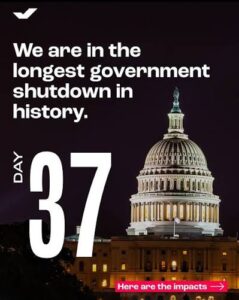
US shutdown drama nearing its end? Senate approves bill to reopen government after six weeks of tense political standoff. Today we will discuss about Congress Gridlock Deepens: Bills Delayed, Parties Fight, Voters Angry
Congress Gridlock Deepens: Bills Delayed, Parties Fight, Voters Angry
Congressional gridlock has become one of the defining features of modern American politics, and in recent months it has intensified to a degree that many analysts describe as unprecedented. Bills are stalled, committees are paralyzed, deadlines are missed, and lawmakers appear more focused on political point-scoring than governing. For millions of Americans, the result is growing frustration, rising distrust, and an overwhelming sense that Washington has stopped working for them.
The deepening crisis is about more than just partisan fights — it is a product of structural flaws, political incentives, ideological hardening, and a Congress that now behaves more like a battlefield than a legislative body. As this gridlock worsens, the consequences are spilling into homes, businesses, schools, and public services across the nation.
This article takes a full look at the causes, the escalation, the recent flashpoints, and the mood of the public — and explains why voters are angrier than ever before.
I. A System at a Standstill
The United States Congress has one core constitutional responsibility: pass laws and fund the government. Yet, repeated budget delays, stalled negotiations, and partisan showdowns have pushed the legislature into near-permanent dysfunction.
Instead of cooperation, the chambers are caught in cycles of:
Failed votes
Cloture battles
Committee deadlocks
Shutdown threats
Partisan accusations
Strategic walkouts and boycotts
Leadership challenges
The result: major bills that should normally move forward — on healthcare, immigration, national security, veterans’ services, and infrastructure — never leave the floor, or never make it out of committee.
Legislation is piling up like never before. Thousands of proposals remain untouched, unvoted, or purposely blocked to avoid giving the opposing party a victory.
In short: Congress is frozen.
II. The Latest Flashpoint: Funding Bills Delayed Again
The most visible sign of deepening gridlock is the repeated failure to pass federal budget bills on time. Instead of normal appropriations, Congress has lurched from one temporary measure to another, often passing stopgap bills at the last minute — or failing to pass them at all.
Why funding keeps getting delayed
Parties cannot agree on spending priorities
Republicans and Democrats have polar opposite views on taxes, defense spending, healthcare subsidies, social programs, and administrative funding.Leaders are under pressure from extreme factions
Hardliners in both parties punish compromise. Speaker and Senate leadership constantly face rebellion from within.Elections distort negotiation
In election years — and even off-years — lawmakers avoid deals that could upset their base.Shutdown threats have become a bargaining tool
Congress has normalized using the threat of government shutdowns as leverage in negotiations.
As a result, funding deadlines now trigger last-minute chaos instead of routine governance.
III. Procedural Barriers Make Everything Worse
Even when there is some agreement, Congress faces procedural obstacles that allow a small number of lawmakers to halt progress.
Key barriers contributing to gridlock
Filibuster rules in the Senate, requiring 60 votes to advance most bills
Committee gatekeeping, where chairs can stop hearings or votes
Amendment battles, where one controversial add-on can sink an entire bill
Veto points, which give minorities extraordinary power
Cloture motions, used strategically to kill time and block movement
Together, these procedural tools transform Congress into a maze where bills die long before reaching the President’s desk.
IV. Partisanship at an All-Time High
The modern Congress is more polarized than at any point since Reconstruction. Lawmakers increasingly:
Vote strictly along party lines
Avoid cross-party relationships
Prioritize ideology over compromise
Attack opponents through media and social platforms
Treat legislative losses as personal or party humiliation
The old norm — where both parties negotiated behind closed doors — has eroded. Many lawmakers now fear backlash from their own supporters if they show even a hint of bipartisanship.
Why polarization has intensified
Media echo chambers amplify extreme voices
Primary elections punish moderates
Special interests reward rigid positions
Social media encourages public confrontation over private negotiation
Nationalized politics make local compromise seem risky
The result: the political center has collapsed, leaving no space for pragmatic dealmaking.
V. Consequences for Ordinary Americans
Gridlock is more than political drama — it carries real-world consequences. Every delayed bill means services slowed, programs paused, uncertainty created.
1. Government services disrupted
When Congress fails to pass funding, government agencies cannot operate normally. This means:
Delays in passport processing
Disruptions to food assistance programs
Pauses in small-business loans
Slowed federal hiring
Reduced operations at national parks
Delayed tax refunds
Even temporary shutdowns or funding gaps create massive backlogs and confusion.
2. Millions of federal workers affected
Many workers face:
Furloughs
Pay delays
Job uncertainty
Cutbacks in agency budgets
These disruptions ripple into communities and local economies.
3. Businesses lose time and money
Companies that rely on federal contracts, permits, regulatory approvals, or data often face:
Delayed projects
Budget instability
Interrupted supply chains
Cancelled programs
Economic ripple effects can last months beyond the gridlock itself.
4. National security vulnerabilities increase
Military budgets, intelligence operations, cybersecurity updates, and defense contract renewals all require timely funding. When Congress stalls, readiness suffers.
5. Americans lose trust in democracy
Surveys consistently show declining confidence in:
Congress
Elected representatives
Political parties
Government institutions
Voters increasingly believe lawmakers prioritize party success over national interest.
VI. Why Voters Are Angry
American voters are not just frustrated — they are furious. The widening gap between political battles in Washington and everyday struggles at home fuels a sense that Congress is out of touch.
Major sources of voter anger
Congressional salaries remain unchanged while services shut down
Many ask why lawmakers continue to get paid during shutdowns while millions of federal workers go unpaid.Politicians spend more time blaming than fixing
Press conferences and social media fights replace substantive action.Public needs are ignored
Issues like inflation, healthcare costs, housing shortages, and border management require legislative solutions — but gridlock blocks progress.Ego and power struggles overshadow policy
Leadership battles and infighting dominate headlines.Promises during campaigns rarely translate into action
Voters feel deceived or neglected when campaign commitments collapse in Congress.Both parties appear more focused on winning than governing
For many Americans, gridlock represents a system that prioritizes political victory over public good.
VII. Deeper Structural Causes Behind the Paralysis
Gridlock is not just a product of personalities — it is built into the system.
1. Bicameralism makes compromise difficult
Two chambers must pass identical versions of bills — doubling the chances of disagreement.
2. The separation of powers increases conflict
The executive and legislative branches often clash over authority, priorities, and policy.
3. State-based representation skews incentives
Senators from small states have disproportionate power, affecting national policy.
4. Gerrymandering creates “safe districts”
Lawmakers from districts that overwhelmingly support one party fear challenges from more extreme candidates in their own primaries — not from general election opponents.
5. Lobbyists and interest groups influence lawmaking
Pressure from powerful groups discourages compromise and rewards obstruction.
VIII. A Cycle That Feeds Itself
The more Congress fails, the more voters lose trust.
The more voters lose trust, the more extreme candidates emerge.
The more extremists enter Congress, the more gridlock deepens.
This becomes a self-reinforcing loop — a cycle difficult to escape without major institutional and cultural change.
IX. Possible Paths Out of Gridlock
While difficult, several reforms could help restore functionality.
1. Reforming the filibuster
Making it harder to block legislation through procedural barriers would allow more bills to reach a vote.
2. Encouraging bipartisan committees
Joint task forces could help depoliticize major issues like immigration or healthcare.
3. Automatic continuing resolutions
This would prevent shutdowns even if Congress fails to pass new budgets.
4. Strengthening ethics and transparency rules
Reducing special-interest influence can create space for genuine negotiation.
5. Primary reform
Open primaries or ranked-choice systems could reduce the power of hardline factions.
6. Civic engagement and voter pressure
When voters demand compromise and punish obstruction, lawmakers respond.
X. Conclusion: A Congress in Crisis — and a Nation Losing Patience
Congress is locked in a cycle of conflict, delay, and dysfunction. Bills are stalled, negotiations break down, and even fundamental responsibilities — like funding the government — now trigger fights instead of collaboration.
The result is a government that feels paralyzed and a public that feels betrayed.
As gridlock deepens, the stakes grow higher. Essential services are delayed, national challenges go unaddressed, and trust in democracy erodes. Voters across party lines are demanding action, accountability, and cooperation — and their anger reflects a nation tired of political theater.
Whether Congress can break free from this paralysis remains uncertain. But one thing is clear: without meaningful change, gridlock will continue to define American politics — and the country will continue to bear the cost.
How useful was this post?
Click on a star to rate it!
Average rating 0 / 5. Vote count: 0
No votes so far! Be the first to rate this post.
About the Author

usa5911.com
Administrator
Hi, I’m Gurdeep Singh, a professional content writer from India with over 3 years of experience in the field. I specialize in covering U.S. politics, delivering timely and engaging content tailored specifically for an American audience. Along with my dedicated team, we track and report on all the latest political trends, news, and in-depth analysis shaping the United States today. Our goal is to provide clear, factual, and compelling content that keeps readers informed and engaged with the ever-changing political landscape.