Capitol Chaos Rising: Governors Clash, Congress Freezes, Public Shocked

“The only embarrassment here is you,” GOP Rep. Mike Lawler told Democratic leader Hakeem Jeffries. Today we will discuss about Capitol Chaos Rising: Governors Clash, Congress Freezes, Public Shocked
Capitol Chaos Rising: Governors Clash, Congress Freezes, Public Shocked
The year 2025 has pushed the United States into one of its most politically volatile eras since the early 1970s. What began as routine disagreements in Washington quickly spiraled into dramatic shutdowns, constitutional confrontations, unprecedented federal interventions, and intense state-federal clashes. The mood across the nation is tense, uncertain, and restless. Many Americans feel as though the institutions they once trusted are cracking under pressure.
The phrase “Capitol Chaos” has become shorthand for a broader breakdown: a Congress unable to fund the government, a president taking unprecedented steps to federalize local law enforcement, governors openly challenging Washington, and citizens struggling through real-world consequences of political gridlock.
The chaos is not a single event—it is a chain reaction. One crisis has triggered another, leaving the nation’s political center shaken and millions of citizens questioning what comes next.
II. Congress Freezes — The Shutdown That Paralyzed Washington
The most visible symbol of dysfunction has been the historic 43-day federal government shutdown, the longest in U.S. history. What should have been a standard budget agreement turned into a national spectacle of paralysis.
How the Shutdown Happened
Congress failed to pass a budget or continuing resolution.
Federal agencies were forced to close or operate with limited staff.
Nearly a million federal workers were furloughed.
Millions more worked without pay, unsure when their wages would resume.
The shutdown didn’t just inconvenience government employees—it shook the entire national economy. Air travel slowed due to staffing shortages. Food assistance programs faced interruptions. Museums, parks, research centers, and public facilities closed. Small businesses reliant on federal contracts struggled to survive.
Public Reaction
Across the country, Americans were outraged. Families missed paychecks, travelers were stranded, veterans experienced delays in benefits, and communities faced gaps in essential services. For many citizens, the shutdown became a symbol of an increasingly dysfunctional democracy unable to meet basic expectations.
Even after the shutdown eventually ended, the political damage lingered. Public confidence in Congress reached near-record lows. Citizens expressed frustration not just at one party or politician, but at the entire system.
III. Federal Takeover of D.C. Policing — A Flashpoint for Democracy
While the shutdown shook the nation, Washington, D.C., became the center of an even more controversial development: the federal takeover of the D.C. Metropolitan Police Department.
Invoking emergency authority, the president ordered a federalization of local police and deployed National Guard troops into the nation’s capital. This move stunned residents and political experts alike, marking the first time in modern U.S. history that local policing in the capital was placed directly under federal control.
The Stated Reason
The administration claimed it was responding to a surge in crime. However, local leaders argued that crime levels were not at crisis levels and that the takeover was politically motivated rather than driven by public safety concerns.
Local Reaction
The response from D.C. residents was immediate and intense:
Protests broke out in several districts.
Civic groups warned of threats to civil liberties.
Residents criticized what they saw as a militarization of their neighborhoods.
Local leaders called the move an attack on home rule and democratic autonomy.
Many described the moment as surreal—federal agents, armored vehicles, and uniformed troops patrolling streets usually overseen by local officers accountable to local voters.
Legal and Political Fallout
Lawsuits were filed. Members of Congress introduced resolutions demanding the restoration of local control. Civil-rights groups raised alarms about racial profiling and excessive use of force. The courts required parts of the takeover to be rolled back, though the incident left a lasting imprint on national discourse.
The message was clear: the federal government was willing to override local authority, even in the nation’s capital. For millions of Americans, this became the clearest example of the “capitol chaos” gripping Washington.
IV. Governors Enter the Battlefield — State vs. Federal Conflict Intensifies
What happened in Washington did not stay in Washington. Governors across the country watched the federal police takeover with alarm, viewing it as a dangerous precedent that could one day be used against their own states.
Many state leaders began speaking out more boldly than ever before. Rather than quietly disagreeing with the administration, governors publicly challenged federal decisions—on policing, immigration, election authority, and funding.
Major Points of Tension
Federal Overreach — Governors criticized what they viewed as an aggressive expansion of executive power.
States’ Rights — State legislatures passed measures reaffirming local autonomy.
Budget Fallout — The federal shutdown forced states to scramble to maintain essential services.
Erosion of Democratic Norms — Many governors warned that the chaos in Washington could destabilize their own governments.
The conflict grew so intense that several analysts described 2025 as the closest the U.S. has come in decades to a modernized constitutional crisis.
V. The Public Responds — Shock, Anger, Fear, and Mobilization
No crisis in modern U.S. history has hit the public from so many angles at once. As Washington became more chaotic, Americans found themselves dealing with real-life consequences.
1. Financial Stress
Many households experienced delayed paychecks, suspended benefits, or disruptions in services. Federal workers were forced to take out loans, borrow from relatives, or rely on food banks.
2. Civic Anxiety
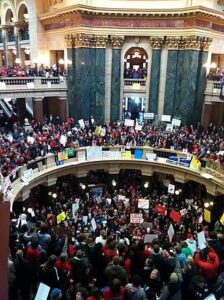
Residents of Washington, D.C., reported increased anxiety and fear as heavily armed personnel patrolled their neighborhoods. Protests erupted across the city, with slogans demanding the restoration of democratic principles.
3. Loss of Faith in Institutions
For many Americans, the back-to-back crises shattered assumptions that the nation’s political institutions were stable and reliable. Confidence in Congress, courts, and federal agencies dipped sharply.
4. A Rise in Civic Activism
On the other hand, the chaos ignited a surge of activism. Citizens organized marches, petitioned lawmakers, and created local support networks for furloughed workers. Young people in particular showed a renewed interest in political engagement.
VI. The Bigger Picture — What This Chaos Means for the Future
The events of 2025 reflect deeper structural issues in American governance. Beneath the headlines lie fundamental questions with long-term implications.
1. Can Federal Power Expand Without Limit?
The federalization of D.C. law enforcement triggered national debate about executive power. If the federal government can override local autonomy in the capital, what prevents it from doing so elsewhere?
2. Are Shutdowns Becoming a Political Weapon?
Shutdowns were once rare. Now they appear to be a recurring tactic in political negotiations. This raises a troubling question:
Will future governments routinely halt operations to gain leverage?
3. Is Public Trust Recoverable?
Trust in democratic institutions takes years to build but can evaporate in moments of crisis. The question now is whether that trust can be rebuilt—or whether cynicism will become the new civic normal.
4. Could the United States Be Entering an Era of Permanent Political Conflict?
The widening gap between federal and state authority, combined with voter anger and institutional gridlock, suggests the U.S. may be heading toward a long period of instability.
VII. Warning Signs and Voices of Resistance
Despite the chaos, countless voices—scholars, governors, activists, former officials—are urging restraint, cooperation, and reform. They argue that without serious changes in how the federal government operates, the nation risks a deeper breakdown.
Key recommendations from experts include:
Protecting local autonomy through stronger legal safeguards.
Reforming the budget process to reduce the risk of shutdowns.
Increasing oversight on executive power.
Expanding community input into policing decisions.
Encouraging bipartisan civic engagement at the local level.
The message is consistent: America’s democracy must be strengthened before the chaos becomes irreversible.
VIII. Conclusion — A Crossroads for the Capital and the Country
“Capitol Chaos Rising” is more than a headline. It is a description of a nation grappling with leadership struggles, eroding norms, and high-stakes power battles.
Washington is at a crossroads:
One path leads toward recovery—reform, cooperation, and renewed trust.
The other leads toward deeper conflict, polarization, and institutional breakdown.
The choices made by lawmakers, governors, courts, and citizens in the coming months will determine which path the nation takes.
For now, the chaos continues. But through it emerges a powerful realization: democracy is not self-sustaining. It must be protected, defended, and constantly renewed—especially in moments like these.
How useful was this post?
Click on a star to rate it!
Average rating 0 / 5. Vote count: 0
No votes so far! Be the first to rate this post.
About the Author

usa5911.com
Administrator
Hi, I’m Gurdeep Singh, a professional content writer from India with over 3 years of experience in the field. I specialize in covering U.S. politics, delivering timely and engaging content tailored specifically for an American audience. Along with my dedicated team, we track and report on all the latest political trends, news, and in-depth analysis shaping the United States today. Our goal is to provide clear, factual, and compelling content that keeps readers informed and engaged with the ever-changing political landscape.