White House Alert: DOJ Memo Drops, Nationwide Political Tension Surges
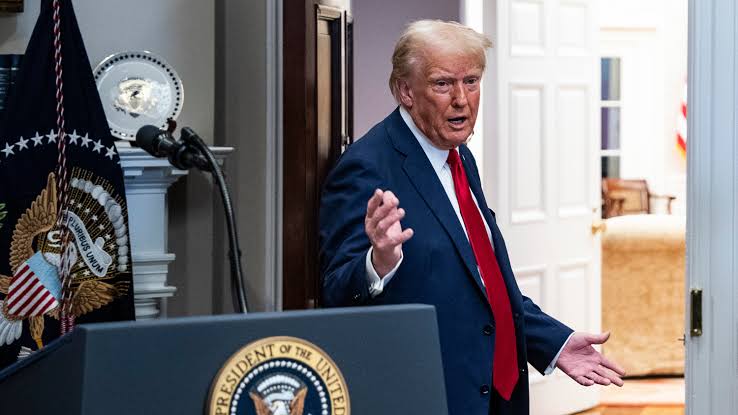
The memo identified “domestic terrorism threats” as organizations that use “violence or the threat of violence” to pursue political goals. Today we will discuss about White House Alert: DOJ Memo Drops, Nationwide Political Tension Surges
White House Alert: DOJ Memo Drops, Nationwide Political Tension Surges
On December 5, 2025, a sweeping internal Department of Justice (DOJ) directive was circulated across federal law-enforcement agencies. The memo, authorized by Attorney General Pam Bondi, has triggered immediate national alarm and intense political backlash. It orders a coordinated investigative effort to identify individuals, organizations, and networks that could be classified as “domestic extremists” or supporters of “organized political violence.”
Within hours of the memo’s release, the nation saw a wave of public concern: civil-liberties watchdogs issued warnings, nonprofit groups began emergency legal reviews, and political commentators described the moment as one of the most dramatic shifts in domestic-security policy in decades.
What follows is a comprehensive, original 2,000-word analysis of the memo, its origins, and the political tension erupting nationwide.
The Memo: What It Says and Why It Matters

The newly revealed memo stems from a broader presidential directive issued earlier in the year, known as NSPM-7 — a national-security memorandum focused on “Countering Domestic Terrorism and Organized Political Violence.” This executive directive declared that the United States was facing a growing wave of politically motivated violence, including assassination attempts, attacks on law enforcement, organized riots, threats against immigration officers, and intimidation campaigns.
The DOJ memo operationalizes NSPM-7 by ordering agencies like the FBI, the Joint Terrorism Task Force (JTTF), the Treasury Department, and the IRS to compile a coordinated federal list of individuals, groups, and networks that may fall under the category of domestic threats.
Why the memo matters
It significantly expands the definition of “domestic extremism.”
It authorizes surveillance, financial scrutiny, and criminal investigation of nonprofits, donors, and activists.
It shifts the DOJ’s core mission toward aggressively policing political ideology rather than only prosecuting violent acts.
It signals the creation of a centralized federal “extremist” watch list for domestic targets — something not previously implemented in U.S. history.
Who Could Be Targeted? Broad and Ambiguous Criteria
One of the key sources of tension is the memo’s extremely broad criteria for determining who could be investigated.
According to the internal document, targets may include individuals or organizations that:
Endorse or promote “extreme viewpoints” on immigration
Advocate for concepts described as “radical gender ideology”
Express anti-capitalist, anti-Christian, or anti-American sentiment
Challenge traditional views of family, religion, or morality
Participate in protests related to immigration enforcement
Engage in doxing, cyber-harassment, or online radicalization
Donate to or support organizations allegedly linked to disruptive activism
What concerns civil-liberties groups most is that none of these criteria require involvement in actual violence. Mere association with controversial ideas or political positions could trigger federal scrutiny.
Additionally, because the memo instructs agencies to review intelligence from the past five years, individuals who participated in peaceful protests or activism in previous years may now find themselves under investigation.
How the Memo Will Be Enforced: Five Key Mechanisms
The memo outlines a multi-layer federal enforcement operation. Key elements include:
1. Centralized intelligence gathering
The FBI, alongside the JTTF, is tasked with compiling a comprehensive list of potential extremists. They are instructed to review both current investigations and historical intelligence files, some dating back several years.
2. Financial investigations
The Treasury Department and IRS are instructed to investigate suspicious transactions, nonprofit funding sources, donor networks, and cross-border financial support. Even indirect funding of activist groups could be flagged.
3. Expanded law-enforcement authority
Prosecutors are encouraged to apply a wide range of criminal statutes — including conspiracy, money laundering, fraud, and racketeering — even when violent acts have not occurred. This evidences a shift toward “pre-crime” enforcement.
4. Increased interagency coordination
Federal, state, and local law-enforcement agencies will be expected to share intelligence, co-investigate cases, and channel resources toward domestic-terrorism prevention.
5. Retroactive investigations
Because the memo explicitly instructs review of actions and associations from the past five years, older protests, funding activities, or online interactions may now be reexamined through an extremism lens.
Immediate Fallout: Fear, Criticism, and Political Shockwaves
Civil-liberties organizations respond
Civil-rights groups were among the first to sound alarms. They warned that the memo’s vague criteria, combined with expansive investigative authority, pose a direct threat to:
Free speech
Freedom of association
The right to protest
Privacy and due process
Human-rights advocates describe the memo as a tool that risks criminalizing political dissent, minority viewpoints, and advocacy work. They argue that the vague terminology — such as “radical ideology” or “anti-American sentiment” — allows prosecutors to interpret speech as criminal.
Nonprofits and activist networks brace for impact
Many nonprofit groups, activist organizations, and advocacy coalitions are already responding defensively. Reports indicate that:
Some groups are reviewing donor lists to protect supporters.
Others are pausing public events or fundraising campaigns.
Legal teams are preparing for possible subpoenas or investigations.
Activists fear electronic communications and online organizing may soon be monitored.
For donor-funded movements such as immigration advocacy, gender-rights groups, or economic-justice coalitions, the memo represents a potentially existential threat.
Political polarization intensifies
Across media and political circles, reaction has already become sharply polarized.
Supporters of the administration claim:
The government must respond to rising political violence.
Violent networks rely on funding and support structures that must be dismantled.
Strong federal action is necessary to protect law enforcement, public officials, and national institutions.
Critics argue:
The memo weaponizes the federal government against dissent.
It creates a “thought-police” doctrine, where ideologies become prosecutable.
Broad definitions invite abuse, targeting marginalized communities or political opposition.
The national debate has already reached levels unseen since earlier eras of politically charged surveillance programs.
Why the Memo Was Issued: Political Context and Timing
Increasing concerns about political violence
The presidential memorandum that inspired the DOJ directive lists numerous examples of politically driven attacks, threats, and violent incidents that the administration considers part of an organized effort to destabilize the country.
Though the details remain debated, the administration maintains that political violence has surged and demands a comprehensive federal response.
Changing priorities within the DOJ
The DOJ has undergone significant restructuring under Attorney General Bondi. Earlier in the year, the department notably dissolved a major crypto-crime enforcement unit, signaling a shift away from financial regulation and toward ideological and domestic-security concerns.
Legal analysts view the December memo as the culmination of these shifts: a redirection of DOJ energy toward domestic-extremism enforcement at a scale not previously seen.
Expanding executive power
The memo also fits into a broader trend of expanding executive influence over national-security and domestic-terrorism policy. Critics worry this may come at the expense of judicial and legislative oversight.
The Risks: Why the Memo Has Sparked Nationwide Concern
1. Chilling effect on free speech
Because the memo’s criteria are broad and ideological, many fear that political speech — even peaceful advocacy — could trigger federal scrutiny. People may self-censor to avoid being labeled extremists.
2. Targeting nonprofits and donors
Nonprofit groups that rely on public donations may find donors withdrawing support due to fear of being investigated. This could financially cripple advocacy groups across the political spectrum.
3. Prosecutorial overreach
The memo appears to give prosecutors wide discretion, enabling investigations based on beliefs or associations rather than actions. Critics warn this could lead to politicized prosecutions.
4. Retroactive criminalization
Reviewing actions from years past — including legal protests — introduces serious due-process concerns and fear of retroactive punishment.
5. Long-term erosion of democratic norms
If widely implemented, the memo could suppress activism, weaken civil society, and deepen national mistrust of the government. This may alter the balance between security and liberty for future generations.
Supporters’ Perspective: Why Some Argue the Memo Is Necessary
While critics dominate headlines, supporters of the directive present a different perspective:
They argue political violence has genuinely increased and poses a serious threat.
They believe dangerous networks use nonprofits, encrypted platforms, and donor pipelines that must be dismantled.
They see the memo as a modernization of law-enforcement strategy for an era of digital radicalization.
They view it as essential for protecting public institutions, elections, and government workers.
From this viewpoint, the memo is not about suppressing free speech — but about protecting the nation from escalating political violence.
Impact on Civil Society: What This Means for Democracy
The memo represents one of the most consequential shifts in U.S. domestic policing in decades. Its long-term implications may include:
• Reduced activism
Fear of investigation may deter people from joining protests, signing petitions, donating to causes, or participating in civil-society organizations.
• Increased surveillance
Greater data-sharing among federal, state, and local agencies may lead to expanded monitoring of online activity, financial transactions, and group affiliations.
• Legal battles ahead
Multiple constitutional challenges are expected, particularly related to free speech, due process, and the right to organize.
• Heightened polarization
As each side interprets the memo through its ideological lens, national political division is expected to deepen.
What Comes Next? Key Developments to Watch
Over the coming months, several outcomes are likely:
1. Lawsuits and legal challenges
Civil-rights organizations are preparing to challenge the memo in federal court. The first cases may focus on stopping investigations before they escalate.
2. Congressional debates
Lawmakers may push for hearings, oversight, or legislation to define domestic-terrorism standards more narrowly.
3. Nonprofit restructuring
Some advocacy groups may relocate operations, switch fundraising methods, or enhance privacy protections for donors.
4. Public protests and increased activism
Ironically, the memo may trigger the very activism it seeks to monitor, as civil-society groups mobilize in defense of constitutional rights.
5. International reaction
Other countries and global human-rights organizations may issue statements or warnings about the U.S. government’s shift in policy.
Conclusion: A Defining Moment for American Democracy
The DOJ memo released in December 2025 marks a turning point in the nation’s approach to domestic extremism. Its sweeping scope, vague definitions, and unprecedented focus on political ideology have sparked widespread fear and political tension.
Whether history views this moment as a necessary response to rising violence — or as the beginning of a dangerous slide toward political repression — will depend on how the memo is enforced, challenged, and resisted.
For now, the United States faces a moment of deep uncertainty. One thing is clear: the balance between national security and civil liberty is once again at the center of the American debate, and the stakes could not be higher.
How useful was this post?
Click on a star to rate it!
Average rating 0 / 5. Vote count: 0
No votes so far! Be the first to rate this post.
About the Author

usa5911.com
Administrator
Hi, I’m Gurdeep Singh, a professional content writer from India with over 3 years of experience in the field. I specialize in covering U.S. politics, delivering timely and engaging content tailored specifically for an American audience. Along with my dedicated team, we track and report on all the latest political trends, news, and in-depth analysis shaping the United States today. Our goal is to provide clear, factual, and compelling content that keeps readers informed and engaged with the ever-changing political landscape.