White House Storm: Leaks Spread, Power Cracks or New Game Starting
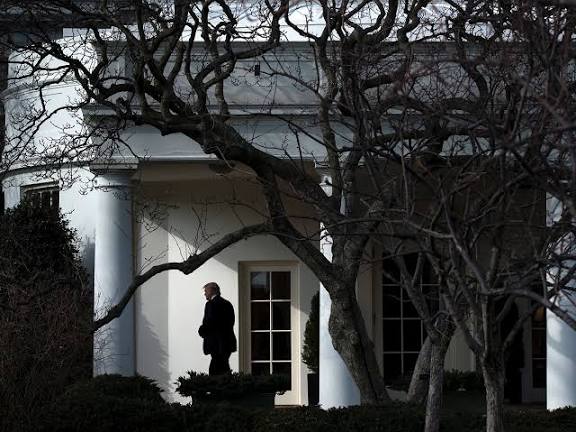
The phrase “White House Storm: Leaks Spread, Power Cracks, or New Game Starting” is not a single headline but a descriptive summary of recurring themes in Washington. Today we will discuss about White House Storm: Leaks Spread, Power Cracks or New Game Starting
White House Storm: Leaks Spread, Power Cracks or New Game Starting
In early 2025, the U.S. government found itself at the center of a rapidly escalating security and political crisis: a wave of leaks and data mishandling that has exposed internal fractures, raised serious questions about trust and competence — and possibly, signaled the opening moves of a new power game inside Washington.
It started with shocking disclosures: sensitive White House documents, including detailed floor plans and security‑related information, were mistakenly shared with thousands of federal employees. Soon after, a far more explosive leak surfaced: members of the Trump administration’s national‑security team had reportedly discussed imminent military operations in private group chats — only to accidentally add an outside journalist to the group. The leak triggered resignations, firings, investigations, and a swirl of conflicting accounts about who knew what, when — and why.
As the dust settles, insiders, lawmakers, and analysts are asking: Is this chaos just a string of bungled mistakes, or is it the symptom of deeper power realignments — perhaps even a planned shake‑up?
From Blueprints to Bombast: The Document Leak
On April 20, 2025, a bombshell report revealed that employees at the General Services Administration (GSA), the bureaucracy charged with government buildings and logistics, had inadvertently shared a folder containing sensitive documents — including internal floor plans of the White House, proposed blast‑door blueprints for the visitor center, and banking details of a vendor — with more than 11,200 staff.
Though none of the files were officially classified, many were marked “CUI” (Controlled Unclassified Information), a designation that still demands careful handling. A number of the shared files had editing privileges, meaning thousands could not only view but modify them.
The leak reportedly dated back to early 2021 — under the then‑Joe Biden administration — and continued into the current era, with at least one file shared as recently as the week before the report surfaced.
GSA officials acted quickly, restricting access after the breach was discovered. But the incident reignited bipartisan concerns over systemic digital security lapses within the U.S. federal establishment — and raised alarm over how even “non‑classified” materials, when exposed broadly, can pose real security risks. Experts pointed out that even sharing structural plans of White House wings or security‑related documents with thousands of individuals is “absolutely not something you want” in such an important facility.
Some analysts now see the GSA leak not as an isolated error — but as part of a broader pattern of sloppy or careless handling of sensitive information by successive administrations.
Signalgate: When War Plans Went (Accidentally) Public
Soon after the document leak stunned Washington insiders, a far more serious scandal erupted — this time involving actual defense and war‑planning communications.
In March 2025, it emerged that high‑ranking officials in the Trump administration had used the encrypted messaging app Signal to discuss real-time military operations targeting Houthi militants in Yemen, including detailed timing of air‑strikes, types of aircraft and missiles, launch and strike times — all sensitive operational information. Crucially, the group chat meant to include only select senior officials had mistakenly included a journalist, who later published the logs.
Among those implicated was Pete Hegseth, the Secretary of Defense. The leak triggered an immediate uproar: former national security officials warned the mishandling of operational plans amounted to a serious breach with potential national‑security consequences.
In response, the White House and Pentagon launched investigations. On April 3, 2025, the Pentagon’s acting inspector general opened a probe into Hegseth’s use of Signal for defense‑related communications.
Hegseth and his supporters initially defended the move, arguing that no classified information was shared; as the Secretary of Defense, he claimed he had the authority to declassify such material.
Still, the political fallout was swift. Several of Hegseth’s senior aides — including his chief and deputy chief of staff — were fired or placed on leave amid the investigation.
Chaos Beneath the Surface: The Infighting
But the Signal‑leak scandal was not just a story of negligence: it exposed a deeper schism within the Pentagon’s leadership.
The inquiry that led to the firings was built on a foundation of conflicting claims — including one that the leakers had been outed through an illegal, warrantless wiretap conducted by the National Security Agency (NSA).
The claim reportedly came from Hegseth’s personal lawyer, who was overseeing the investigation. But when pressed, he denied making the wiretap claim himself, insisting that his information came from other unnamed Pentagon sources.
The lack of clarity on such a serious allegation — and the internal confusion over who said what — deeply alarmed other senior advisers. Many came to suspect that the leak investigation had become a tool for internal power‑play rather than a genuine pursuit of security.
One insider told reporters they now “had no idea who or what to believe.”
The shake‑up left the Defense Secretary’s inner circle dramatically diminished. With the chief and deputy chief of staff gone, Hegseth was reportedly left relying on a skeleton crew of advisers.
“Case Closed”? Not So Fast
By the end of March 2025, the White House seemed desperate to draw a line under the Signal leak fiasco. Press officials said the scandal was “closed … as far as we are concerned,” and that steps had been taken to ensure such an error “can obviously never happen again.”
But that gesture of closure has not quelled the storm — far from it.
Critics point out that the very conditions that allowed such a leak remain unaddressed. The use of encrypted consumer messaging platforms like Signal for official military communications — especially without access restrictions or logs — remains highly controversial. For many, the Signal episode reveals not just a single mistake but a systemic failure to enforce secure, accountable communications within the U.S. defense establishment.
Meanwhile, the GSA document leak underscores that mis‑handling of sensitive information is not limited to covert operations — but affects the very infrastructure of government itself.
What This Means: Cracks in Power, Trust — and Maybe a New Game
Taken together, the leaks present a troubling picture: a government beset by distrust, mis‑management, and internal fracturing. But they may also signal something more — a recalibration of power within the White House and the Pentagon.
1. Erosion of Institutional Trust
The leaks — one involving unclassified but sensitive building plans, the other involving war‑time communications — undermine public confidence in official competence and discretion. If a contract vendor’s banking details or the design of a blast‑door could be exposed to thousands, what else might be vulnerable? If sensitive military operations can be accidentally shared with journalists, how safe are active missions or intelligence operations?
That erosion of trust extends beyond the agencies involved. Even among senior administration insiders, the conflicting narratives and finger‑pointing suggest a breakdown of cohesion.
2. Rising Internal Fractures & Factionalism
The firings and purges following the leaks suggest a broader struggle within the Pentagon — between rival factions, and between the professional bureaucracy and political leadership. The wiretap allegations, whether true or invented, blunted the legitimacy of the leak investigation and may reflect an attempt to settle internal scores under the guise of security concerns.
The result is a slimmed-down circle of trusted aides — but also a more fragile power structure. The loss of several senior officials and the disappearance of key advisers reduces depth and institutional memory, potentially hampering effective governance.
3. Reputation Cost — At Home and Abroad
Internationally, the mishandling of classified and sensitive information — especially relating to war plans — could undermine U.S. credibility. Allies may question the discretion of U.S. military leadership; adversaries may see opportunity in instability or missteps.
Domestically, this spells political risk: what began as an “oops” with a Google Drive folder could evolve into a broader critique of how the administration handles national security, transparency, and accountability.
4. Is This a Reset — or a Smokescreen?
Some analysts now suggest the leaks are not mere accidents, but part of a larger — deliberate — rearrangement of power. The timing, the scale of dismissals, the internal confusion over investigations: all hint at more than just incompetence.
For example — was the leak used to purge or discredit certain aides? Was the wiretap claim meant to justify firings under dubious pretexts? Could the White House be recalibrating who it trusts as it gears up for the next political phases: internal consolidation, personnel reshuffling, perhaps even pre‑emptive moves ahead of looming Senate hearings or Congressional inquiries?
In this frame, the leaks are not the end — but the beginning. A “storm” to clear the deck.
Comparisons & Echoes of the Past: Are We Re‑visiting History?
On the surface, the “White House Storm” may resemble past scandals: unintentional leaks, data mishandling, internal purges. But there are important precedents and contrasts to draw.
The infamous Watergate scandal in the 1970s involved break‑ins, bugging, and a cover‑up that eventually brought down a presidency. While the current leaks do not (so far) involve burglary or direct illegal entry, the underlying themes of secrecy, institutional breach, and political fallout are strikingly similar.
The earlier Plame affair (2003–2006) exposed the risks of “leaks as policy tools” — where disclosure of sensitive intelligence was used to settle political scores. The current leaks, especially with conflicting internal narratives and possible internal vendettas, risk repeating that dangerous pattern: operational secrecy exploited for political ends.
Yet — there is a difference. In those older scandals, the leaks often emerged from external pressure, journalistic doggedness, or overt sabotage. The 2025 White House storm appears more chaotic, more internally self‑inflicted: mis‑handling of digital tools and sloppy internal practices — not espionage per se. That suggests a deeper systemic problem with institutional discipline and digital hygiene.
What’s Next: Scenarios & What to Watch
Given the volatility of the past few months, several possible trajectories open up.
Scenario A: Institutional Retrenchment & Reform
Under pressure — public, political, and bipartisan — the White House and Pentagon may move to overhaul how sensitive information is handled. That could include:
tighter restrictions on communications platforms,
mandatory secure messaging and record‑keeping protocols,
training and audits for all federal agencies handling sensitive or CUI‑level materials,
permanent reforms at GSA to prevent mis‑sharing of documents — perhaps even external oversight.
If done transparently, such reforms could restore some confidence and help stabilize internal operations — but success is not guaranteed given the psychological and cultural inertia often found in large bureaucracies.
Scenario B: Political Realignments & Power Shifts
The leaks may also mark the start of a broader power reshuffle. The firings of senior aides might just be the beginning — a prelude to more major changes to personnel at the Pentagon or White House staff.
If certain factions now see themselves weakened, we might see attempts to consolidate loyalty — promote trusted allies, sideline dissenters, and reorient decision‑making toward a tighter inner circle. This could have long‑term implications for U.S. foreign policy, military strategy, and administrative stability.
Scenario C: Continued Chaos — Until Something Breaks
If reforms are resisted or half‑hearted, leaks might continue, potentially even worsen. Digital complacency, personal devices used for official business, improper file‑sharing — once institutional culture is broken, it’s difficult to restore.
This scenario is especially risky if external actors — foreign intelligence, adversarial governments, cyber‑threat groups — begin to exploit the disorder.
Scenario D: Media & Congressional Pressure Escalates
Already, lawmakers from both parties have expressed concern; some have called for independent reviews, IG investigations, and even Congressional hearings. If pressure mounts, we could see renewed scrutiny over national security protocols, classification and declassification authority, and oversight of high‑ranking officials.
That could lead to firings, resignations, or even criminal investigations depending on what further leaks or whistleblowers reveal.
What It Means for the Bigger Picture: U.S. Power, Democracy & National Security
The “White House Storm” is more than an internal scandal — it touches on core issues about how a superpower handles power, information, and trust.
Governance & Institutional Weakness: The leaks illustrate how even powerful institutions can suffer from basic mis‑management — of passwords, permissions, chat groups. This underlines a broader vulnerability in bureaucracies adapting to the digital age.
Transparency vs. Security Tension: Democracies often struggle to balance transparency and secrecy. The mishandling of “sensitive but unclassified” info reminds us that not all dangerous information is “top secret.” Privacy, security, and access control remain essential even for so‑called lower-tier data.
Internal Politics Over National Interest: When leak investigations turn into internecine power struggles, the public good takes a back seat. That raises questions about whether national security is being subordinated to internal rivalries.
Trust at Stake — Domestically & Internationally: Allies, adversaries, and U.S. citizens alike may watch how this plays out. Continued leaks could diminish U.S. credibility; swift, transparent reforms could restore some faith — but damage may linger.
Conclusion: A Storm — or the Opening of a New Game?
The leaks that have rocked the White House and Pentagon in 2025 are more than a string of unfortunate blunders.
Taken together, they point to a systemic failure: of digital discipline, of institutional memory, and perhaps of leadership prioritization. The fact that internal investigations quickly devolved into conflicting narratives — with claims of wire‑taps, political vendettas, and unexplained firings — suggests this is not just about misplaced Google Drive permissions or an accidental Signal chat invite.
Instead, we may be witnessing the clearing of the board — a shake‑up of power that could reshape how the White House, Pentagon, and related agencies operate, who they trust, and how they manage — or mismanage — sensitive information.
Whether this is a corrective reset or the start of deeper chaos depends on what comes next. If reforms follow, with clearer protocols, accountability, and structural oversight, then the storm might bring renewal. But if internal infighting continues, or leaks become the norm — then this could be the opening salvo in a new, dangerous game of hidden power, secrecy, and instability.
How useful was this post?
Click on a star to rate it!
Average rating 0 / 5. Vote count: 0
No votes so far! Be the first to rate this post.
About the Author

usa5911.com
Administrator
Hi, I’m Gurdeep Singh, a professional content writer from India with over 3 years of experience in the field. I specialize in covering U.S. politics, delivering timely and engaging content tailored specifically for an American audience. Along with my dedicated team, we track and report on all the latest political trends, news, and in-depth analysis shaping the United States today. Our goal is to provide clear, factual, and compelling content that keeps readers informed and engaged with the ever-changing political landscape.