D.C. Meltdown: Agencies Clashing, States Revolting or System Overheating
This difference can become a source of rebellion and frustration. This era of convergence and more relative peace may be followed. Today we will discuss about D.C. Meltdown: Agencies Clashing, States Revolting or System Overheating
D.C. Meltdown: Agencies Clashing, States Revolting or System Overheating
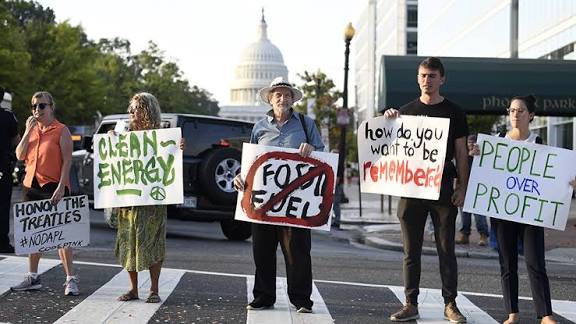
In 2025, the United States — and particularly its capital, Washington, D.C. — finds itself at the center of a deep institutional crisis. The sweeping reshuffling of federal agencies, mass layoffs, a dramatic purge of oversight offices, and an unprecedented federal takeover of policing have triggered widespread backlash. What is unfolding is not merely administrative turbulence, but a structural shake‑up that many fear may undermine the core functions of American government. This is a meltdown with origins both in the halls of bureaucracy and on the streets — where federal agents clash with local governments, and states and citizens revolt.
The Spark: “Efficiency” Overhaul and the Rise of Department of Government Efficiency (DOGE)
The 2025 meltdown began in earnest when the new administration moved quickly to dismantle or radically reshape key federal institutions. Central to that effort was the creation of a new entity: the Department of Government Efficiency — widely referred to by its acronym, DOGE. Headed by a tech billionaire, DOGE was explicitly tasked with “streamlining” government — cutting spending, ending what the administration deemed wasteful programs, and restructuring agencies.
One of the first and most high‑profile targets was United States Agency for International Development (USAID), the sixty‑year‑old agency responsible for administering U.S. foreign aid and international development. In early 2025, DOGE declared that the agency would be shut down almost overnight.
Thousands of USAID employees — in Washington and across the globe — were put on administrative leave, contracts were frozen, programs halted, and overseas operations suddenly thrown into chaos.
The impacts were swift and far-reaching: humanitarian efforts, health programs (such as HIV/AIDS treatment), disaster relief, and development initiatives — many depended on by vulnerable populations worldwide — were suspended or left in limbo.
The speed and scope of the shutdown shocked many. Legal experts and civil-service unions quickly raised alarms about the constitutionality of shutting down an agency created by Congress, pointing out that such a move bypassed the legislative branch altogether.
Indeed, by mid-2025, a federal judge ruled that the attempt to dismantle USAID by DOGE was likely unconstitutional, issuing an injunction that paused further cuts and ordered restoration of email and system access for affected employees.
Yet, even the judge’s intervention could not undo the human and programmatic damage already done: many aid contracts were canceled, employees let go, and numerous global initiatives remain stalled.
This first wave — the “bureaucratic purge” — signaled a dramatic reorientation of federal power and set the stage for further turmoil. The question many Americans began asking was: if agencies can be abolished with a decree, what else is vulnerable?
Clash of Agencies and Internal Resistance
The dismantling of USAID was not an isolated event, but part of a broader shake‑up across many federal agencies. Under DOGE’s mandate, the federal civil‑service apparatus began to crumble. Oversight offices were gutted, long‑standing regulatory bodies weakened, and staff purged — sometimes with little warning or explanation.
Inside federal agencies, morale plunged. Employees — many of them career civil servants — described the atmosphere as “chaos,” “fear,” and “madness.”
The uncertainty triggered waves of protest and internal resistance. Some agencies reportedly instructed personnel to ignore new directives — for example, a controversial mandate asking workers to submit weekly performance reports under threat of termination.
The internal disruption spilled beyond morale — basic functions of government began to unravel. Programs were terminated or frozen. Employees who had dedicated their careers to public service suddenly found themselves jobless, sometimes without severance, and with little transparency.
Many Americans began to question: if vital agencies can be dismantled so easily — without congressional input — what is the future of government services, foreign aid, and oversight? Critics warned that these moves eroded institutional checks and balances, threatening not only services but the democratic foundations of U.S. governance.
The Capital in Crisis: Militarization of D.C. Law Enforcement
As bureaucratic institutions were being shredded, another, perhaps more visible crisis was unfolding on the streets of the nation’s capital. In an unprecedented move, the administration used powers under the District of Columbia Home Rule Act to federalize the city’s police force — the Metropolitan Police Department of the District of Columbia (MPD) — and deploy the District of Columbia National Guard along with other federal law-enforcement agencies to patrol the city.
Officially, the action was justified as a response to a “crime emergency.” But critics quickly pointed out a glaring problem: crime statistics showed that violent crime in D.C. was actually at a 30-year low.
Still, hundreds of National Guard troops — some armed — were sent into the city. Local officials, civil‑rights groups, and many residents described the move as a blatant overreach, a politicized attempt to impose federal power over a city historically run by its own elected government.
For the first time in decades, Washington’s streets saw a visible and armed military presence. The Guard conducted high‑visibility patrols, homeless encampments were swept, and federal agents joined in policing.
Residents and civil‑liberties advocates responded with alarm. Many argued that this was not about public safety but political control: D.C. is not a state, and under the Home Rule Act, the federal government already wields more power there than in any other American city. Federalizing the police and imposing a militarized presence threatened to remake the nature of civic life in the capital.
As one law professor noted, the deployment effectively bypassed local law‑enforcement agencies and concentrated power in the hands of federal authorities — with little accountability.
Pushback: Legal Challenges, State Resistance, and Public Outcry
The fallout was immediate. Local officials, civil‑rights organizations, and members of Congress condemned the move as unconstitutional and an assault on local autonomy.
Within days, a lawsuit was filed by the city’s attorney general. A federal judge eventually ruled the deployment unlawful. But before the order could take full effect, it was stayed — allowing the Guard to remain.
Then came tragedy: National Guard members deployed as part of this federal law‑enforcement surge were shot near government buildings. One soldier died; others were seriously wounded.
In response, the administration ordered the deployment of additional troops and moved to arm all National Guard soldiers on duty in D.C. with live weapons.
What had begun as an ostensible crime-prevention strategy turned into a full-blown militarized occupation — with lethal consequences. The image of armed soldiers patrolling streets not as warriors overseas but as domestic enforcers sparked a wave of condemnation and fear among residents. Many wondered: has the capital been transformed into a security zone? And at what cost to civil liberties?
At the same time, across the country, states and localities resisted: some declined to cooperate with federal directives; others withdrew support for enforcement operations; many demanded oversight and return of funding. The backlash made clear that the federal government might lack the capacity — or legitimacy — to micromanage every aspect of governance without consequences.
The System Overheated: Institutional Fragility and Constitutional Crisis
Taken together, these developments reveal a deeper structural stress in American governance. The meltdown is not just about one agency or one city — it’s symptomatic of broader institutional fragility. Several fault lines stand out:
1. Erosion of Checks and Balances
The unilateral shutdown of a major federal agency without congressional approval, the mass firing of civil‑service employees, and the takeover of local police illustrate a weakening of constitutional checks. The institutions meant to serve as counterweights — Congress, courts, local governments — are being bypassed or overwhelmed.
2. Operational Collapse and Human Impact
When agencies are gutted on a whim, programs collapse, funding disappears, and people — both employees and aid recipients — suffer. Domestic services and global aid programs alike have been disrupted.
3. Militarization of Domestic Policing
Turning a nation’s capital into a militarized zone marks a radical shift. The long-term risks: normalization of military presence in civilian life, erosion of civil rights, and potential for violence and abuse.
4. Erosion of Public Trust and Institutional Legitimacy
For many Americans, trust in government is already fragile. When public services are dismantled, agencies eliminated, and civil-service workers dismissed en masse, confidence in governance is deeply undermined.
5. Flashpoint for Broader Conflict
As federal power expands — even into areas traditionally reserved for states or cities — resistance naturally builds. Lawsuits, state pushback, public protest, and social unrest increase the risk of political and social breakdown.
In short: the American system may be overheating. The blast furnace of reform, austerity, and centralized power is threatening to melt the structural supports that have kept the country’s institutions upright — possibly for decades.
Why It Matters — For the U.S. and the World
The stakes run far beyond Washington architecture or domestic politics. The consequences of this meltdown reach globally:
The shutdown of foreign aid programs undermines American soft power and jeopardizes humanitarian efforts worldwide. Vulnerable populations, conflict zones, and developing countries reliant on U.S. assistance may face deadly shortages.
America’s reputation as a stable democracy — with robust institutions, rule of law, and checks on power — is eroding. If one administration can dismantle agencies, fire watchdogs, federalize policing, and militarize the capital, what prevents future administrations from doing worse?
The precedent for domestic militarization raises alarm internationally. If the world’s oldest modern democracy succumbs to armed policing of its capital, it undermines democratic norms globally.
Within the U.S., the social contract between citizens and government is fraying. When public services collapse, trusted institutions disappear, and civil-service workers are dismissed en masse — people lose faith. That could fuel unrest, polarization, and political instability for years to come.
Voices of the Dispossessed: Federal Workers, Citizens, Critics
Many civil‑servants displaced by the purge have expressed despair, grief, and anger — two emotions that often go hand in hand when institutions collapse.
One poignant account described a federal employee breaking down after being terminated with little notice, highlighting the human toll of abrupt policy shifts. Another warned of a broader tactic: to create anxiety and force voluntary departures.
At the same time, lawmakers, civil‑rights groups, and local governments have sounded the alarm, calling federal overreach into D.C. policing an egregious attack on local autonomy and warning that it undermined decades of self-governance.
Judges, for the moment, have tried to check the worst excesses, blocking further shutdowns and questioning the legality of using federal troops for domestic law enforcement.
Is the Meltdown Inevitable — Or Reversible?
Whether the current crisis will spiral further or eventually cool down depends on multiple factors: political pushback, state resistance, public opinion, and — crucially — the resilience of American democratic institutions such as the courts and Congress.
There are signs of pushback: legal challenges to agency shutdowns and military deployments are moving forward, and some states and localities are refusing to cooperate with federal overreach.
But there are also serious structural vulnerabilities. Once legitimacy is lost, restoration is difficult.
Moreover, the human cost — on civil-service workers, vulnerable global populations, and citizens of D.C. — may fuel social unrest, political radicalization, and a growing distrust of government.
What Comes Next — Major Flashpoints to Watch
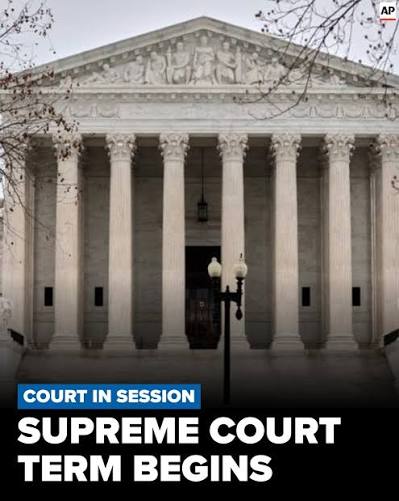
Court rulings on federal overreach: Both agency shutdowns and federalization of policing are being challenged. Future rulings could reaffirm constitutional limits or redefine them.
State and local resistance: Pushback could blunt further federal encroachment.
Public response and protest movements: Growing discontent could translate to protests, political mobilization, or structural reform demands.
Global fallout of foreign-aid cuts: Humanitarian and development impacts could affect America’s global standing.
Institutional rebuilding or permanent erosion: The post-crisis period will test whether institutions and civil society can rebuild what was damaged.
Conclusion — A Moment of Reckoning for American Governance
The events unfolding in Washington, D.C., in 2025 — from the rise of DOGE, the dismantling of essential agencies, to militarized policing and the shattering of institutional norms — represent more than a political scandal or a temporary power play. They embody a deeper structural stress: a test of whether the American system of government — built on separations of power, institutional checks, accountable public service, and democratic rule — can withstand concentrated power and unchecked executive action.
If the meltdown continues unchecked, the result may not simply be broken bureaucracy or disrupted services. It may be a recalibrated America — one where power is centralized, oversight eroded, and the very idea of government as servant of the people is fundamentally altered.
But if citizens, institutions, states, and courts push back, this crisis could become a turning point — a wake-up call that saves, rather than destroys, American democracy.
At this juncture, the United States stands at a crossroads. Whether it stumbles into institutional collapse or emerges stronger depends on a complex, uncertain interplay of law, politics, and citizen action. What’s certain is this: the meltdown of 2025 will be consequential — for decades to come.
How useful was this post?
Click on a star to rate it!
Average rating 0 / 5. Vote count: 0
No votes so far! Be the first to rate this post.
About the Author

usa5911.com
Administrator
Hi, I’m Gurdeep Singh, a professional content writer from India with over 3 years of experience in the field. I specialize in covering U.S. politics, delivering timely and engaging content tailored specifically for an American audience. Along with my dedicated team, we track and report on all the latest political trends, news, and in-depth analysis shaping the United States today. Our goal is to provide clear, factual, and compelling content that keeps readers informed and engaged with the ever-changing political landscape.