Democrats Split: Policy Fight or Silent Civil War
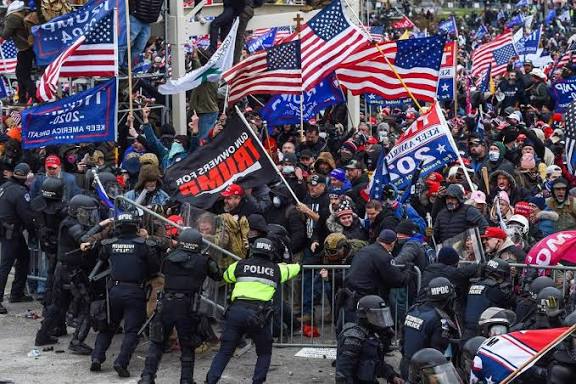
War Democrats in American politics of the 1860s were members of the Democratic Party who supported the Union and rejected the policies of the Copperheads. Today we will discuss about Democrats Split: Policy Fight or Silent Civil War
Democrats Split: Policy Fight or Silent Civil War
The Democratic Party (Democrats) in the United States has long been a broad “big-tent” coalition — a collection of ideologically diverse constituencies, ranging from centrist moderates to bold progressives, from pragmatic centrists to democratic socialists.
In recent years, however, the internal tensions within the party have become increasingly visible and bitter. Some observers argue it amounts to nothing more than a normal policy dispute; others warn that Democrats are sliding toward something more serious — a silent civil war that threatens to fracture the party.
In this article, we explore why the split matters now, who is involved, how deep the divisions run — and whether this is just partisan friction or the beginning of a structural break for the Democratic Party.
Why the Split Matters
Electoral consequences and the need for unity
The stakes are high for Democrats. After recent elections, the party suffered significant losses: they lost the presidency, and control of both the Senate and the House slipped away.
In response, a growing number of Democratic voters now say the party should move in a more moderate direction. A recent poll showed 45% of Democrats favor moderation — up sharply from 34% a few years ago. Meanwhile, only 29% want the party to go more liberal, a decline in liberal-leaning support.
Such numbers reflect a harsh reality: the Democrats can no longer afford to take their electoral coalition for granted. With shrinking majorities and tougher competition, internal cohesion — or lack thereof — could determine whether they win or lose future elections.
As one commentator noted, “when we act as a coalition … we win. And when we forget, we fracture.”
Governance challenges: Can a divided party govern effectively?
Beyond elections, deep internal divisions pose major governance risks. A party that cannot agree internally struggles to craft unified legislation, set a coherent agenda, or respond consistently to national crises.
A key fault line in the party centers on whether Democrats should “stand and fight” for bold reforms — or compromise, avoid high-risk confrontation, and prioritize short-term wins.
That internal debate isn’t ideological only — it also reflects a strategic divide over whether the party aims to win power or to preserve it, whether it prioritizes bold transformational change or moderate pragmatism.
When internal fighting becomes institutionalized — when caucuses, factions, and outside groups start leveraging disagreement to influence decisions — a party can descend into paralysis.
Who’s Divided: The Factions
Though broad labels like “left” vs. “center” can oversimplify, there are concrete coalitions, caucuses, and tendencies within the Democratic Party that help map the divisions.
Centrists and Moderates: The Pragmatic Core
The New Democrat Coalition (NDC) represents Democrats who favor progressively minded but business-friendly, fiscally moderate policies. By recent counts, it has become the largest Democratic caucus in the House, comprising over half of all Democratic representatives.
On the more conservative end are members of the Blue Dog Coalition, historically the fiscally moderate/socially moderate wing, though their numbers have shrunk over time.
These centrists and moderates generally favor incremental change, bipartisan compromise, and policies that they believe can win broad support — even if that means watering down more ambitious proposals.
Progressives and Left-Wing Reformers
At the other end of the spectrum lie the progressive caucuses, left-wing reformers, and democratic socialists. A prominent voice among them is the Squad — a group advocating for aggressive action on climate change, universal health care, social justice, and wealth inequality.
This faction tends to view the status quo as untenable: structural inequality, corporate influence, and entrenched interests demand bold transformation.
Beyond policy, there is also a philosophical divide: many progressives believe the party should leverage activism, grassroots organizing, and moral urgency — even at the cost of short-term political setbacks.
Emerging Cleavages: The “Abundance Agenda” and Institutional Reckoning
In recent years, a new axis of division has emerged within the party — not simply left vs. center, but institutional posture vs. radical rethinking. Some Democrats now question whether traditional liberal regulation and top-down policymaking really serve voters’ needs.
An influential critique comes from thinkers promoting the “abundance agenda” — an economic vision arguing that over-regulation has stymied infrastructure development, housing construction, and large-scale progress.
This debate isn’t strictly about right- or left-leaning ideology — it’s about whether the Democratic Party can still think big, build massive public works, and deliver tangible benefits to working-class Americans, or whether it should retreat into incrementalism and regulatory caution.
In sum: the party is no longer just two camps. It’s evolving into a multi-dimensional mosaic, where ideology, strategy, economics, and institutional theory intersect — sometimes in conflict.
How Deep Is the Rift? Data & Trends
Election and Primary Data
The divisions manifest starkly in primary contests. About 58% of Democratic candidates identified as “Mainstream Democrats,” while 30% labeled themselves “Progressive.” Only around 1% identified as “Democratic Socialist.”
Importantly, among primary winners, mainstream Democrats outperformed progressives — 67% of winners vs. 30%.
That suggests that while progressive voices are substantial and influential, the center-left/moderate wing continues to hold structural advantage — at least in terms of electoral outcomes.
Public Opinion: Moderate Shift
As noted earlier, recent polls show a growing share of Democrats prefer a more centrist or moderate platform.
This shift may reflect a reaction to electoral failures: after losing power, many Democrats appear to believe moderation and pragmatism may offer the best chance of reclaiming competitiveness.
At the same time, the drop in demand for a more liberal turn suggests unease — or perhaps disillusionment — with ambitious progressive policy among rank-and-file Democrats.
Institutional Response: New Structures
The internal realignment is not only among factions, but also institutionalized structures. A new organization called Majority Democrats was formed — largely comprised of moderate Democrats. Its goal: reshape the party to be more competitive nationwide and to counterbalance the influence of progressive activists within the coalition.
This formalization of moderate influence signals that the rift is not just informal tension — but deliberate organizational repositioning.
Is It Just a Policy Fight — or a Silent Civil War?
The answer depends partly on definitions — but evidence suggests the Democrats are experiencing more than routine policy debates.
Why “Silent Civil War” resonates
Multiple axes of division: It’s not just left vs. center anymore. There are divisions over economic strategy, institutional approach, governance vs. activism orientation, generational leadership — making the fault lines broader and harder to reconcile.
Institutional schisms forming: The creation of new caucuses and groups like Majority Democrats suggests deliberate factional consolidation — a hallmark of structural party splits.
Electoral consequences: With primary results favoring moderates lately, but with sizable progressive undercurrents remaining, the party risks alienating one side or the other — a classic prelude to schism.
Governance paralysis risk: Legislative stalemates, risky compromises, and public infighting can erode public trust and party coherence.
But it might still be a policy fight — not a formal split
The majority of Democratic primary winners remain “mainstream” or moderate, suggesting institutional dominance.
Many political observers and party leaders continue to describe the party as a coalition — not a collection of antagonistic sub-parties.
Historically, parties have accommodated internal diversity without splitting — and the Democrats have done so before.
Thus, while the divisions are serious, a formal schism (e.g., a break to form a third party) is not inevitable — at least not yet.
What It Means for the Democratic Party’s Future
Possible Scenarios
Re-coalition and Unification
Internal tensions get downplayed; moderate and progressive wings reach an uneasy but functional compromise.
Incremental Shift Toward the Center
Moderates consolidate power; party priorities tilt toward what is seen as electable middle-of-the-road policies.
Gradual Drift Toward Progressive Radicalism
Progressive caucuses and democratic-socialist elements keep growing, energizing new demographics but potentially alienating centrist voters.
Structural Fracture: Breakaway or Realignment
If tensions become too great, some members may abandon the party or create formal splinter groups, reshaping the American political landscape.
Risks and Opportunities
Risks:
Splintering the base and diminishing electoral power.
Governance paralysis.
Alienation of key constituencies.
Opportunities:
Rebuilding the party’s identity.
Potential for transformative policies.
Reinvigorated grassroots activism.
Why the Debate Echoes Past Splits — and Why This Time Might Be Different
Historically, splits within major political parties are not new. For example, in the mid-19th century, factions within the Democratic movement foreshadowed larger national divisions.
But the parallels have limitations. Today’s rifts aren’t about slavery, but about ideology, strategy, and the very identity of the Democratic coalition. The fault lines are multi-dimensional.
Unlike the past, today’s Democrats must navigate a more fragmented electorate, mass media, social divisions, economic inequality, and globalism — all of which add complexity.
If a split occurs, it may not result in a clean new party formation. Instead we might see fluid coalitions, shifting caucuses, and policy-based realignments that cross old boundaries.
Conclusion: Fault Lines, Not Yet Faults
At present, the Democratic Party is experiencing a strategic and ideological fracture — deepening divisions, institutional reshuffling, new coalitions, and growing public pressure for clarity.
Yet, it’s not quite a “civil war” in the literal sense — at least not yet. There is no new party emerging; no formal split announced; no clear structural schism.
What we see instead is a complex internal realignment: a battle over identity, purpose, and direction. Whether that evolves into something more severe depends on how the factions respond.
If the party leadership chooses to patch together a coherent coalition that balances pragmatism and idealism, they might emerge stronger.
If not — if the internal conflicts deepen and splinter groups emerge — then what we call the “Democratic Party” today may look very different within a few years.
Democrats are not yet divided irreparably, but the cracks are visible — and unless addressed, they could widen. Whether this moment becomes a policy fight, or a silent civil war, depends not on ideology — but on choices.
How useful was this post?
Click on a star to rate it!
Average rating 0 / 5. Vote count: 0
No votes so far! Be the first to rate this post.
About the Author

usa5911.com
Administrator
Hi, I’m Gurdeep Singh, a professional content writer from India with over 3 years of experience in the field. I specialize in covering U.S. politics, delivering timely and engaging content tailored specifically for an American audience. Along with my dedicated team, we track and report on all the latest political trends, news, and in-depth analysis shaping the United States today. Our goal is to provide clear, factual, and compelling content that keeps readers informed and engaged with the ever-changing political landscape.