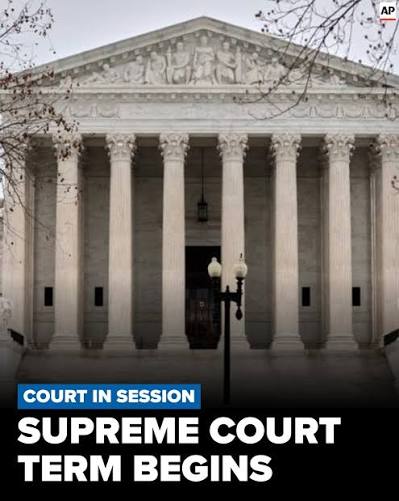
Supreme Court Flashpoint: Rights Shift or Political Pressure
The question is whether the Supreme Court’s decisions represent a “rights shift” or are the result of “political pressure”. Today we will discuss about Supreme Court Flashpoint: Rights Shift or Political Pressure
Supreme Court Flashpoint: Rights Shift or Political Pressure
The Supreme Court of the United States has always occupied a delicate position in American democracy, standing at the meeting point of law, governance and political culture. Historically, the Court carried a reputation for cautious deliberation, respect for precedent, and a degree of neutrality that separated it from the turbulence of partisan politics. But in recent years, the Court has increasingly become a flashpoint in national debates — an institution at the center of conflict over fundamental rights, political power, and institutional legitimacy.
Major rulings have altered the structure of federal regulatory authority, reshaped campaign finance rules, and redefined voting-map disputes. In each of these areas, critics sense a shift driven by ideological motives or political pressure, while defenders see a rightful correction of flawed or activist jurisprudence.
The central question now facing the country is simple but critical:
Is the Supreme Court recalibrating American law to reflect constitutional principles, or is it reshaping rights and institutions in ways that align with political and partisan goals?
A New Era of Precedent-Overturning

1. The Changing Meaning of Precedent
The principle of stare decisis — that courts should generally follow their past decisions — has long been central to the stability of American law. But in the past few years, the Court has demonstrated a willingness to overturn decades-old precedents when the majority believes previous rulings were wrongly decided.
For some, this represents a return to constitutional fidelity. For others, it signals instability and ideological assertiveness.
Prominent justices have argued publicly that older rulings should not bind the Court when they diverge from the original meaning of the Constitution. Critics counter that such an approach allows the Court to upend settled expectations and inject personal ideology into judicial decision-making.
The result is an institution that appears more willing than ever to redraw the legal landscape — a shift that legal scholars view as both transformative and potentially disruptive.
2. The High-Stakes Consequences of Overturning Major Precedents
The Court’s recent decisions have affected regulatory authority, reproductive rights, environmental rules, and federal agency independence. These reversals are not minor technical corrections but structural changes that reshape how government functions.
Some of the most consequential shifts involve:
the power of administrative agencies,
the scope of presidential control over federal institutions,
the role of money in politics, and
the future of electoral representation.
Each reflects the Court’s evolving philosophy — and each has generated fierce public debate.
Flashpoint Decisions: Where Rights, Law, and Politics Collide
1. The Struggle Over Federal Agency Power
One of the most controversial judicial transformations has involved the way courts review decisions made by federal agencies, such as environmental regulators, labor boards, and public-health institutions.
By limiting or eliminating judicial deference to these agencies, the Supreme Court has effectively shifted interpretive authority away from specialists and toward the judiciary. Practically speaking, courts now have more freedom to reject agency interpretations of ambiguous laws.
Supporters say this restores constitutional limits on bureaucracy.
Critics warn it undermines the ability of experts to address complex regulatory challenges — and may allow political actors to exert greater influence over technical areas of national policy.
The larger concern is that weakening agencies may make them vulnerable to executive pressures, reducing the independence they were designed to maintain.
2. Presidential Power and the Future of Independent Agencies
A major case currently before the Court challenges a long-standing rule that presidents cannot fire leaders of certain federal agencies without cause. If the Court overturns this principle, the executive branch could gain sweeping new authority to reshape or control regulatory bodies.
This would mark a profound shift. Independent agencies were historically designed to protect economic stability, consumer welfare, and public safety from partisan interference.
Removing those protections could centralize enormous power in the presidency — something supporters view as democratic accountability, but opponents see as a dangerous erosion of checks and balances.
3. Campaign Finance and Rising Influence of Wealth
The Court is also reviewing challenges to laws that restrict coordination between political candidates and national political parties. Critics of these laws argue they violate free-speech principles by limiting political advocacy. Supporters say the restrictions are crucial for preventing corruption and maintaining fair elections.
If the Court sides with challengers, political parties may be able to spend unlimited amounts in coordination with campaigns — dramatically amplifying the role of wealthy donors and well-funded political organizations.
This would expand on earlier rulings that already opened the door to massive campaign spending. The potential consequence: an electoral environment where influence increasingly correlates with wealth, and where public trust in democratic fairness continues to erode.
4. Voting Maps and the Fight Over Representation
Few issues illustrate the clash between law and politics more clearly than redistricting. Recently, the Court revived a congressional map in Texas that critics argue disproportionately favors one political party and dilutes the voting power of marginalized communities.
The decision sparked immediate debate. Civil-rights organizations claim the map reflects partisan gerrymandering and undermines the Voting Rights Act. Defenders argue the map respects traditional redistricting principles and should remain in place unless violations are proven beyond doubt.
Either way, the Court’s involvement in redistricting cases has become a national pressure point. Each ruling carries implications for political power, demographic representation, and public trust in the fairness of elections.
5. Free Speech, Advocacy Groups, and Government Oversight
Another major case concerns whether states can require certain nonprofit organizations to disclose donor information and internal documents. A faith-based anti-abortion center challenged such disclosure requirements, arguing they infringe on its First Amendment rights.
The case pits two values against each other:
government transparency and consumer protection, and
freedom of association and protection against harassment.
Depending on how the Court rules, the decision could shape disclosure laws for political, religious, and charitable groups nationwide — impacting everything from abortion rights to climate activism to civil-rights organizing.
Why These Shifts Matter: The Broader Impact on Rights and Governance
A. Effects on Legal Stability
Frequent and dramatic reversals of precedent can create uncertainty in the law. When long-standing legal principles abruptly change, governments, institutions, and citizens must adapt to new rules — sometimes with vast social or economic consequences.
This instability can affect industries, regulatory compliance, and expectations of rights. Critics argue that the Court’s willingness to rapidly undo precedents risks creating a volatile legal landscape.
B. Concentration of Power
Several recent decisions share a common effect: concentrating power either in the judiciary or in the executive branch. For instance:
Limiting agency independence expands presidential control.
Weakening campaign-finance restrictions empowers wealthy political actors.
Decisions that reshape voting maps can indirectly influence congressional balance.
To some, this is a necessary rebalancing. To others, it is a dangerous realignment of power away from democratic institutions and toward political elites.
C. Uncertainty for Civil Rights and Social Protections
Changes in precedent can directly affect individual rights. For example:
Voting-rights decisions impact minority representation.
Disclosure-law rulings can affect advocacy groups on both sides of contentious issues.
Regulatory decisions influence environmental protections, worker safety, and public health.
In each case, shifting legal doctrine may alter rights that millions depend on — sometimes abruptly and without consensus.
D. The Court’s Public Image and Legitimacy
Perhaps the most intangible — yet most important — consequence of these flashpoints is their impact on public trust.
As the Court issues decisions that closely map onto partisan divides, more Americans perceive it as politically motivated. Public confidence in the judiciary has declined in numerous polls, and debates over ethics, impartiality, and independence have taken center stage.
A judiciary perceived as political risks losing its authority — and the legitimacy on which its power depends.
Defenders’ Perspective: A Necessary Constitutional Correction
While critics highlight risks, supporters of the Court’s direction argue that many of its decisions are necessary corrections to decades of judicial overreach.
They argue that:
The Court must overturn flawed precedents. Bad decisions should not bind the nation simply because they are old.
Regulatory agencies have grown too powerful. Re-establishing judicial oversight restores constitutional balance.
Campaign-finance restrictions can limit free speech. Political expression should not be constrained by outdated rules.
Independent agencies lack accountability. Allowing presidents more control makes government more democratically responsive.
From this viewpoint, the Court is acting as a guardian of constitutional principle rather than a political actor.
A Middle Path: Reform Without Destabilization
The reality is more nuanced. The Court is engaged in a broader judicial movement to reinterpret the Constitution through a more historically grounded and formalist lens. But when such reinterpretation touches areas integral to democracy — voting, representation, agency independence, and political participation — the stakes become enormous.
What the country must grapple with now is how to preserve:
judicial independence,
legal stability,
democratic fairness, and
constitutional fidelity,
all at once.
Reforms may be needed, but how those reforms are applied will determine whether the country strengthens or weakens its democratic institutions.
Looking Ahead: Cases That Will Shape the Future
The upcoming Supreme Court term includes cases that could expand or limit:
presidential control of federal agencies,
campaign-finance coordination rules,
state power to compel nonprofit disclosures,
and the boundaries of partisan redistricting.
Each decision will influence American politics, governance, and civil rights for years to come. And each will test whether the Court acts as a stabilizing force — or a political flashpoint.
Conclusion: Resetting Rights or Relocating Power?
The Supreme Court today sits at the center of a national crossroads. Its recent decisions have reshaped the balance of power, redefined fundamental rights, and sparked fierce debate over political influence.
Whether the Court is undergoing a constitutional correction or succumbing to political pressure remains a matter of perspective. But one thing is clear: its rulings are transforming the structure of American governance and the lived experiences of millions.
As the Court continues to revisit long-standing precedents and tackle politically charged cases, the country must grapple with critical questions:
How much change is too much?
When does constitutional correction become political intervention?
And can the Supreme Court maintain legitimacy in an era of intense ideological polarization?
The answers will define the next chapter of American democracy.
How useful was this post?
Click on a star to rate it!
Average rating 0 / 5. Vote count: 0
No votes so far! Be the first to rate this post.
About the Author

usa5911.com
Administrator
Hi, I’m Gurdeep Singh, a professional content writer from India with over 3 years of experience in the field. I specialize in covering U.S. politics, delivering timely and engaging content tailored specifically for an American audience. Along with my dedicated team, we track and report on all the latest political trends, news, and in-depth analysis shaping the United States today. Our goal is to provide clear, factual, and compelling content that keeps readers informed and engaged with the ever-changing political landscape.