Border Battle: Biden Pushback or GOP Power Move
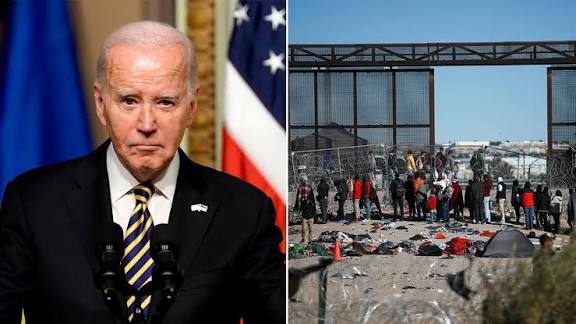
Congressional Republicans argue that President Joe Biden already has all the authority needed to stem the flow of migrants through the U.S. Today we will discuss about Border Battle: Biden Pushback or GOP Power Move
Border Battle: Biden Pushback or GOP Power Move
Few issues ignite American politics more fiercely than the U.S.–Mexico border. Immigration and border policy sit at the crossroads of national security, humanitarian responsibility, cultural identity, and electoral strategy. Over the past several years — from the Biden presidency to the new GOP-driven enforcement wave — the border has evolved from a policy challenge into a full political war.
By 2025, under renewed Republican control and a return to strict border policies, the United States has entered a new era of immigration enforcement. The fierce debate raises a central question:
Is the current border crackdown a necessary pushback against Biden-era policies — or a calculated GOP power move aimed at reshaping America’s immigration system for decades?
This article breaks down the history, motivations, legislation, impacts, and the future of what has become America’s defining “Border Battle.”
The Biden Era: A Balancing Act That Became a Pressure Cooker

1. Biden’s Early Vision — Reform With Humanity
When Joe Biden entered office, he aimed to reverse many of the harshest measures from the previous administration. His team promoted a more humanitarian approach — expanding legal pathways, ending certain strict enforcement policies, and proposing a sweeping immigration reform bill that would have offered legal status to millions of undocumented immigrants.
The proposal, ambitious and historic in scope, included pathways for DACA recipients, long-term undocumented workers, and individuals with temporary protection statuses. But it stalled in Congress, leaving Biden with symbolic intentions and limited legal authority.
2. The Crisis Reality: Surges, Strain, and System Breakdown
As global instability, economic pressures, and regional violence pushed migrants north, the U.S. experienced record-level border crossings.
The asylum system buckled under the pressure:
Processing centers overflowed
Immigration courts faced massive backlogs
Border states scrambled to respond
Critics accused the administration of lacking control
The Biden administration attempted a middle-ground approach: toughening asylum rules during peak crossings while expanding humanitarian parole programs for migrants from crisis-stricken countries.
Supporters viewed this as pragmatic. Critics claimed it created a perception of permissiveness that encouraged further crossings.
3. Biden’s Late-Term Tightening
By mid-2024, the administration shifted hard:
Imposing new restrictions on asylum access
Increasing rapid removals
Tightening legal pathways for certain migrant groups
By this time, however, Biden had alienated both sides:
Progressives argued he betrayed humanitarian values
Conservatives called his measures “too little, too late”
This set the stage for a Republican resurgence on a platform promising to “restore border control.”
2025: The GOP’s Return and the Rise of Hardline Enforcement
With Republicans regaining the White House and sweeping Congress, the border became their top legislative and political priority.
1. The Mega Enforcement Bill: A Border Policy Earthquake
One of the first and largest moves was the passage of a massive border-focused spending and policy package. It injected tens of billions of dollars into immigration enforcement — the largest expansion of border security infrastructure in U.S. history.
Key components included:
Massive funding to rebuild and extend the border wall
Billions for detention centers, increasing capacity to historically unprecedented numbers
Major expansions to ICE and Border Patrol staffing
Advanced surveillance technology and rapid-response enforcement teams
More funding for deportation flights and removal operations
This legislation did not merely adjust border policy — it rewrote the enforcement system.
2. New Mandatory Detention Laws
Additional laws passed in early 2025 expanded mandatory detention for undocumented immigrants, limiting the government’s ability to release migrants while their cases were pending.
More categories of migrants were subject to near-automatic detention, even if they previously qualified for supervised release.
3. Policies Enabling Border Shutdowns
Proposed rules and bills introduced in Congress called for:
Authority to suspend border entry during migration surges
Rapid denial of entry to migrants lacking valid documents
Fast-track removal procedures
These measures dramatically increased executive power over the border, shifting decades-old norms in U.S. immigration law.
4. Symbolic Actions Reinforcing the Message
Public tours of detention centers, tougher rhetoric, and repeated framing of migrants as threats created a clear political signal:
This is not simply border management — it is border domination.
Pushback Against Biden or GOP Power Play? Let’s Break It Down
The answer is not simple. It’s a mixture of historical tension, political opportunity, and ideological goals.
1. The GOP’s Strategic Use of Immigration
For decades, the Republican Party has benefited politically from portraying Democrats as weak on border issues. In the post-Biden environment, the GOP gained an opportunity to:
Reshape immigration law deeply and permanently
Demonstrate aggressive action to energize their voter base
Cement a narrative linking border policy with national security
“Correct” what they framed as years of Democratic mismanagement
Given their control of Congress, the GOP’s legislative push was swift and sweeping — far more than merely undoing Biden’s policies.
2. Is It Fair to Call It “Pushback”?
Partly, yes. The Biden administration did struggle with record migration levels. Even with new restrictions enacted in 2024, the perception of disorder at the border persisted.
But describing the 2025 enforcement wave as only “correction” ignores the scope of the transformation:
New detention capacities
New powers to suspend entry
Expanded deportation operations
End of many ongoing humanitarian programs
Re-review of refugee cases admitted during the Biden years
This is less corrective action and more ideological reconstruction.
3. A Power Move With Long-Term Consequences
The GOP is not merely implementing policy; it is:
Redefining immigration norms
Reshaping enforcement institutions
Embedding long-term capacity for mass removals
Limiting future administrations’ flexibility
It is, in essence, building a new infrastructure of immigration control designed to outlast any single presidential term.
Human and Social Costs of the New Border Regime
1. Surge in Detentions
The expanded detention system now has the capacity to hold vast numbers of migrants at any given moment. This raises concerns about:
Overcrowding
Lack of access to attorneys
Family separations
Mental and physical health impacts
Systemic due-process failures
Migrants fleeing violence or persecution may face rapid removal without meaningful opportunity to plead their case.
2. Acceleration of Deportations
New resources allow for far more frequent and faster deportation operations. While this fulfills political promises of “controlling the border,” it also creates risks:
Wrongful deportations
Deporting individuals with pending asylum claims
Deporting those with U.S.-born children
Disrupting families that have lived in the country for years
Communities with large immigrant populations brace for increased enforcement actions.
3. Reevaluation of Previously Admitted Refugees
A controversial move under the new administration has been the review of refugees admitted under the Biden era. This raises humanitarian and ethical questions, as many refugees have already spent years integrating into American society.
4. Economic and Social Impacts
The crackdown affects:
Labor markets reliant on migrant workers
Businesses dependent on immigrant communities
Local economies in border states
Education systems and social services
Meanwhile, heightened fear drives many immigrant families underground, avoiding medical care, police contact, or public institutions.
Geopolitical Consequences: America’s Global Image Shifts
The U.S. has long presented itself as a beacon for refugees and persecuted individuals. As border and refugee restrictions tighten:
America’s moral authority in international humanitarian circles decreases
Diplomatic tensions with migrant-origin countries may rise
International cooperation on migration could weaken
Other countries may mirror U.S. restrictive policies
This shift could reshape global migration norms.
Why the Border Battle Matters More Than Ever
It is transforming U.S. immigration for decades
New enforcement structures, detention expansions, and policy shifts embed a hardline approach into federal institutions.It impacts millions of lives
Families, workers, refugees, and long-term residents face an environment of fear and uncertainty.It reshapes America’s identity
Immigration has been a cornerstone of American history. Restrictive policies redefine how the nation balances security with humanitarian values.It influences elections and political realignment
Border politics galvanize voters on both sides. The issue will shape future campaigns and political identities.It affects global stability
The U.S. role in refugee resettlement and humanitarian response influences other nations’ actions and global migration patterns.
Conclusion: A High-Stakes Battle With No Easy End
The “Border Battle” is more than a policy dispute — it represents a struggle over America’s future identity, values, and political direction.
The current enforcement surge is partially a reaction to real strains on the immigration system during the Biden years. But the scale, intensity, and ideological design of the GOP’s approach clearly suggest a broader ambition: to construct a long-lasting immigration regime rooted in strict enforcement, rapid removals, and minimized humanitarian pathways.
As this new era unfolds, the United States faces a series of defining questions:
Can the nation secure its borders without sacrificing human dignity?
Will enforcement become the permanent center of immigration policy?
How will future administrations undo or adapt to these systemic changes?
And most importantly: What kind of country does America wish to be in the global landscape of migration and asylum?
The border battle is far from over. It is shaping the future of America — one policy, one law, one human story at a time.
How useful was this post?
Click on a star to rate it!
Average rating 0 / 5. Vote count: 0
No votes so far! Be the first to rate this post.
About the Author

usa5911.com
Administrator
Hi, I’m Gurdeep Singh, a professional content writer from India with over 3 years of experience in the field. I specialize in covering U.S. politics, delivering timely and engaging content tailored specifically for an American audience. Along with my dedicated team, we track and report on all the latest political trends, news, and in-depth analysis shaping the United States today. Our goal is to provide clear, factual, and compelling content that keeps readers informed and engaged with the ever-changing political landscape.