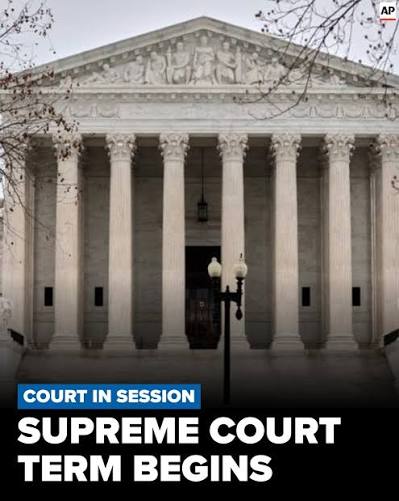
Texas Map Shock: Supreme Court Clears GOP-Heavy Redistricting, Democrats Cry “Election Grab”

Empower the work of the National Democratic Redistricting Committee to end gerrymandering. Help rebuild a democracy where voters choose their politicians. Today we will discuss about Texas Map Shock: Supreme Court Clears GOP-Heavy Redistricting, Democrats Cry “Election Grab”
Texas Map Shock: Supreme Court Clears GOP-Heavy Redistricting, Democrats Cry “Election Grab”
In a dramatic and highly consequential ruling, the U.S. Supreme Court has allowed Texas to move forward with a new congressional map widely considered to favor Republicans. The decision reversed a lower court’s earlier order blocking the map on grounds that it likely constituted racial gerrymandering. The timing — just months before the 2026 midterm primaries — makes this ruling a political bombshell with national implications.
Political observers quickly labeled the controversy “Texas Map Shock,” a phrase capturing both the scale of the surprise and the intense backlash from Democrats and civil-rights groups. Many of them argue that the GOP-authored map represents nothing short of an “election grab,” a tactical power move designed to secure additional Republican seats in the U.S. House.
This article explores how this stunning development unfolded, why the map matters, what the Supreme Court actually said, and how the decision could reshape electoral politics across the country.
What Happened: From Map-Drawing to Supreme Court Intervention

Origins of the 2025 Redistricting Push
The story begins in early 2025 when Texas lawmakers, under firm Republican control, approved a brand-new congressional map. What made the move controversial was not only what the map did, but when it happened.
Typically, states redraw congressional districts once every ten years following the national census. Texas had already completed that process in 2021. Yet, in 2025 — only four years later — Republicans initiated a mid-decade redistricting, an uncommon step that immediately raised suspicion.
The new 2025 map reconfigured all 38 Texas congressional districts, strengthening Republican chances in areas previously considered competitive. Analysts predicted the GOP could gain as many as five additional U.S. House seats from it — enough to reshape the balance of power in Congress.
Immediate Legal Challenges
Civil-rights groups, Democrats, and voting-rights organizations swiftly filed lawsuits. Their argument: the new Texas map wasn’t simply partisan — it was intentionally designed to weaken the power of Black and Latino voters.
Opponents highlighted how several “coalition districts”—areas where minority communities together held enough influence to elect their preferred candidates—were dismantled. In their place, the legislature created districts with strong and often overwhelming Republican advantages.
Lower Court Blocks the Map
In November 2025, a three-judge federal panel issued a detailed and scathing ruling blocking Texas from using the map. The judges argued that the plaintiffs had demonstrated “substantial evidence” the map was likely an unconstitutional racial gerrymander. The court ordered Texas to revert to the earlier 2021 map.
For a brief moment, Democrats and civil-rights activists celebrated what appeared to be a major victory.
But that relief wouldn’t last long.
The Supreme Court Steps In
Only weeks later, Texas appealed to the U.S. Supreme Court, seeking an emergency order to reinstate the disputed map for the upcoming 2026 elections. In early December 2025, the Court granted that request, issuing an unsigned order that effectively nullified the lower court’s decision — at least temporarily.
The Court’s conservative majority emphasized that courts should not “alter election rules on the eve of an election,” arguing that implementing a different map so close to the primary season could cause instability and voter confusion. Some justices further suggested that the lower court may have improperly weighed partisan motives versus racial factors.
Liberal justices dissented sharply, warning that the Court was permitting a map that had already been found discriminatory against minority voters.
Suddenly, the blocked map was back — and Texas politics had been upended.
Why the Map Matters: Legal, Political, and Demographic Stakes
A Blow to Minority Representation
For civil-rights groups, the Supreme Court’s decision represents a potentially devastating setback. Their concerns center on these key issues:
Dilution of Minority Voting Power: The new map dismantles several districts where Black, Latino, and other minority voters could elect their preferred candidates.
Undercutting “Coalition Districts”: Even if no single minority group held a majority, their combined voting power previously made several districts competitive. Many of those districts have now been reshaped to favor Republicans.
Weakening of Voting Rights Act Protections: Critics argue that by allowing the map to stand despite evidence of racial impacts, the Court is slowly eroding key protections of the Voting Rights Act of 1965.
In short, opponents say the new map does not reflect population diversity — it manipulates it.
Partisan Advantage and the 2026 Midterms
Politically, the stakes could not be higher. The reinstated map could give Republicans up to five additional House seats — a potentially decisive factor for control of the House of Representatives.
If the GOP captures those seats, Texas alone could shift the national balance of power.
A New Era of Mid-Decade Redistricting
Texas’s abrupt mid-cycle map redraw could inspire similar moves in other states. Historically, mid-decade redistricting was rare, viewed as excessive and destabilizing. But the Supreme Court’s decision may signal that such dramatic changes are legally permissible.
States like Missouri, North Carolina, and others are reportedly exploring similar strategies, potentially leading to unstable, constantly shifting political boundaries.
If this becomes the norm, political analysts warn of a “redistricting arms race” where maps are redrawn repeatedly whenever one party gains legislative control.
Reactions: Cheers, Outrage, and Unease
Republican Leaders Celebrate a Major Victory
For Republicans, the ruling was nothing short of a triumph.
Texas’s governor praised the Court for recognizing the state’s authority to draw districts as it sees fit. State officials argued that the new map correctly reflects Texas’s political leanings, emphasizing that partisan considerations — not race — guided their decisions.
Republican lawmakers also touted the map as a necessary corrective to what they view as shifting demographics and political realities in the fast-growing state.
Democrats and Civil-Rights Groups Cry Foul
Democrats denounced the decision as a judicial endorsement of racially discriminatory tactics.
Prominent national figures argued that the Court had “shredded its credibility,” enabling what they called a blatant power grab at the expense of minority voters.
On the ground in Texas, Democratic representatives expressed alarm that these changes could undo decades of progress in minority political participation. Many feared the decision marked the “effective end” of the Voting Rights Act’s remaining protections.
Organizers warned the decision could reduce minority turnout by creating districts where their votes matter less, fostering cynicism and disengagement.
Legal Experts Sound the Alarm
Election-law scholars and constitutional experts offered a more measured — but no less serious — critique. Many suggested the decision:
Signals weakening judicial protections against racial gerrymandering.
Normalizes mid-decade redistricting, opening the door to more frequent partisan map-rewrites.
Creates confusion over how courts should distinguish between racial and partisan motives.
May embolden further legal challenges, potentially altering the future of the Voting Rights Act.
While the Supreme Court’s order is temporary, experts warn it could have long-lasting ripple effects.
Broader National Implications: A Precedent for the Future?
A New Normal in Redistricting Battles
The Texas case underscores a wider pattern: increasingly aggressive redistricting fights across the country, often independent of census cycles. If one state can effectively redraw its map every few years, what stops others from doing the same?
This scenario raises fundamental democratic questions:
How frequently can — or should — maps change?
What protections do minority communities have if statewide legislatures redraw districts whenever political winds shift?
Does this erode the stability of American elections?
Challenges to Voter Confidence
Frequent and partisan-driven redistricting risks undermining public trust. If voters believe maps are manipulated for partisan advantage, they may perceive elections as unfair or predetermined.
Minority communities, already disproportionately affected by map changes, may become especially discouraged. Lower turnout could lead to even less representation, creating a feedback loop.
More Legal Battles Ahead
The Supreme Court’s emergency order did not fully rule on the merits of the case. That means:
The map is allowed for now.
Lawsuits will continue.
The Court may eventually hear the case in full, setting a definitive precedent.
Meanwhile, similar cases from other states — especially in the South — could converge into a larger legal showdown over racial gerrymandering and partisan intent.
Why Critics Call It an “Election Grab”
Many activists and political commentators describe the reinstated map as an “election grab” because it:
Strengthens GOP control in multiple districts previously considered competitive.
Was enacted hastily, outside the normal 10-year redistricting cycle.
Reduces minority voting influence, especially in urban and multiracial districts.
Ignores evidence of racial motivation that the lower court found compelling.
Creates immediate political benefits, specifically targeting the 2026 midterms.
To critics, the strategy is clear: redraw the lines, rearrange the voters, and lock in power.
To supporters, the map simply reflects a rapidly changing political landscape.
What Happens Next: The Road to the 2026 Midterms and Beyond
Short-Term Reality: The Map Will Be Used in 2026
Barring an extraordinary legal reversal, Texas will conduct its 2026 elections using the GOP-favored map. That reality significantly reshapes the dynamics of multiple congressional races.
Candidates who once held competitive seats may now find themselves in districts strategically engineered to favor one party.
Ongoing Legal Battles
Civil-rights groups are preparing new challenges that may extend beyond 2026. They are seeking full judicial review to demonstrate that the map violates constitutional protections.
In addition, pending redistricting cases from other states could intersect with the Texas litigation, potentially prompting the Supreme Court to clarify how election-year timing, racial considerations, and partisan motives should be weighed.
Long-Term Implications
If the Court ultimately upholds Texas’s approach:
Mid-cycle redistricting may become common.
Voting-rights protections may weaken further.
Maps could shift every few years, not every decade.
Political maneuvering may overshadow demographic reality.
If, on the other hand, the Court later rules against the map, it could reassert limits on racial gerrymandering — though likely after the 2026 elections have already been shaped by the new districts.
Conclusion — A Turning Point with National Consequences
The Supreme Court’s decision to reinstate Texas’s GOP-favored congressional map marks a watershed moment in American electoral politics. It highlights the growing tension between partisan ambition, minority representation, and judicial oversight.
For Republicans, it is a strategic victory — potentially adding multiple seats in Congress and strengthening their national advantage. For Democrats and civil-rights groups, it represents a profound setback, signaling what they view as a dangerous erosion of voting protections and democratic norms.
Most importantly, this ruling may reshape not only Texas’s political landscape but also the future of redistricting across the United States. With stakes this high, the battle over electoral maps — in Texas and beyond — is far from over.
How useful was this post?
Click on a star to rate it!
Average rating 0 / 5. Vote count: 0
No votes so far! Be the first to rate this post.
About the Author

usa5911.com
Administrator
Hi, I’m Gurdeep Singh, a professional content writer from India with over 3 years of experience in the field. I specialize in covering U.S. politics, delivering timely and engaging content tailored specifically for an American audience. Along with my dedicated team, we track and report on all the latest political trends, news, and in-depth analysis shaping the United States today. Our goal is to provide clear, factual, and compelling content that keeps readers informed and engaged with the ever-changing political landscape.