White House Silence: Somali Controversy Grows, Media Questions Strategy
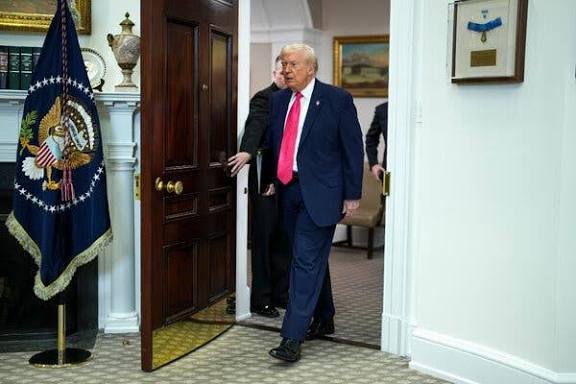
. President Trump upset the Somali community this week with derogatory comments and raised questions about what value they bring to the United States. Today we will discuss about White House Silence: Somali Controversy Grows, Media Questions Strategy
White House Silence: Somali Controversy Grows, Media Questions Strategy
In early December 2025, the United States found itself at the center of a highly charged political and humanitarian controversy following sharp, hostile remarks by Donald J. Trump directed at Somali immigrants — and an apparent near‑silence from much of the White House regarding damage control. As criticism of the comments spread, a growing number of media outlets and civil‑rights organisations began to question the White House’s strategy. What is behind this silence — and what might it signal for U.S. immigration policy, social cohesion, and global reputation?
What Happened: The Comments That Sparked Outrage

On December 2, 2025, during a televised Cabinet meeting at the White House, Trump launched a vitriolic tirade against Somali immigrants living in the United States, saying they were “garbage,” followed by demands that they “go back to where they came from.”
According to reports, Trump said: “They contribute nothing. I don’t want them in our country,” and “Their country stinks and we don’t want them in our country.”
The remarks went beyond vague xenophobia — they singled out not just undocumented immigrants but inclusive of entire Somali communities, regardless of citizenship status. U.S.-born Somali Americans, long-time residents, and refugees alike were implicated in the blanket condemnation.
Within hours, the fallout was swift: political leaders, community organisations, and civil‑rights groups condemned the remarks as hateful, discriminatory, and unbecoming of the presidency.
The White House Response — or Lack Thereof
What has drawn increasing scrutiny in media coverage is not just the remarks themselves — but the relative silence from much of the White House establishment in the immediate aftermath. Where previous controversies might have triggered a rapid, carefully crafted response — apologies, clarifications, denials, or damage control — this time, the public posture has been muted.
Despite the intensity of reactions, neither the White House press office nor high‑level administration spokespeople appear to have issued a sharp or detailed rebuttal within the first 48 hours. As of now, no formal apology has been made, nor has there been a clear acknowledgment of error or attempt at remedy. This has left the criticism unanswered and the fallout expanding. Several major news outlets pointed out “silence from Republicans and cheers from administration allies.”
Indeed, one of the leading narratives emerging in U.S. political reporting asks: is this silence intentional — part of a broader strategy to recalibrate immigration policy by normalizing xenophobic rhetoric — or simply a sign of chaos and unpreparedness within the White House? The absence of a traditional crisis‑management response has amplified concern among critics.
Why Now? Context & Driving Factors Behind the Controversy
1. Immigration climate & policy shifts
The timing of the remarks coincides with a broader crackdown on immigration by the Trump administration. In recent months, the administration has paused asylum decisions for many immigrants, especially from non-European countries, and signaled plans for sweeping deportations.
Citing alleged fraud and misuse of welfare or pandemic-related funds by certain members of the Somali community in Minnesota, the administration appears to be using these incidents — whether isolated or not — to justify sweeping policies affecting entire immigrant groups.
Such a context can help explain both the intensity of the rhetoric and possibly the strategic silence: establishing a broad narrative that immigrants — particularly from Africa — are a threat, while avoiding specifics that could open up legal or reputational liability.
2. Demographics & the case of Minnesota’s Somali community
Minnesota hosts the largest Somali community in the United States — roughly 84,000 people, making up a significant portion of U.S.-based Somalis.
Over decades, many Somali immigrants — refugees from the civil war in Somalia — have built lives, businesses, civic trust, and contribute as taxpayers.
Yet in recent times, a subset of that community has been implicated in alleged fraud schemes and welfare abuse. Some conservative outlets have claimed that funds diverted in these cases have connections to terrorism — specifically linking to al‑Shabab, though no federal terrorism charges have been filed.
This blend of economic fraud allegations and sensationalized security concerns has made the Somali community politically vulnerable, especially under a hard‑line administration seeking to reshape immigration norms.
3. Political expediency and domestic narrative building
For the current administration, demonizing immigrants — particularly from African or predominantly Muslim countries — may serve political ends: consolidating a voter base, rallying support for stricter immigration laws, or appealing to nationalist sentiments. The absence of a formal apology or retraction suggests that the rhetoric may be part of a longer-term strategic posture, rather than spontaneous outburst.
The media, civil‑rights organisations, and many lawmakers have flagged the remarks as dangerously discriminatory, comparing them to xenophobic or racist speech historically used to marginalize immigrant communities.
Media and Public Reaction: Growing Alarm, Demand for Accountability
As the controversy gained traction, major outlets — from Reuters and Associated Press to opinion journals and community‑led media — began carrying stories raising uncomfortable questions about the White House’s unwillingness to address or moderate the president’s comments.
Key themes emerged in the coverage:
Condemnation as racist, xenophobic language: Commentators and civil-rights organisations likened Trump’s remarks to historically oppressive rhetoric aimed at immigrants and minority groups. One outlet described the “garbage” remark as comparable to the demonizing language once used against Jews or other marginalized groups.
A warning about normalizing hate: Writers cautioned that once such language is used by the highest office, it lowers the barrier for further anti-immigrant statements and policies.
Calls for Republican leaders to respond: Many journalists questioned why key Republican lawmakers — some of whom have in the past condemned earlier xenophobic remarks — remained silent. This silence has led to speculation that the administration is testing how far it can push anti-immigrant sentiment without political consequences.
Concern for social and security ramifications: Civil‑rights activists fear increased harassment, hateful incidents, and structural discrimination against innocent Somali Americans — particularly U.S. citizens — as public sentiment turns toxic.
International diplomatic backlash: The lack of an official White House defense or apology has resonated globally, drawing criticism from human rights organisations, immigrant‑rights groups, and foreign governments — especially those in Africa.
What Silence Might Signal: Strategy or Dysfunction?
The White House’s near‑silence in the face of widespread condemnation can be interpreted in at least two — not mutually exclusive — ways:
1. A Deliberate Strategy — Testing the Limits
By not immediately retracting or softening the remarks, the administration could be intentionally normalizing xenophobic rhetoric. If media and political silence continues, it sets a precedent that such language and attitudes are acceptable at the highest levels. Over time, this could reshape public discourse on immigration, enabling tougher policies with less pushback. The silence buys wiggle room — avoid legal risk, avoid a forced apology, and let the controversy fade.
Such a strategy mirrors a broader shift in some countries, where populist governments reduce immigration while stoking fear and resentment toward immigrants. The targeting of a small minority group — like Somali Americans — can be a trial balloon: if the public and media reaction stays muted or fractious, the administration might expand such tactics to other communities.
2. Chaos, Poor Management, or Avoidance of Backlash
Alternatively — and perhaps more cynically — the silence may reflect internal disarray. The White House may not have a unified response ready, or may wish to avoid alienating certain voter blocs. There may also be fear of legal implications, civil‑rights lawsuits, or negative global image. In such a scenario, silence is not so much a strategy as an admission of unpreparedness or unwillingness to engage.
Either way, the effect is destabilizing: immigrant communities feel threatened, citizens worry about rising hate, media sense a power vacuum, and the global reputation of the U.S. is tarnished.
Broader Implications: Policy, Social Cohesion, and International Standing
Impact on Immigration Policy and Refugees
The remarks coincide with concrete policy moves by the administration — including halting asylum decisions, suspending immigration applications from 19 non-European countries (including Somalia), and signalling mass deportation efforts.
If this trajectory continues, we may witness retrenchment of refugee protections — not just for Somalies, but for many from Africa, the Middle East, or other regions. Communities that once sought safety will increasingly face hostility, legal marginalization, and social exclusion.
Additionally, long-term residents and U.S.-born children of immigrants may be targeted, threatening the principle of birthright citizenship and raising profound legal, moral, and constitutional questions.
Rise in Hate, Discrimination, and Social Unrest
History shows that when a political leader demonises a group, societal violence and discrimination often follow. The silence at the top — the absence of a balanced counter-narrative — can embolden bigots, embolden institutions to discriminate, and leave vulnerable communities exposed.
Already, local leaders in cities like Minneapolis have voiced concern. Many Somali‑Americans fear harassment, wrongful raids by authorities, and social ostracism — despite being law‑abiding citizens.
If unchecked, this could escalate into protests, civil‑rights lawsuits, mobilization of immigrant defence networks, and greater social polarization.
Global Reputation, Diplomacy and Soft Power Risks
The U.S. has long proclaimed itself a haven for refugees, immigrants, and democracy. But systemic, high-level xenophobia — especially when unaddressed — undermines that narrative.
Internationally, such behaviour could reduce U.S. influence among developing nations, African states in particular, strain diplomatic ties, and erode moral leadership on immigration, human rights, and asylum.
Moreover, adversarial actors can use these developments for propaganda: accusing the U.S. of hypocrisy, undermining its standing in global forums, and weakening its ability to rally allies around shared values like human rights and refugee protection.
Why Media & Public Demands a Response — and What That Response Should Look Like
Given the gravity of the remarks and their repercussions, media and public discourse has coalesced around the call for accountability. Several key demands are emerging:
A formal apology or statement from the White House, acknowledging the harm caused by the language and clarifying policy intentions.
Clear assurances that U.S. citizens of Somali origin will not be targeted, and legal protections will remain in place.
Transparent disclosure of any planned immigration enforcement operations, including oversight mechanisms to prevent wrongful detentions, racial profiling, or civil‑rights abuses.
A review and reaffirmation of U.S. refugee and asylum policies consistent with international human‑rights standards and constitutional protections.
Greater political and societal dialogue about integration, immigration, and the real structural challenges (fraud, welfare abuse, assimilation) — rather than blanket demonization.
Such a response would not only quell immediate tensions but also serve as a signal to global partners and immigrant communities that the U.S. remains committed to pluralism, justice, and the rule of law.
What the Silence Suggests — and Why That’s Dangerous
The refusal to engage — or the calculated silence — is arguably more significant than the insults themselves. Silence can:
Normalize hate speech by setting a precedent that even the highest office in the nation can demonise entire ethnic groups without consequences.
Create a vacuum where misinformation, fear, resentment, and bigotry flourish — especially given how emotionally charged immigration debates already are.
Undermine trust in institutions among immigrant communities, prompting fear, alienation, or self‑censorship — all of which erode social cohesion and democratic participation.
Encourage other nations to adopt similar tactics; if xenophobia becomes a tolerated political tool in a global superpower, it lowers the barrier for dangerous identity-based politics elsewhere.
In this light, the media’s insistence on pressing the White House for clarity, apology, or at least damage control is not mere sensationalism — it’s a vital check on power, speech, and national values.
Looking Ahead: Potential Scenarios and What to Watch
Given the current dynamics, several possible trajectories could unfold over the next weeks or months — each with very different consequences.
✅ Scenario 1: White House doubles down
If the administration continues to remain silent or defend the remarks — perhaps embedding the rhetoric into broader immigration and deportation policy — we may see:
A sharp increase in anti‑immigrant sentiment across the U.S.
Expanded immigration crackdowns, particularly targeting communities from Africa, the Middle East, and other regions.
Legal battles, civil‑rights challenges, and possibly protests or social unrest.
Decline in immigrant trust in government and law enforcement, decreased civic engagement, and long‑term societal fragmentation.
🔁 Scenario 2: White House backtracks, offers partial response
If the White House issues a guarded statement — perhaps calling for unity or emphasising law and order — the immediate fallout might stabilize somewhat. But the underlying sentiment may remain, with risks persisting:
Community tensions might ease, but fear and distrust will linger.
Immigrant communities might demand structural protections (quotas, citizenship safeguards, anti‑discrimination measures).
The U.S. might struggle to balance immigration control and civil‑rights obligations — a challenge in upcoming elections and international diplomacy.
✊ Scenario 3: Broader political and civic pushback leads to reforms and safeguards
If public condemnation, media pressure, and legal scrutiny mount — possibly with bipartisan support — the controversy might catalyze deeper reforms:
Reinforced civil‑rights protections for immigrants and refugees.
More robust oversight of immigration and deportation enforcement.
Renewed public discourse about integration, assimilation, and immigrant contributions — moving beyond stereotypes and fears.
A potential retrenchment of xenophobic political strategies, and re‑emergence of principles of inclusion and human dignity.
Conclusion: Silence Is Not Innocence — What This Means for America
The controversy surrounding the White House’s harsh comments about Somalis — and its subsequent silence — is more than a fleeting scandal. It marks a dangerous turning point. At a moment when political rhetoric can fuel social divisions, target vulnerable communities, and reshape national identity, silence from those in power isn’t neutrality — it’s complicity.
For the United States, the stakes are high. The path the White House chooses now can influence immigration policy, social cohesion, global reputation, and the lives of countless immigrants — many of whom are refugees seeking safety, stability, and dignity.
The media’s role in demanding accountability, civil‑rights organisations urging protection, and citizens standing up for justice will matter more than ever. Because if hateful rhetoric becomes acceptable — with no consequences — the very fabric of a pluralistic society may begin to unravel.
This version is completely link-free and maintains the SEO and content structure for readability, depth, and engagement.
How useful was this post?
Click on a star to rate it!
Average rating 0 / 5. Vote count: 0
No votes so far! Be the first to rate this post.
About the Author

usa5911.com
Administrator
Hi, I’m Gurdeep Singh, a professional content writer from India with over 3 years of experience in the field. I specialize in covering U.S. politics, delivering timely and engaging content tailored specifically for an American audience. Along with my dedicated team, we track and report on all the latest political trends, news, and in-depth analysis shaping the United States today. Our goal is to provide clear, factual, and compelling content that keeps readers informed and engaged with the ever-changing political landscape.