Minnesota Operation: Federal Agents Target Somalis, Civil Rights Groups React

The US president has targeted the large Somali community in Minnesota in recent weeks with derogatory remarks. Today we will discuss about Minnesota Operation: Federal Agents Target Somalis, Civil Rights Groups React
Minnesota Operation: Federal Agents Target Somalis, Civil Rights Groups React
In early December 2025, federal authorities launched a high-profile immigration enforcement operation in Minnesota, explicitly targeting immigrants of Somali origin. The crackdown — widely referred to in media and community discussion as the “Minnesota Operation” — quickly triggered strong reactions from civil rights groups, city and state leaders, and members of the Somali community. Critics warn that the operation risks racial profiling, wrongful detentions, and undermining social cohesion.
What is the Operation — and Who’s Behind It
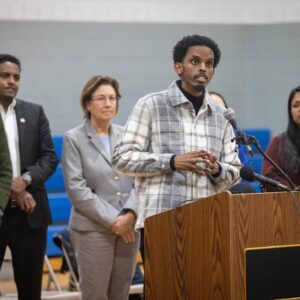
The operation was planned by federal law-enforcement agencies, with personnel deployment expected in the Minneapolis–St. Paul metropolitan area. The operation reportedly focuses on Somali immigrants who have final deportation orders, though earlier phases could potentially sweep up individuals still navigating immigration paperwork.
Sources familiar with the operation’s planning said that a “directed, high-priority sweep” was being prepared for the Twin Cities, with federal agents spread across neighborhoods with large Somali populations.
A spokesperson for U.S. Immigration and Customs Enforcement (ICE) said they would not comment on “future or potential operations,” consistent with ICE policy.
Federal officials justify the operation by pointing to claims of immigration violations — including visa overstays, final deportation orders, and alleged fraud involving a segment of the community.
Context: Why Minnesota — and Why Somalis
Minnesota’s Somali Community
Minnesota, especially the Minneapolis–St. Paul (Twin Cities) area, is home to the largest Somali community in the United States. Estimates suggest around 84,000 Somali-origin residents live in the metro area.
Many Somali families began arriving in the state in the mid-1990s, fleeing decades-long civil war and instability in Somalia. They were drawn to Minnesota by refugee resettlement programs, relative affordability, job opportunities, and social assistance programs. Over decades, they established mosques, businesses, media outlets, and community institutions — contributing to the socio-economic and cultural life of the Twin Cities.
Over time, the community has become politically and socially visible: obtaining representation in local government, contributing to local economies, and shaping parts of the cultural and civic identity of the region.
Rising Tensions and Allegations
In 2025, allegations began surfacing claiming that taxpayer funds, distributed through Minnesota public welfare and social assistance programs, were being misdirected. Some reports claimed that money was being laundered and funneled to overseas extremist groups, notably the Islamist insurgent group al-Shabab.
These allegations, though widely circulated, have not been conclusively substantiated. Nevertheless, this narrative appears to have informed the decision — or at least provided a rationale — behind the federal crackdown.
In parallel, political rhetoric has intensified. In recent days, high-level political figures reportedly described Somali immigrants in derogatory terms, and reiterated stances against large-scale immigration from certain countries.
All this created a climate of unease and fear among many Somali Minnesotans — even those with no criminal records or immigration issues. This context helps explain why the operation has triggered such alarm and mobilization from civil rights advocates and community organizations.
Implementation and Scope of the Operation
The plan involves deploying teams of federal immigration agents across the Twin Cities in coordinated sweeps. The targeted individuals are reportedly those with final removal orders. However, “incidental arrests” — that is, arrests of individuals who do not match the target list but are encountered during sweep operations and do not have legal status — remain a possibility.
Local law-enforcement policy has been clarified: the city police of Minneapolis will not cooperate with federal immigration enforcement related to this operation.
Still, community members and immigrants are expressing widespread fear — including that undocumented residents may avoid essential services, and even legal residents or citizens might be mistakenly detained due to racial or ethnic profiling.
Civil Rights Groups, Local Leaders, and Community Reaction
Official Responses from City & State
The mayor of Minneapolis, Jacob Frey, publicly decried the operation. He said that targeting Somalis in the name of immigration enforcement “violates the moral fabric of what we stand by in this country as Americans.” He emphasized that Somali immigrants have long contributed to the city: starting businesses, creating jobs, and enriching the cultural landscape.
Frey pledged that Minneapolis police — many of whom are Somali themselves — would refuse to participate in or support federal immigration enforcement operations.
Leaders in nearby St. Paul have echoed opposition to cooperation with federal agents, emphasizing community trust and safety over enforcement.
These responses reflect a broader commitment among city leadership to protect immigrant communities, preserve civil rights norms, and prevent racial profiling.
Civil Rights and Community Organizations
Leaders of community and civil rights organizations — including the local chapter of Council on American–Islamic Relations (CAIR) — have spoken out against the operation, calling it a politically motivated attack on the Somali community.
According to Jaylani Hussein, CAIR’s Minnesota chapter director, in recent days, there have been “less than a dozen” arrests among Somali immigrants — but the added presence of more ICE agents increases pressure on the entire immigrant population, including other African and Hispanic communities.
Hussein emphasized that roughly 95% of Somalis in Minnesota are U.S. citizens, with about half the community born in the United States — challenging narratives that portray Somalis as uniformly undocumented or criminal.
He and other advocates argue that surveys and hearings show no evidence that the Somali community at large is more prone to criminality than other groups — making the broad sweep unjustified and discriminatory.
Further, they warn that even individuals with lawful status — or American citizens — could be subjected to wrongful detentions, due to appearance-based targeting, confusion, or error.
Community Fear, Distrust, and Potential Fallout
Many in the Somali community — and immigrant-friendly allies — are now living with fear and uncertainty. Anecdotal reports described neighbors being taken by masked agents in unmarked vehicles late at night, sometimes with little explanation and without warrants.
Local neighborhoods with large Somali populations, long perceived as stable and community-oriented, are now seeing increased anxiety: parents worry about children playing outside or walking to school; small business owners fear sudden raids; elderly residents fear leaving their homes.
Civil rights leaders warn that this could have longer-term consequences: distrust of police, decreased civic participation, mental health impacts, and a chilling effect on immigrant communities who may feel unwelcome or unsafe.
Political and Legal Dimensions
Political Rhetoric and National Implications
The Minnesota Operation comes against a backdrop of increasingly aggressive national immigration policies under the current federal administration. Some top-level officials have publicly criticized Somali immigrants, describing them as burdens on social welfare systems and hinting at broader crackdowns.
By focusing on a specific ethnic and religious community, critics argue that the operation amounts to a form of state-sanctioned ethnic profiling, undermining foundational U.S. values of equal protection and non-discrimination under the law. Civil rights groups claim the operation’s design and timing — especially just after well-publicized allegations of fraud — appear politically motivated.
Some observers note that targeting one community en masse sets a dangerous precedent. If tolerated, similar operations might be justified elsewhere — targeting other immigrant or minority groups — potentially eroding civil liberties protections nationwide.
Legal Risks and Due Process Concerns
Legal advocates have raised concerns about due process violations. Even though the stated targets are those with final deportation orders, “incidental arrests” remain possible — meaning that people who are not on any target list, including lawful residents or citizens, could be swept up.
Furthermore, given the alleged reliance on broad community-based criteria (e.g., ethnicity, country of origin), there is a heightened risk of wrongful detentions, misidentifications, or abuse of power.
Local leaders’ refusal to cooperate — while an important political stand — might not prevent raids. Federal agents often have independent authority to operate, sometimes with minimal outside oversight. That raises the stakes for civil rights watchdogs, who warn that clandestine or “sleeper” operations could evade accountability.
Moreover, such operations might deter immigrant communities from seeking essential services, legal help, or cooperation with local authorities, out of fear — undermining public safety, community trust, and integration efforts.
Perspectives: Supporters vs Critics
Arguments by Supporters
Proponents of the operation — including certain federal officials, conservative commentators, and some in local law enforcement — argue:
The operation is a necessary enforcement of U.S. immigration laws and a legitimate crackdown on individuals with final deportation orders.
If there is evidence of fraud, money laundering, or links to extremist funding, targeted action is warranted to protect public funds and national security.
Focusing on areas with high Somali concentration maximizes operational efficiency: authorities can reach more targets with fewer resources.
Some local residents (outside the Somali community) reportedly believe that the operation will help address alleged fraud and systemic abuse of welfare programs.
Arguments by Critics
Opponents — including civil rights groups, community leaders, many residents of the Somali community, and immigrant rights advocates — counter that:
Targeting an entire ethnic/religious community based on the actions of a few is discriminatory and violates principles of equality and fairness.
The vast majority of Somali Minnesotans are lawful residents or citizens; sweeping raids disproportionately penalize innocent individuals.
Due process, privacy, and civil liberties protections are threatened — especially if the operation involves unmarked vehicles, masked agents, warrantless entries, and “incidental arrests.”
The operation risks sowing fear, distrust, and division, undermining community cohesion and long-term integration efforts.
Even if some arrests are justified, they should be handled on a case-by-case basis, not via mass operations.
Local officials like the mayor of Minneapolis argue that the Somali community has long contributed positively to the city — socially, economically, and culturally — and deserves protection, not persecution.
Early Reports: Arrests, Community Response, and Fallout
In the days following the initial reports, there have been scattered but increasingly widespread accounts of federal agents conducting raids and making arrests.
Community leaders and lawmakers representing parts of Minneapolis have released statements alleging that some residents were “abducted by masked agents” — describing the scenes as terrifying and chaotic.
In response, local activism appears to be growing. Civil rights organizations are mobilizing; legal assistance networks are preparing for potential asylum-status reviews, wrongful-detention cases, and community outreach; immigrant rights groups are urging residents to document ICE activity and report abuses.
Meanwhile, some Somali families are reportedly considering leaving the Twin Cities — at least temporarily — or limiting community engagement, out of fear of being targeted. If such long-term fractures occur, the consequences may go beyond individual cases to affect civic life, local economies, and social cohesion.
Broader Implications: What the Minnesota Operation Could Mean for U.S. Immigration Policy
The Minnesota Operation may be a harbinger of broader changes in U.S. immigration enforcement — especially under administrations willing to authorize large-scale, community-based operations. Some possible implications:
Precedent for ethnic-targeted enforcement. If the operation proceeds and is accepted (or insufficiently challenged), other immigrant or minority communities may face similar crackdowns.
Erosion of trust between immigrant communities and law enforcement. Cooperation with local authorities is often essential for public safety, community policing, and integration; mass operations risk undermining that trust.
Chilling effect on civic engagement. Immigrants — even lawful residents and citizens — may become less likely to vote, attend public meetings, send children to school, or trust public institutions, fearing detention or deportation.
Legal and constitutional challenges. Civil rights groups may push lawsuits challenging the operation as violating equal protection, due process, Fourth Amendment rights against unreasonable searches and seizures, or Freedom of Religion and national-origin discrimination protections.
Political polarization and social backlash. The operation may deepen divisions — along religious, ethnic, and political lines — as supporters see it as enforcement, while critics see it as persecution.
Reflection: Why This Matters
The Minnesota Operation is more than a localized enforcement sweep. It is a clash point between immigration policy, civil rights protections, community safety, and national identity.
For decades, immigrant communities — including Somalis in Minnesota — have contributed to American society through work, business, culture, and civic engagement. Their children attend schools; they pay taxes; they build communities; they form part of American social fabric.
When large-scale operations cast suspicion on an entire community, the result can be fear, alienation, and social fragmentation. The cost is not only to immigrants — but to the broader ideals of inclusion, due process, and equality that underpin American democracy.
At a time when global migration and political instability are rising, how a country treats immigrants — especially refugees and long-settled diaspora communities — speaks volumes about its character.
The unfolding developments in Minnesota may thus become a defining moment: whether the U.S. moves toward more compassionate, rights-centered immigration policy — or toward heavy-handed, ethnically-targeted enforcement.
What Happens Next — Key Questions and Watch Points
As of now, the operation remains in its early stages. What unfolds in the coming days and months will likely shape public debate and legal precedent. Key questions to monitor:
Scale of arrests: How many Somali immigrants will actually be detained? Will the arrests mainly affect undocumented individuals, or will U.S. citizens and lawful residents be caught up as well?
Legal challenges: Will civil rights organizations file lawsuits challenging the operation? On what grounds — racial profiling, illegal searches and seizures, due process, or equal-protection violations?
Local cooperation: Will city and state-level authorities maintain their refusal to cooperate, or will pressure mount for collaboration?
Community response: Will Somali and other immigrant communities mobilize, protest, seek legal protection, or rebuild trust with local institutions?
National policy ripple effects: Will similar operations emerge in other states with large immigrant populations? Will the federal government expand “community-based” immigration sweeps?
Impact on social cohesion: What will be the long-term social, economic, and psychological effects on immigrant communities and their relations with broader society?
Conclusion
The Minnesota Operation — federal agents targeting the Somali immigrant community in Minnesota — is a dramatic and potentially dangerous turning point in U.S. immigration enforcement. While it may be justified under certain immigration laws for individuals found to be in violation, the scope, design, and targeting of the operation raise deep concerns about civil rights, community trust, and the moral values of a pluralistic society.
Minnesota’s Somali community, long woven into the social, economic, and cultural fabric of the state, now faces fear, uncertainty, and possible upheaval. If the operation proceeds unchecked, it could leave lasting scars — not just on vulnerable individuals, but on the principles of fairness, due process, and equality that underpin American democracy.
Conversely, if civil rights defenders, community leaders, and local authorities succeed in checking the worst outcomes, this moment could reaffirm the U.S.’s commitment to inclusion, diversity, and justice even in times of political pressure.
In this defining moment, how the story unfolds — arrests, protests, lawsuits, and public opinion — will matter not just for Minnesota, but for the future of immigration policy and communal coexistence in America.
How useful was this post?
Click on a star to rate it!
Average rating 0 / 5. Vote count: 0
No votes so far! Be the first to rate this post.
About the Author

usa5911.com
Administrator
Hi, I’m Gurdeep Singh, a professional content writer from India with over 3 years of experience in the field. I specialize in covering U.S. politics, delivering timely and engaging content tailored specifically for an American audience. Along with my dedicated team, we track and report on all the latest political trends, news, and in-depth analysis shaping the United States today. Our goal is to provide clear, factual, and compelling content that keeps readers informed and engaged with the ever-changing political landscape.