Somali Shockwave: Trump’s Remarks Go Viral, Public Outrage Explodes
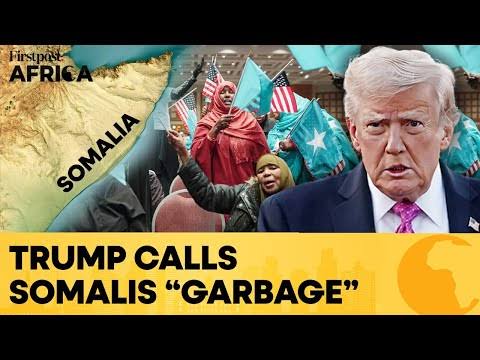
Trump’s anger over his remarks targeting the Somali community. Tuesday 2 December 2025 11:45 PM GMT-8. Today we will discuss about Somali Shockwave: Trump’s Remarks Go Viral, Public Outrage Explodes
Somali Shockwave: Trump’s Remarks Go Viral, Public Outrage Explodes
On December 2–3, 2025, what began as a fiery Cabinet‑meeting speech by Donald Trump exploded into an international storm — reverberating from the Somali diaspora in Minnesota to the streets of Mogadishu. The cascade of reactions, from anger and despair to defiance and reflection, has revealed deep fractures in global discourse around migration, identity, and dignity. What some call “blunt honesty,” many perceive as toxic xenophobia. For Somalis worldwide, it has become a moment of reckoning — a “Somali shockwave.”
What Trump Said — And Why It Hit Hard
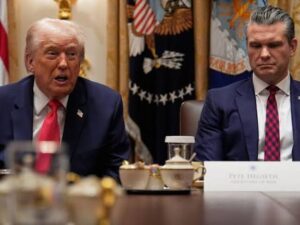
During a televised Cabinet meeting, Trump described Somali immigrants in the United States in harsh terms. He referred to them as “garbage,” said he did not want them in the country, claimed Somalia was a “stinking” place, and suggested that Somali immigrants “should go back to where they came from.”
He went further, alleging that Somalis “run around killing each other,” and implied that the Somali‑American community contributed nothing of value to society.
While Trump’s abrasive rhetoric is not novel, the bluntness and targeting of an entire nationality — along with a sizeable diaspora that includes U.S. citizens — marks a serious escalation. In many communities, the word “garbage” is likely to provoke visceral pain, especially when spoken by a former U.S. president.
The timing of the remarks also coincided with increased immigration enforcement activities. Immediately following the speech, federal authorities reportedly prepared operations in states like Minnesota targeting Somalis, particularly those with deportation orders.
Given this confluence of hateful rhetoric plus sweeping policy — the term “Somali shockwave” is not an overstatement.
Global and Local Outrage — Voices From Somalia, Diaspora, and the World
Outrage, condemnation, and hurt
News coverage and reactions from Somali communities — both in Somalia and abroad — make clear that many people felt deeply insulted and hurt.
In Somalia’s capital Mogadishu and beyond, many citizens criticized Trump’s language as crude and unacceptable. As one elder, Abdisalan Omar, put it: “The world should respond. Presidents who speak in such a way cannot serve the U.S. and the world.”
A construction worker from Mogadishu, Bule Ismail, summarized the feelings of many: “In our culture, we do not use abusive language.” He argued that such public denigration was disgraceful.
A smaller but vocal group acknowledged the severity of the language but argued that underlying some of Trump’s harsh statements were real issues — governance failures, corruption, insecurity, and the persistent danger from violent extremism in Somalia. A Mogadishu resident, Samira Abdullahi, whose land was expropriated by the government, said that “we have no government. Al Shabab is looting and bombing all Somalis.”
Still, even those more sympathetic to the substance rejected the tone — with many calling the remarks deeply irresponsible, demeaning, and unworthy of a global leader.
Diplomatic response — silence as strategy
In Mogadishu, the official response was surprisingly muted. The country’s Prime Minister, Hamza Abdi Barre, urged Somalis not to amplify Trump’s remarks. He pointed out that Trump had previously insulted other nations and recommended a posture of “strategic disregard.” “Sometimes it’s easier to ignore than to respond,” he said.
Still, other Somali officials countered that the remarks were part of a broader pattern of xenophobic, dehumanizing rhetoric. The country’s State Minister for Foreign Affairs, Ali Omar Ali, posted on social media that using Somalia as fodder for political outrage abroad “insults our resilience and our sacrifice.” He called for unity, dignity, and refusal to be “manipulated at someone’s convenience.”
The Impact on Somali‑American Communities and Immigrants Worldwide
The shockwave was not confined to Somalia. In the United States — especially in states like Minnesota, home to the largest Somali-American population — the fallout was immediate and alarming.
Many in the Somali‑American community described feeling betrayed and targeted. Their lives, citizenships, and contributions reduced to vile stereotypes and sweeping generalizations. Community leaders expressed deep concern about increased discrimination, hostility, and the psychological toll of being labeled as “garbage.”
Civil‑rights groups sounded alarms that the rhetoric could embolden hate speech, xenophobia, and possible violent backlash.
The timing of new immigration enforcement operations — especially targeting Somali immigrants with final deportation orders — raised fears of mass detentions and wrongful deportations. Many Somalis in Minnesota are naturalized citizens, not undocumented migrants; yet the broad brush seemed designed to cast suspicion on an entire community.
The consequences reach beyond national borders — fuelling fear among immigrant communities worldwide about belonging, identity, and the fragility of acceptance.
Why This Moment Resonates: Beyond a Presidential Tirade
Why did these remarks spark such intense outrage — arguably more so than prior instances of anti‑immigrant rhetoric? Several overlapping factors have made this moment distinct and deeply consequential.
1. Sweeping Collective Blame
Trump didn’t target a few individuals accused of wrongdoing; he targeted an entire nationality — implying collective guilt. That broad brush transforms personal statements into structural condemnation of a people.
2. Overlap with Policy Action
The timing matters. The speech was quickly followed by plans for heavy immigration enforcement, revocation of protections for Somali nationals, and possible mass deportations. The language wasn’t idle rhetoric — it was a prelude to policy, or at least it helped justify one. That blend of hateful language + coercive action strikes at the root of a community’s security and dignity.
3. Global Context: Fragile Somalia + Diaspora Realities
Somalia continues to struggle with decades of conflict, poverty, governance challenges, and the threat posed by extremist group Al‑Shabab. Many Somalis compete daily with instability, displacement, and trauma. For a global leader to reduce their identity to “garbage” — ignoring these realities — is more than harsh; it is contemptuous.
Meanwhile, millions of Somalis live abroad — in the U.S. and elsewhere. Their contributions to host societies, their struggles for acceptance, and their hopes for a stable identity are jeopardized when political leaders publicly denigrate them.
4. Moral and Ethical Dimension
Many leaders and citizens around the world expect public figures — especially presidents — to uphold a baseline of dignity, respect, and rhetorical responsibility. When that baseline is breached, the consequences ripple beyond politics: they affect social cohesion, human dignity, intercommunity relations. For Somalis — regardless of geography — the remarks felt like a moral assault.
Internal Divisions: Pain, Anger — and Some Uncomfortable Reflections
One revealing feature of the outrage has been internal division within Somali communities — between those calling for condemnation and rejection of Trump’s remarks, and a smaller contingent who, while mourning the language, urged reflection on Somalia’s internal problems.
Some Somalis in Mogadishu argued that certain criticisms about governance, corruption, insecurity, and violence, though expressed cruelly by Trump, reflect real challenges the country faces. As one resident put it: “Trump said the truth but in unpleasant words.”
These voices emphasized not to take the rhetoric personally but to extract the kernel of truth about governance and security failures. For them, the moment became a painful mirror — exposing long‑standing frustrations with the state of their nation.
Yet such reflections remain overshadowed by anger at the demeaning tone, and by a sense that legitimate critique — even if valid — does not excuse cruelty or dehumanization.
Meanwhile, the official line from the Somali government has been strategic restraint. By urging citizens not to inflame the issue, the leadership seems to weigh the costs of a diplomatic confrontation against the benefits. The result: a complicated mixture of hurt, silence, resentment — and unresolved tension.
Broader Implications: Migration, Racism, Global Discourse
This “Somali shockwave” is not just about Somalia or Somalis — it speaks to larger global dynamics.
In an increasingly polarized world, where migration, identity, and nationalism are hot‑button issues, the way leaders talk matters. Dehumanizing language can legitimize prejudice, foster discrimination, and fuel xenophobia.
For diaspora communities, such rhetoric undermines belonging. It threatens the sense of home — while also undermining personal dignity. It lays bare a sobering reality: even citizenship may not shield you from being targeted.
On the international stage, it complicates diplomacy. The official restraint by Somalia’s leadership underscores the hard choices facing countries that rely on foreign aid, security cooperation, and diplomatic engagement with major powers, even when insulted.
On a moral level, it challenges the norms of public discourse. It pushes the boundaries of what is “acceptable” for political leaders to say — and forces societies to ask: where do we draw the line between criticism, truth‑telling, and hateful speech?
What Comes Next: Fallout, Repercussions, and the Uncertain Road Ahead
As the shockwave continues spreading, several possible trajectories emerge.
— For Somali‑Americans, fear and activism
The immediate concern for many Somali‑Americans is survival: protection from discrimination, wrongful arrests or deportations, and a hostile societal environment. Civil‑rights groups, local leaders, and community members may mobilize to defend themselves, organize protests, and push for legal safeguards. Protests have erupted near immigration enforcement sites in Minnesota.
— For Somalia — dignity vs stability
For the Somali government, the path ahead is fraught. Responding too aggressively risks provoking diplomatic or aid consequences. Staying silent risks domestic backlash for not defending national dignity. Prime Minister Hamza Abdi Barre’s approach — urging the country to move on — may preserve short‑term stability, but could deepen public resentment over time.
— On global norms — debate over hate speech and leadership responsibility
Internationally, this incident could reignite debates about racism, xenophobia, and the responsibility of world leaders. Civil‑society organizations, immigrant rights groups, and human rights defenders may leverage the outrage to call for clearer standards on political speech, especially when it targets entire communities.
— For Somalis themselves — a moment of reflection and unity (or fragmentation)
Perhaps most importantly, this moment is reshaping Somali identity — particularly among younger people and diaspora communities. Some may embrace activism and solidarity, forging stronger ties across borders. Others may feel disillusioned, fearing rejection and alienation. How Somalis respond — with dignity, unity, critique, or internal division — could define the next chapter of their collective story.
Conclusion: A Moment of Crisis — and a Test of Conscience
The “Somali shockwave” is more than a media moment. It’s a test of values — both personal and collective.
When a powerful leader calls an entire people “garbage,” when he reduces centuries of culture, survival, and struggle into a single insult, the damage is not just rhetorical. It is emotional, psychological, social, political.
For Somalis, whether at home in Mogadishu, in refugee camps, or scattered across the globe in diaspora communities — the wave of outrage, pain, and uncertainty is real. Many will continue to demand respect, dignity, and accountability. Many will mourn. Some will reflect. And some will push back.
For the rest of the world — this is a moment to watch. Will we remain silent? Will we speak up for human dignity? Will we allow hateful rhetoric to become normalized? Or will we reaffirm that behind each immigrant, each refugee, each name on a visa — there is a human being deserving of respect and empathy.
The answer will tell us not only who we are as individuals — but what kind of world we want to build.
How useful was this post?
Click on a star to rate it!
Average rating 0 / 5. Vote count: 0
No votes so far! Be the first to rate this post.
About the Author

usa5911.com
Administrator
Hi, I’m Gurdeep Singh, a professional content writer from India with over 3 years of experience in the field. I specialize in covering U.S. politics, delivering timely and engaging content tailored specifically for an American audience. Along with my dedicated team, we track and report on all the latest political trends, news, and in-depth analysis shaping the United States today. Our goal is to provide clear, factual, and compelling content that keeps readers informed and engaged with the ever-changing political landscape.