Capitol Clash: Congress Splits Again, Shutdown Fears Return
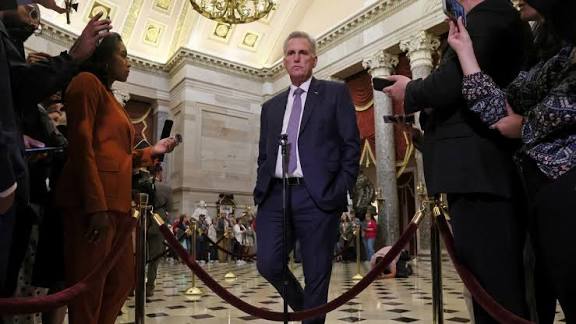
Congress has returned to a very different world from the one it had just weeks before its Thanksgiving break. Today we will discuss about Capitol Clash: Congress Splits Again, Shutdown Fears Return
Capitol Clash: Congress Splits Again, Shutdown Fears Return
In early October 2025, the halls of the United States Congress once again became a battleground. As the new fiscal year began without a comprehensive spending agreement, partisan divisions deepened — and the result was dramatic: a full-blown government shutdown, the longest in U.S. history.
This shutdown, however, is not simply the consequence of annual budgetary quibbles. It reflects a deeper, increasingly bitter clash — over policy, power, precedent, and priorities. The split in Congress, between the controlling Republicans (House and Senate majority) and a defiant Democratic minority, has exposed fissures in both governance and political strategy.
As operations faltered, millions of Americans braced for repercussions — from furloughed workers to disrupted services to uncertainty in health-care coverage. And though a temporary resolution has — for now — re-opened the doors at the Capitol, the underlying fractures remain. In short: the “Capitol clash” is far from over.
This article traces how we got here, why the split matters beyond politics, what the shutdown cost — and what lies ahead.
The Fallout Begins: What Triggered the Shutdown — and Why It Mattered

The Failure to Fund the Government by October 1
Under U.S. federal law, Congress must pass 12 annual appropriations bills, or else a “continuing resolution” (CR) to keep the government funded temporarily. In 2025, as the fiscal year turned over on October 1, lawmakers had failed to finalize any of those bills.
The impasse finally snapped just after midnight on October 1: both the Republican-drafted CR and the Democratic counter-proposal failed in the Senate. On a 55-45 vote, the GOP plan fell short of the 60 votes needed, and Democrats blocked the version that would have included extensions of certain social-safety-net provisions — triggering a full shutdown.
Shortly thereafter, federal agencies across the U.S. began to furlough non-essential staff, close public services such as museums and national parks, suspend processing of many permits, and freeze various benefits.
Why This Shutdown Is Historic
This was not just another temporary closure — it became the longest shutdown in U.S. history.
Past shutdowns had occasionally lasted weeks; this one, stretching into over a month by some counts, illustrated how deeply divided Congress had become, and how perilous the federal budget process is when there is no compromise. The length and scale of this stallout underscored emerging structural risks in U.S. governance — where gridlock, not governance, appears to be the norm.
The Core Conflict: Health Insurance, Budget Cuts — and Political Strategy
Why did the stalemate escalate so rapidly? While funding deadlines are recurring, the underlying issues this time struck at the heart of American social policy and partisan identity.
The Health-Care Subsidy Controversy (Affordable Care Act — ACA) at the Center
At the center of the crisis was a bitter dispute over expiring enhanced tax credits under the Affordable Care Act (ACA). These subsidies — expanded during the COVID-19 pandemic — helped millions of Americans afford health insurance. Many households, especially lower- and middle-income families, had come to rely on them.
Democrats insisted any new funding deal must include an extension of these subsidies, warning that otherwise premiums for many could skyrocket, and millions could lose coverage or face severe cost increases.
Republicans — who controlled both chambers of Congress — refused to include those subsidies in the stopgap funding bill. Their demand was clear: reopen the government now, negotiate health-care later. House Speaker Mike Johnson and other GOP leaders insisted that essential operations take priority, and refused to let Democrats hold the budget hostage for policy concessions.
This standoff was not only a battle over spending: it was a clash of philosophical visions. Republicans framed their position as fiscal responsibility and limited government; Democrats depicted the refusal as callous disregard for families relying on subsidized health care.
Political Calculations — and Power Plays
Beyond policy, the standoff also reveals deeper strategic calculations. Republicans saw leverage — with control of both the House and Senate, and with a presidency under Donald Trump, they presumably could weather a shutdown and emerge stronger, blaming Democrats for the disruption. Some GOP hardliners appeared willing to weather the political cost for ideological gains.
Democrats, by contrast, were betting that public frustration — unpaid workers, stalled services, rising uncertainty — would force the GOP to negotiate. They emphasized human impact: missed paychecks, furloughs, threatened social-safety-net programs, and health care instability.
Thus, the shutdown became more than a budgetary lapse — it turned into a symbolic struggle over the identity and future of U.S. governance.
The Human Cost: What Went Wrong — and Who Suffered
The shutdown was not just a Washington spectacle. Its effects rippled across the country, hurting ordinary Americans: federal workers, social-service beneficiaries, travelers, and millions reliant on government support.
Furloughs, Layoffs and Uncertainty for Federal Workers
Nearly 900,000 employees — civil servants, contractors, and agency staff — faced furloughs and unpaid periods.
While essential workers (e.g., in defense, public safety) continued working, many “non-essential” personnel — from museum staff to clerks to admin workers — were told not to report to work, or even laid off permanently under some agency plans.
Agencies such as the national parks, passport offices, regulatory bodies, and many social-service departments closed or drastically reduced operations. The disruption affected public access to basic services and eroded trust in the reliability of government institutions.
Social Safety Nets, Services and Everyday Lives Disrupted
Millions rely on federal programs such as food assistance, social security, and health-care support. The shutdown forced many of those programs to freeze, at least temporarily.
For Americans with chronic illnesses, or those dependent on subsidized health insurance under ACA, the risk was especially severe: without clarity on continued subsidies, premium costs threatened to soar.
Beyond individuals, there were broader economic effects. Data releases (for instance, from the labor bureau) were delayed; planning and regulation for industries stalled; uncertainty surged among businesses reliant on federal contracts or services.
Public Frustration — And the Political Fallout
Shut museums, closed parks, grounded flights, delayed permits — all became visible signs of dysfunction, undermining public confidence in government. As weeks passed and normalcy failed to return, pressure mounted on lawmakers. Some constituents questioned not just who was at fault, but whether Congress was still capable of governing effectively.
For many Americans, the shutdown was not an abstract policy debate — it was a jarring reminder that political gridlock can have real human costs.
Resolution — For Now: How the Shutdown Ended — But Why the Clash Is Far From Over
After weeks of political impasse and public pressure, Congress finally acted. In November 2025, the Senate passed a compromise funding bill — and the House followed. The legislation, once signed by President Trump, reopened the government and ended the shutdown.
What the Deal Included — and What It Left Out
The passed package restored funding for essential agencies, revived social-safety-net programs, resumed federal paychecks, and reopened air-traffic control and other disrupted services.
However — critically — it did not guarantee extension of the enhanced health-care subsidies under ACA. Instead, lawmakers only committed to holding a vote on the issue later (in December), with no guarantee of passage.
As a result, while the immediate crisis was averted, the risk of a future shutdown remains very real — especially with nine remaining appropriations bills unresolved.
What This Says About the Nature of the Conflict
The temporary deal underscores that what unfolded wasn’t simply a failure to pass a budget — it was a clash over long-term priorities and power: how much safety net the government provides, how big government should be, and who gets to decide.
The willingness of a handful of moderate Democrats to cross party lines and vote for the GOP-backed funding bill further exposed growing fractures within the Democratic caucus itself — possibly reflecting regional pressures, political pragmatism, or divergent views on how best to respond to public anxiety.
For Republicans, the shutdown and its resolution may look like a political win: they delivered on their promise to control spending and avoided making concessions on core policy, while the blame for the shutdown largely remained with Democrats in public perception.
But the deal also exposed the fragility of congressional consensus. With only temporary funding in place and major issues — health care, social services, appropriations bills — unresolved, the potential for renewed chaos remains high.
What Happens Next — And Why the Capitol Clash May Return
Emerging from the shutdown, Washington might appear calm — but many believe the calm is only temporary. The real struggle has yet to begin.
Countdown to a New Deadline — And Renewed Risk
Because the new funding package only temporarily patches together some appropriations — leaving others unresolved — Congress faces looming deadlines. Without agreement on the remaining bills, partial or full shutdowns could re-emerge early next year.
The unresolved question of ACA subsidies remains another flashpoint. If the December vote fails (or is delayed indefinitely), millions of Americans could see their insurance premiums jump — triggering public outcry, political pressure, and potential economic fallout.
Erosion of Trust — Political and Institutional
This shutdown — and the way it unfolded — has eroded trust in Congress’s ability to govern. Many Americans witnessed weeks of gridlock, heated public spats, and what looked like prioritization of political posturing over real governance.
If lawmakers can’t demonstrate they’ve learned from this fiasco, future clashes will likely provoke deeper cynicism — and greater volatility.
Shifting Political Strategy — Hardening of Lines
In the aftermath, both major parties appear to be consolidating their positions. Republicans are reasserting their identity around fiscal restraint and smaller government; Democrats may double down on social safety and health-care protections. The moderate coalition that briefly broke this standstill may dissolve under pressure from party hardliners on both sides.
All of this portends a more polarized and brittle Congress — one where shutdowns, brinkmanship, and political standoffs may become the default mode.
Why “Capitol Clash” Is More Than Just Budget Drama — It’s a Sign of Larger Trends
The 2025 shutdown (and the splits that caused it) highlight some underlying structural issues in American politics and governance.
1. The Budget Process Is Broken — And Periodic Shutdowns May Become the Norm
For decades, shutdowns were rare, occasional, and often quickly resolved. But the length and severity of this shutdown suggest that the traditional process of passing 12 appropriations bills per year — or short stop-gap CRs — may no longer be workable under today’s hyper-polarized politics.
When political parties view passing a budget not as a governance task but as a tactical fight, the risk of shutdown increases. The 2025 shutdown may represent a turning point: where shutdowns evolve from rare crises to recurring weapons in political warfare.
2. Social Safety Nets — And Health Care — Are Now Inextricably Political
What started as a technical funding dispute quickly morphed into a broader debate over social safety nets, health-care accessibility, and the role of government in providing public goods. The stakes were no longer abstract fiscal numbers — they were people’s access to insurance, their daily living costs, and their trust in government.
This fuse between budget appropriations and social policy shows how intertwined — and how volatile — the American legislative system has become.
3. Governing Has Become Risky — Politically and Institutionally
For lawmakers, compromise now comes with political risk: they might lose support within their own party for yielding, or face voter backlash for being seen as weak. That makes compromise harder.
For institutions, repeated shutdowns threaten to destabilize agencies, erode morale among staff, delay critical services, and weaken public trust. As shutdowns become more frequent, the capacity of government to function smoothly may degrade.
4. The Precedent Set for Future Crises — And Future Clashes
By reaching such a high-stakes standoff — and surviving it with only temporary fixes — Congress has set a precedent: that major policy fights (health care, social safety nets) can be used as leverage in budget negotiations. That invites repetition.
If this becomes the new normal, every future fiscal deadline will carry the threat of shutdown — and with it, the risk of widespread disruption and instability.
Voices From the Capitol — Rage, Accusations, and Bitter Exchanges
The shutdown was not just legislative; it was emotional — with anger, finger-pointing, public accusations, and harsh rhetoric.
On the Senate floor and in media appearances, Democrats and Republicans traded blame: each accused the other of holding the American people hostage.
Inside the House, tensions boiled over. The normally restrained floor turned into a scene of ugly confrontations, as party leaders and rank-and-file members bickered in hallways and on live television. Emotions ran high, signalling how personal and bitter the clash had become.
For many lawmakers — especially moderates caught in between hardline factions — the pressure was immense. Some crossed party lines to vote for the compromise; others expressed regret, anger, or disbelief at how far the conflict had escalated.
This wasn’t just politics as usual. It was politics as combat — and many fear it’s only a taste of what’s to come.
What the Shutdown Teaches — And What to Watch in the Coming Months
As the dust settles, there are several lessons — and several major future flashpoints — that observers, policymakers, and the public should watch closely.
A Test for Democracy, Governance, and Stability
The 2025 shutdown demonstrated that political brinkmanship can override governance — with real consequences for citizens. In a country as large and interconnected as the U.S., repeated disruptions threaten not only institutions but public trust and systemic integrity.
The question now is: will Congress and its leaders change course — or will shutdowns, threats, and standoffs become the norm? The answer matters not just for Washington, but for the millions of people whose lives depend on consistent government services.
Upcoming Deadlines — And Potential Future Shutdowns
With only some appropriation bills resolved, and with the looming December vote on health-care subsidies unresolved, 2026 may begin under the shadow of renewed uncertainty. If Congress fails to reach consensus early, Americans could face another shutdown — potentially more frequent and more severe than this one.
At the same time, contentious policy debates — over health care, social welfare, defense spending — remain unresolved. If those issues get tied to future budget negotiations, the risk of another Capitol clash will grow.
The Political Risks — And Rewards — for Parties
For Republicans, sticking to fiscal conservatism paid off — at least in the short term. They avoided giving Democrats leverage on policy, reclaimed narrative control, and forced a compromise on their terms.
For Democrats, the costs were higher — concessions on funding legislation, failure (so far) to secure health-care subsidies, and potential backlash from supporters. But the fight also galvanized their identity: a defense of the social safety net, of healthcare access, and of vulnerable Americans.
Moderates — those who crossed the aisle to support the funding deal — may find themselves squeezed from both sides in future battles. Their role as bridge-builders may shrink in an increasingly polarized environment.
Conclusion: The Capitol Clash Is Not — It’s Evolving
The 2025 shutdown was more than a political hiccup — it was a moment of reckoning. It exposed structural flaws in congressional budgeting, revealed deep partisan divides over social policy, and brought to light tensions between governance and political strategy.
Though a compromise has temporarily reopened the government, the core issues remain unresolved. The risk of another shutdown looms. The fight over health-care subsidies, social welfare, and budget priorities continues. And the “Capitol clash” — a recurring drama in Washington — appears poised for its next act.
If history is any guide, the stakes will only grow higher. And for Americans — and observers around the world — the fallout will matter.
Reflection: Why This Matters — Even for People Outside the U.S.
U.S. domestic politics has ripple effects worldwide:
U.S. federal government shutdowns can delay economic data, trade decisions, regulatory updates, and policy announcements — which in turn affects global markets, currency flows, and trade relationships.
U.S. foreign aid, defense cooperation, visa processing, and other international commitments often get postponed during shutdowns — causing real consequences for people and governments abroad.
The nature of political conflict in a superpower like the U.S. shapes global discourse on governance, democracy, and institutional resilience.
Thus, the “Capitol clash” isn’t just an American drama — it’s a global story about how polarized democracy responds to social needs, fiscal constraints, and political ambition.
How useful was this post?
Click on a star to rate it!
Average rating 0 / 5. Vote count: 0
No votes so far! Be the first to rate this post.
About the Author

usa5911.com
Administrator
Hi, I’m Gurdeep Singh, a professional content writer from India with over 3 years of experience in the field. I specialize in covering U.S. politics, delivering timely and engaging content tailored specifically for an American audience. Along with my dedicated team, we track and report on all the latest political trends, news, and in-depth analysis shaping the United States today. Our goal is to provide clear, factual, and compelling content that keeps readers informed and engaged with the ever-changing political landscape.