Trump vs Refugee Policy Ignites Again After Washington Shooting Shock

Recently there was a shooting near the White House, in which an Afghan civilian seriously injured two members of the National Guard. Today we will discuss about Trump vs Refugee Policy Ignites Again After Washington Shooting Shock
Trump vs Refugee Policy Ignites Again After Washington Shooting Shock
The United States was thrust back into a fierce national debate on refugee policy after a shocking shooting near the White House left two National Guard members critically injured. The suspect, identified as an Afghan national who resettled in the U.S. under a previous administration’s evacuation program, quickly became the centerpiece of a political storm. Within hours, President Trump moved to suspend all Afghan immigration processing, demand a full review of past arrivals, and declare that “lax migration policies” represent the biggest threat to the nation’s security.
The incident electrified already-tense conversations about refugee admissions, immigration vetting, and national identity. While many Americans viewed the attack as a confirmation of security vulnerabilities, others warned that the administration’s sweeping response punished entire communities for the actions of one individual. As the debate intensifies, it is clear that the Washington shooting has become more than an isolated event — it is a catalyst for a much broader redefinition of U.S. refugee policy.
This article explores the political fallout, policy changes, criticisms, and long-term consequences of the latest clash between President Trump’s hardline stance and the humanitarian framework that once shaped American refugee resettlement.
A Policy Landscape Already in Flux
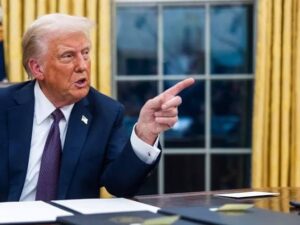
To understand the magnitude of the aftermath, it’s essential to recognize the context in which the shooting occurred. When President Trump returned to office, he inherited a decades-old refugee system shaped by the Refugee Act of 1980, which created an official pathway for resettling people fleeing war, persecution, and violence. For generations, the United States admitted tens of thousands of refugees each year, earning a global reputation as a humanitarian leader.
But by 2025, the Trump administration had already begun dismantling the core pillars of this program. Annual refugee admissions had been slashed to a historic low. The traditional resettlement system was largely suspended. Key agencies lost funding, private-sponsorship programs were shut down, and family reunification routes had been revoked.
Against this backdrop, the Washington shooting did not ignite a new policy direction but accelerated an existing shift toward a more restrictive, security-centric model of immigration.
The Shooting That Sparked a National Reckoning
What Happened
On the evening of November 26, two National Guard members patrolling near the White House were shot by a 29-year-old Afghan man. Authorities quickly apprehended the suspect. Early reports indicated he had entered the United States under a resettlement initiative designed for Afghans who assisted U.S. forces or faced danger following the American withdrawal.
The attack reverberated across the country, not only for its proximity to the seat of federal power but because it fed into preexisting anxieties about immigration and national security.
Trump’s Immediate Response
Within hours, President Trump delivered a national address describing the incident as both a tragedy and a policy failure. Declaring that “weak immigration systems” were to blame, he announced:
An indefinite halt to all Afghan immigration processing
A retroactive review of all Afghan nationals already resettled in the U.S.
A call for stricter nationwide vetting procedures
He also deployed additional National Guard forces to Washington, framing the moment as evidence that the country must be “relentless” in preventing threats from entering U.S. borders.
Administration officials echoed the message, asserting that refugee systems had become pathways for violent actors due to insufficient vetting. Critics, however, noted that Afghan allies had already undergone extensive background checks before being admitted.
Policy Ripples: What Changed After the Shooting
The fallout from the shooting triggered immediate and far-reaching policy actions. Some of these were direct responses to the incident; others were accelerated plans already in motion.
1. Suspension of Immigration Requests from Afghan Nationals
The government instituted a blanket freeze on all immigration petitions connected to Afghanistan. This halt affects:
Asylum seekers awaiting decisions
Afghans applying for special immigrant visas
Refugee families hoping for reunification
Individuals in legal processing pipelines
For thousands, the pathway to safety suddenly vanished, leaving many stranded or indefinitely delayed.
2. Retroactive Vetting of Already-Resettled Refugees
Perhaps the most controversial measure was the announcement that all Afghan refugees previously admitted will undergo re-evaluation. This includes individuals with:
Green cards
Work authorization
Long-term residency
Deep community ties
The possibility of losing legal status or facing deportation sent shockwaves through Afghan American communities and advocacy organizations, many of whom said they felt blindsided and betrayed.
3. Continued Dismantling of Refugee Resettlement Infrastructure
Prior to the shooting, the administration had already defunded and destabilized much of the national refugee resettlement system. After the incident, officials cited the attack as validation for maintaining — and in some cases expanding — these restrictions.
The U.S. refugee program, once the world’s largest, now operates at a fraction of its former capacity.
4. Shifting Priorities Toward Select Nationalities
The administration’s refugee strategy for the upcoming fiscal year signaled a dramatic change: it allocated most remaining refugee slots to groups it prioritised by political and cultural criteria. This has raised ethical and legal concerns about fairness, discrimination, and the future role of humanitarian need in refugee selection.
Supporters and Critics: A Deeply Polarized Nationwide Reaction
Supporters of Trump’s Approach
Those backing the administration’s response argue:
The shooting proves security vetting failed.
Refugee admissions from conflict zones are inherently risky.
The U.S. must prioritize safety over humanitarian obligations.
Immigration should be merit-based, not need-based.
The system needs aggressive tightening to avoid future threats.
For these supporters, the event illustrates what they see as the dangers of mass resettlement from regions destabilized by war and extremism.
Critics and Humanitarian Concerns
Opponents of the new measures warn that the government’s actions:
Punish entire communities for the actions of one individual
Violate commitments made to Afghans who supported U.S. missions
Create fear and instability in vulnerable refugee populations
Undermine due process and legal protections
Damage U.S. credibility as a humanitarian leader
Advocates argue that refugee vetting is already among the strictest in the world, often taking years, and that resettled Afghans were extensively screened before approval.
The Human Impact: Trauma, Uncertainty, and Broken Trust
For Afghan families across America, the announcement brought panic and confusion. Many had already endured years of danger, displacement, and uncertainty. Now, they face the possibility that their legal status may be re-evaluated — or revoked.
Individuals who built new lives in the U.S. are suddenly fearful:
Parents worry about deportation
Children fear separation
Employees fear losing work authorization
Students fear their futures may evaporate
Advocates report that community centers have been flooded with calls from anxious Afghan residents seeking legal guidance. Many now live with a renewed sense of insecurity, unsure whether the country that promised them refuge may instead send them back into harm’s way.
U.S. Identity and Global Reputation at a Crossroads
The consequences of the administration’s reaction ripple beyond domestic politics.
1. America’s Humanitarian Legacy Is Under Strain
For decades, the U.S. prided itself on offering refuge to people fleeing violence and persecution. The latest policies mark a dramatic retreat from this tradition. Critics warn the country risks abandoning its moral responsibilities at a time when global displacement is at historic highs.
2. Refugees and Immigrants Become Political Flashpoints
The framing of refugee admissions as a national security threat feeds into a wider narrative that portrays immigrants as potential dangers rather than contributors. This has long-term consequences for American social cohesion and multicultural identity.
3. International Partners Are Watching Closely
When the U.S. scales back refugee leadership, other nations often follow. Humanitarian organizations fear this shift could trigger a chain reaction, further reducing global protection for people fleeing conflict.
Legal Battles on the Horizon
The administration’s sweeping post-shooting actions are likely to face legal challenges in courts. Potential points of contention include:
Retroactive evaluation of lawful residents
Due process concerns
Discrimination claims
Violations of international refugee commitments
Legal experts expect lawsuits arguing that rescinding refugee protections from individuals who have already been vetted, approved, and resettled may breach constitutional guarantees and contractual obligations.
What Comes Next: Possible Scenarios
1. Long-term Suspension of Afghan Refugee Admissions
The halt may remain indefinite, becoming a de facto permanent ban.
2. Expanded Vetting Policies for Other Nationalities
Other refugee groups may also face increased scrutiny or retroactive evaluations.
3. Shrinking or Reversal of the Refugee Program
With infrastructure dismantled and admissions minimal, the U.S. may continue retreating from humanitarian leadership.
4. Legal Pushback and Public Mobilization
Advocacy groups, community organizations, and some lawmakers may push for judicial review or legislative action to protect at-risk refugees.
5. Heightened Political Polarization
Immigration debates are likely to dominate upcoming elections, further dividing the public on how America defines its identity and values.
Conclusion
The Washington shooting was tragic and deeply unsettling, but the policy response it triggered could reshape American refugee policy for years to come. President Trump’s aggressive actions — halting Afghan immigration, launching retroactive vetting, and reinforcing a hardline stance — have ignited a fresh national debate over what America owes to refugees and how it balances humanitarian tradition with national security.
For Afghan communities, the consequences are immediate and personal: instability, fear, and the threat of losing everything they’ve built. For the country, the moment marks a turning point — one that forces Americans to ask whether the nation will continue its legacy as a refuge for the vulnerable or redefine itself as a fortress prioritizing exclusion and control.
As legal battles, political debates, and human stories unfold, the future of U.S. refugee policy hangs in the balance. The choices made now will shape not only policy but the very character of the United States for generations to come.
How useful was this post?
Click on a star to rate it!
Average rating 0 / 5. Vote count: 0
No votes so far! Be the first to rate this post.
About the Author

usa5911.com
Administrator
Hi, I’m Gurdeep Singh, a professional content writer from India with over 3 years of experience in the field. I specialize in covering U.S. politics, delivering timely and engaging content tailored specifically for an American audience. Along with my dedicated team, we track and report on all the latest political trends, news, and in-depth analysis shaping the United States today. Our goal is to provide clear, factual, and compelling content that keeps readers informed and engaged with the ever-changing political landscape.