No Kings Protest Surges: 50501 Movement Floods US Cities Against Power Grab

No Kings protest took place on October 18, 2025, as part of a series of mass demonstrations taking place in the United States against Donald Trump. Today we will discuss about No Kings Protest Surges: 50501 Movement Floods US Cities Against Power Grab
No Kings Protest Surges: 50501 Movement Floods US Cities Against Power Grab
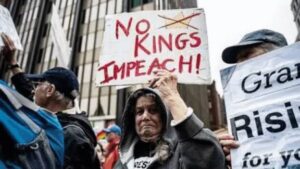
In 2025, an unprecedented wave of protest swept across the United States under the banner “No Kings.” What began as online frustration transformed into a massive, coordinated national uprising driven by the explosive momentum of the 50501 Movement. Alarmed by what they believed was a creeping power grab within the federal government, millions of Americans took to the streets to declare a simple message:
“We will not be ruled.”
This article explores the origins, motivations, growth, and impact of the No Kings protests — and why the 50501 Movement has become one of the most influential political mobilizations of the decade.
Origins of the 50501 Movement
The 50501 Movement emerged from the digital sphere, specifically from a rapidly growing Reddit community. The name 50501 stands for:
50 protests, 50 states, 1 movement.
What started as an idea — coordinating peaceful resistance in every state simultaneously — quickly evolved into a full-scale national activist network. The movement grew in response to concerns over:
Executive overreach
Disregard for democratic norms
Consolidation of power in new federal departments
Influence of billionaires over governmental decisions
Cuts to social programs and protections
50501 distinguished itself by having no central figurehead. It was decentralized, volunteer-led, and community-powered, mirroring the structure of global leaderless movements like Occupy and the Arab Spring era networks.
This decentralized model allowed the movement to grow at lightning speed. Local chapters sprang up in virtually every major city, each capable of organizing events while staying aligned with national goals.
From Online Organizing to Real-World Mobilization
The first coordinated nationwide protest took place on February 5, 2025, when thousands gathered in state capitals and major cities. By February 17 — Presidents’ Day — the number had grown significantly. The theme, “No Kings on Presidents’ Day,” echoed the movement’s core message: no president should act like royalty.
Over the next several months, momentum accelerated:
March 4: Nationwide marches
April 5: “Hands Off” demonstrations
April 19: A coordinated national day of action
Each protest gained size, visibility, and media attention. What set 50501 apart was its ability to organize quickly while maintaining a peaceful, strategic approach.
But the most defining moment came on June 14, 2025.
**Why “No Kings”?
The Symbolism Behind the Slogan**
The phrase “No Kings” became the central rallying cry of the movement. It served as a symbolic reminder of America’s founding principles — a rejection of monarchy, concentrated power, and governance without accountability.
Protesters argued that:
A president should not rule by decree
No individual should place themselves above the law
Wealthy elites should not direct government function
Federal departments must serve the people, not private interests
The message resonated deeply with Americans across the political spectrum who feared that democratic checks and balances were eroding.
The “No Kings” theme was also intentionally provocative — designed to capture public attention, galvanize new supporters, and draw stark historical parallels.
June 14: The Largest No Kings Protest in U.S. History
June 14, 2025, marked a turning point. The protest coincided with a large military parade in Washington, D.C., creating a symbolic contrast between state power and popular resistance.
On the same day, more than 2,000 registered local events took place nationwide.
Estimates of total turnout reached millions, placing it among the largest single-day protest mobilizations in American history.
Cities with the largest turnouts included:
New York City
Chicago
Los Angeles
Atlanta
Philadelphia
Denver
Seattle
Washington, D.C.
Protesters wore bright yellow, the signature color of the movement, chosen to represent unity, visibility, and peaceful defiance.
The atmosphere varied by location — some marches felt like festivals of democracy, complete with music and art, while others resembled solemn vigils for democratic norms.
A Tragic Incident in Utah
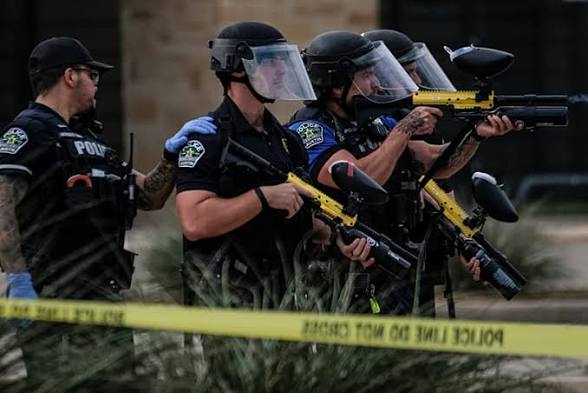
Despite widespread peaceful participation, not all protests unfolded without incident.
In Salt Lake City, Utah, a confrontation escalated into gunfire, resulting in the tragic death of a protester. According to police accounts, the altercation began when a man brandished a rifle near the demonstration. Volunteer peacekeepers at the event also discharged weapons.
The incident shocked the movement.
50501 organizers across the nation condemned the violence, reiterating their commitment to nonviolent resistance and safer protest practices. It was a sober reminder of the risks activists face in a country with widespread firearm access and a tense political climate.
Movement Structure: How 50501 Organizes at Scale
One of the most remarkable aspects of the No Kings protests is how well-organized they are despite lacking centralized leadership.
Key features of the movement’s structure:
1. Local Chapters
Each chapter is independently run by volunteers. They coordinate:
Permits
Safety teams
Speakers and performers
Accessibility planning
Community partnerships
Some chapters have organized events drawing tens of thousands of participants.
2. Decentralized Coordination
Rather than a top-down hierarchy, 50501 operates through:
Shared messaging
Open-source toolkits
Social media communication
Mutual aid between chapters
This model allows rapid adaptation while avoiding authoritarian leadership within an anti-authoritarian movement.
3. Safety and De-escalation Teams
The movement trains volunteers in:
De-escalation
Crowd safety
Nonviolent protest tactics
Digital security
The focus is on minimizing risk and preventing confrontation.
4. Grassroots Funding
50501 deliberately avoids large political donations. Most support comes from:
Small donors
Local fundraising
Volunteer labor
This strengthens the movement’s credibility as a genuine grassroots effort.
After June: The Resistance Continues
Following the massive success of No Kings Day, the movement didn’t lose steam. Instead, it escalated.
Some major subsequent actions included:
No Kings 2.0 in October — a second nationwide mobilization
Free America Weekend over July 4 — combining celebration and resistance
Numerous regional and local protests, vigils, town halls, and community actions
Several civil rights and social justice organizations began coordinating with 50501, creating broader coalitions around voting rights, civil liberties, immigration protections, climate justice, and economic reform.
Local chapters also began creating:
Voter registration drives
Mutual aid programs
Educational workshops
Legislative advocacy initiatives
Art and cultural events promoting democracy
The movement became not just a protest force — but a civic infrastructure.
Why the Movement Resonates
1. Historical Symbolism
The idea of resisting “kings” taps directly into America’s founding narrative. It frames authoritarian drift as un-American — an effective rhetorical strategy.
2. Breadth of Issues
50501 unites people concerned about:
Workers’ rights
Healthcare
Immigration
Civil liberties
Surveillance
Austerity measures
Corporate influence
Climate policy
This intersectionality expands its base.
3. Digital-to-Local Organizing
The internet builds awareness. Local chapters build community.
The hybrid model is modern, efficient, and resilient.
4. Nonviolent Ethos
The movement’s emphasis on peace invites participation from families, elders, youth, and people new to activism.
5. Scale and Momentum
The sheer size of the protests conveys legitimacy and urgency.
Challenges Facing the 50501 Movement
1. Safety Risks
Large protests always carry risks, especially in armed environments.
The Utah tragedy exposed vulnerabilities.
2. Maintaining Long-Term Momentum
Mass mobilizations are exhausting. Sustaining energy between major protests is difficult.
3. Decentralization Trade-Offs
Without a central leadership structure, messaging can become diffuse or inconsistent across chapters.
4. Counter-Narratives
Opponents argue that the movement exaggerates threats or is partisan.
Organizers must continually reaffirm their democratic and nonpartisan intentions.
5. Translating Protest into Policy
Awareness must eventually become action — through voting, advocacy, and legislative engagement.
Cultural and Political Impact
The No Kings protests are already reshaping American civic culture in several ways:
1. Heightened Civic Engagement
Millions of Americans — including many first-time activists — are now politically activated.
2. New Coalitions
Labor unions, civil rights groups, youth organizations, and progressive movements have found common cause within 50501 events.
3. Reclaiming Democratic Language
The movement’s language — “No kings,” “people over power,” “democracy is not a monarchy” — has re-centered foundational American values in political discourse.
4. Influence on Elections and Policy Debates
Candidates and policymakers are increasingly forced to respond to the concerns raised by protesters.
5. A Template for Future Movements
50501’s hybrid decentralized model may inspire similar movements worldwide.
The Road Ahead: What Comes Next?
Looking toward the future, the movement may evolve in several potential directions:
Increased emphasis on legislative advocacy
Continued national days of action
Expanded partnerships with civil rights and democracy organizations
Greater focus on local organizing and community resilience
Enhanced voter engagement drives
More strategic use of art, music, and culture
The question now is whether 50501 can convert street power into policy change — a challenge that faces all major protest movements.
Conclusion: A Defining Moment in Modern American Protest History
The No Kings protests, fueled by the 50501 Movement, represent a historic collective outcry against concentrated power and authoritarian drift. In cities across the nation, Americans have stood together to reaffirm a core democratic principle:
No one — no president, no billionaire, no official — is above the people.
Whether the movement will ultimately reshape the political landscape remains to be seen.
But its impact is undeniable.
It has awakened millions, forged new alliances, elevated the national conversation on democracy, and demonstrated the enduring power of peaceful mass mobilization. In doing so, it has carved its place as one of the most significant protest movements of the 21st century.
How useful was this post?
Click on a star to rate it!
Average rating 0 / 5. Vote count: 0
No votes so far! Be the first to rate this post.
About the Author

usa5911.com
Administrator
Hi, I’m Gurdeep Singh, a professional content writer from India with over 3 years of experience in the field. I specialize in covering U.S. politics, delivering timely and engaging content tailored specifically for an American audience. Along with my dedicated team, we track and report on all the latest political trends, news, and in-depth analysis shaping the United States today. Our goal is to provide clear, factual, and compelling content that keeps readers informed and engaged with the ever-changing political landscape.