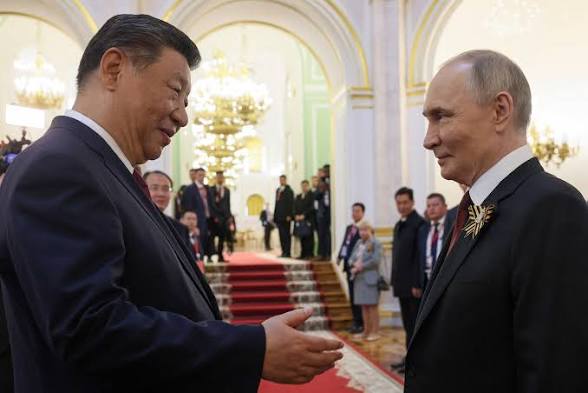
Russian President Vladimir Putin is seeking to strengthen Moscow’s international position following his latest diplomatic engagement with Chinese President Xi Jinping. However, experts warn that the relationship between Russia and China is changing, with Beijing gaining greater influence over Moscow’s political and economic decisions.
The latest developments highlight an important contradiction in the Russia-China partnership. Both countries publicly describe their relationship as a strategic alliance built on shared interests. Yet Russia’s growing dependence on Chinese markets, technology and diplomatic support has created an increasingly unequal partnership.
Putin wants to demonstrate that Russia remains an influential global power despite Western sanctions and the continuing war in Ukraine. His engagement with Xi also provides an opportunity to challenge the perception that Moscow has become internationally isolated.
However, China’s growing economic strength gives Beijing considerable bargaining power. This creates a difficult situation for Putin, who needs Chinese cooperation but also wants to preserve Russia’s independence in international affairs.
The changing relationship could have consequences far beyond Moscow and Beijing. It may influence the war in Ukraine, international trade, energy markets and the broader balance of power between Western countries and their geopolitical rivals.
Recent expert analysis suggests that the relationship is entering a new phase. Instead of functioning as an equal partnership, Russia and China increasingly operate within a power structure in which Beijing has more options and Moscow has fewer alternatives.
1. Why Putin Is Seeking Greater Leverage After the China Summit
Putin’s diplomatic strategy reflects Russia’s need to maintain international influence while dealing with mounting economic and political pressure.
Since launching its full-scale invasion of Ukraine in February 2022, Russia has faced extensive Western sanctions. These restrictions have affected financial transactions, energy exports, access to technology and relationships with major Western economies.
China has become one of Moscow’s most important economic partners during this period.
The relationship provides Russia with access to a major export market and an important source of manufactured goods. It also gives Putin a powerful diplomatic partner that does not support the Western approach to isolating Moscow.
However, Putin does not want Russia to appear dependent on Beijing.
He wants to present the partnership as cooperation between two major powers rather than a relationship in which China makes the important decisions.
This distinction matters for Russia’s international image. Moscow has historically viewed itself as an independent centre of global power. Accepting a subordinate position within the partnership would weaken that image.
The summit therefore offers Putin an opportunity to strengthen his diplomatic position, demonstrate international support and secure additional cooperation.
At the same time, the Kremlin must manage the reality that China’s economic influence continues to grow.
According to analysis published by the European University Institute’s Australia-China Relations Institute in May 2026, the relationship has become increasingly asymmetric. China has greater freedom to decide which Russian economic projects deserve support and under what conditions.
This creates a significant challenge for Putin as he attempts to preserve Moscow’s strategic independence.
2. China Is Gaining More Influence Over Russia
One of the biggest developments in the Russia-China relationship is the growing difference in economic power.
China has a large industrial base, extensive international trade networks and significant financial resources. Russia, meanwhile, has become more dependent on Chinese economic cooperation since Western sanctions restricted many of its traditional business relationships.
This imbalance gives Beijing greater negotiating power.
Russia needs China as a buyer of energy products, a supplier of manufactured goods and a diplomatic partner. China, however, has other international trading partners and can choose how deeply it wants to engage with Moscow.
This difference affects negotiations over major infrastructure projects.
The Power of Siberia 2 pipeline dispute
One important example is the proposed Power of Siberia 2 natural gas pipeline.
Russia has long wanted to expand natural gas exports to China through this project. The pipeline could provide Moscow with another major energy market as European demand for Russian gas has declined.
However, negotiations have faced difficulties.
China has shown little urgency to accept the terms Russia wants. Beijing has its own energy requirements and can purchase supplies from multiple international sources.
Analysis by Michael Clarke, published through the Australia-China Relations Institute on May 28, 2026, highlighted the significance of the pipeline negotiations.
The analysis explained that Moscow wanted progress on the project during Putin’s Beijing visit. However, no agreement emerged, and the pipeline was not mentioned in China’s official account of the summit.
uts.edu.au+1
This outcome illustrates the changing balance of power.
Putin wants China to make long-term commitments to Russian energy exports. Beijing wants favourable prices and terms that protect Chinese economic interests.
Consequently, Russia cannot assume that its strategic importance will automatically translate into Chinese financial commitments.
Why Beijing has more bargaining power
China’s advantage comes from its economic flexibility.
Beijing can maintain relations with Russia while continuing to trade with European, Asian and other international markets.
Russia has fewer alternatives because Western sanctions have restricted many of its previous economic relationships.
This situation gives Chinese negotiators more influence over prices, investment conditions and infrastructure agreements.
For Putin, the challenge is to secure Chinese cooperation without allowing economic dependence to become political dependence.
3. The China Summit and Putin’s International Image
The diplomatic importance of the summit extends beyond economic agreements.
Putin also wants to demonstrate that Russia remains a major international power.
Western governments have attempted to increase pressure on Moscow through sanctions, diplomatic isolation and restrictions on Russian international activities.
However, Putin has consistently rejected the idea that these measures have isolated Russia.
His meetings with Xi provide an opportunity to challenge that narrative.
During his November 18 visit to Shenzhen, Putin met Xi ahead of the historic trilateral meeting involving US President Donald Trump.
The gathering gave the Russian president an opportunity to appear alongside two of the world’s most powerful leaders.
According to reporting by the Associated Press, the November 19 meeting provided Putin with a high-profile platform to present Russia as an equal global power and advance Moscow’s demands concerning Ukraine.
AP News+1
The symbolism was important.
Putin could show domestic audiences that Russia still has access to major international decision-makers.
He could also send a message to Western governments that diplomatic pressure has not eliminated Moscow’s ability to participate in global discussions.
However, international recognition does not necessarily produce practical advantages.
The summit did not deliver a major breakthrough on Ukraine. It also failed to establish a concrete solution to the broader disagreements between Washington, Moscow and Beijing.
This distinction between diplomatic symbolism and practical results is central to understanding Putin’s strategy.
4. Experts Warn of a Shift in the Russia-China Partnership
The most important warning from experts concerns the changing balance between Moscow and Beijing.
For years, Russia and China have described their relationship as a comprehensive strategic partnership. Both governments have criticised Western dominance and supported a more multipolar international system.
Nevertheless, shared political objectives do not mean that both countries have equal influence.
China’s economic expansion and Russia’s international isolation have gradually changed the relationship.
Russia’s growing dependence
Russia needs international markets for its energy exports. It also needs access to industrial equipment, electronic components and other products that have become harder to obtain through Western suppliers.
China can help fill some of these gaps.
However, this support gives Beijing influence over Russian economic choices.
A 2025 study published by the Swedish Institute of International Affairs examined the consequences of the shifting power balance between the two countries.
Its findings highlighted several possible areas of Chinese influence, including energy pricing, access to Russian markets, diplomatic support and defence cooperation.
The study also explained that China could potentially seek stronger Russian backing for its international positions, including issues involving Taiwan and regional security.
ui.se+1
These findings suggest that the partnership is not simply about two governments cooperating against Western pressure.
It is also about two countries negotiating their individual interests.
China does not want unlimited commitments
Beijing has reasons to maintain close relations with Moscow.
Russia is an important energy supplier and a major diplomatic partner. Cooperation also supports China’s broader ambition to strengthen its international influence.
However, China does not necessarily want to accept every Russian demand.
Beijing must consider its own relationships with European countries, international investors and major trading partners.
Providing unlimited support to Russia could increase economic and diplomatic costs.
Therefore, China is likely to maintain a careful balance between cooperation with Moscow and protecting its independent interests.
This is where Putin’s search for greater leverage becomes difficult.
He needs China, but China does not need to accept every proposal coming from the Kremlin.
5. How the Summit Could Affect the War in Ukraine
Ukraine remains one of the most important issues shaping Russia’s relationship with China and the United States.
Putin wants to improve Russia’s negotiating position while maintaining pressure on Kyiv.
The Kremlin also wants Washington to consider Russian demands when discussing the future of European security.
The November 19 trilateral summit created an opportunity to discuss these issues directly with Trump and Xi.
However, expectations for a major diplomatic breakthrough remained limited.
Experts speaking to Al Jazeera explained that Moscow wanted political support from Beijing, reduced pressure from Washington and greater freedom to pursue its objectives in Ukraine.
The analysis also highlighted Russia’s desire to keep Washington focused on a broader European security framework rather than concentrating exclusively on a ceasefire.
Al Jazeera+1
Russia wants stronger negotiating leverage
Putin’s approach is based on the belief that Russia can improve its position through continued military pressure and diplomatic engagement.
A stronger international position could help Moscow demand favourable terms in future negotiations.
The Kremlin also wants to prevent Ukraine from receiving unlimited Western military and financial assistance.
However, Ukraine and its European partners remain opposed to agreements that would determine the country’s future without Ukrainian participation.
This creates a major diplomatic obstacle.
Any settlement involving territorial questions, security guarantees or Ukraine’s future relationship with NATO would require difficult negotiations.
China could potentially influence these discussions, but it has not demonstrated a willingness to accept the role of a major mediator on terms that would satisfy every participant.
China’s position remains complicated
China has repeatedly called for dialogue and a political settlement.
However, Beijing’s relationship with Moscow makes its diplomatic position complicated.
China wants stability in international markets and does not want the conflict to create additional economic disruption.
At the same time, it has strategic reasons to maintain its relationship with Russia.
This means Beijing may encourage negotiations without necessarily putting significant pressure on Putin to accept Ukraine’s preferred terms.
The summit therefore demonstrated the limits of diplomatic cooperation.
Having three powerful leaders in the same room does not automatically resolve the disagreements that have prolonged the war.
6. Putin’s Relationship With Trump Adds Another Dimension
The involvement of Donald Trump introduces another important element into Putin’s strategy.
Washington remains one of the most influential actors in determining the future of Western sanctions, military assistance to Ukraine and European security.
Putin therefore has strong reasons to maintain direct communication with the US president.
The November 19 meeting provided a rare opportunity for Putin to engage with Trump and Xi in the same diplomatic setting.
According to the Atlantic Council’s November 17 analysis, Putin hoped the trilateral format would create an environment in which major powers could discuss Ukraine and other international issues.
The analysis warned that Moscow could benefit if Washington placed additional pressure on Kyiv while giving greater consideration to Russian demands.
Atlantic Council+1
However, this strategy also carries risks.
Trump has his own political and diplomatic priorities. His interests do not automatically align with Putin’s objectives or China’s long-term ambitions.
Washington may seek cooperation on nuclear arms control, trade and regional security while continuing to disagree with Moscow over Ukraine.
Similarly, China may welcome improved US-Russia communication but remain unwilling to support every American or Russian proposal.
Putin must therefore manage two powerful relationships without allowing either partner to dictate Russia’s foreign policy.
7. Why the Summit Matters to the United States and Europe
The changing Russia-China relationship has important implications for Western governments.
For the United States, the partnership creates challenges involving economic security, military planning and international diplomacy.
China’s industrial capabilities and Russia’s military resources represent different but potentially complementary sources of geopolitical influence.
Closer cooperation between the two countries could complicate Western efforts to contain their international influence.
However, the relationship also contains disagreements that Western policymakers may seek to understand and address.
Europe’s security concerns
European governments remain particularly concerned about the war in Ukraine.
Any negotiations between Washington and Moscow that exclude Kyiv and European countries could create uncertainty about the continent’s future security arrangements.
European policymakers also worry about Russia’s ability to maintain its military operations through continued access to international markets and industrial supplies.
China’s economic relationship with Russia therefore remains an important consideration in European foreign policy.
The European Policy Centre’s May 29, 2026 analysis argued that Chinese support for Russia had become increasingly structural rather than merely temporary.
It also highlighted the need for European governments to develop a stronger combination of incentives and economic pressure in response to the relationship.
epc.eu+1
Concerns about a new global power structure
The trilateral summit also raised questions about the future of international diplomacy.
When the leaders of the United States, Russia and China meet, countries outside the discussion may worry that their interests could be overlooked.
Ukraine is particularly concerned because its territorial integrity and security are directly connected to the negotiations.
European and Indo-Pacific governments also have reasons to monitor the relationship.
The Council on Foreign Relations published expert assessments on November 19 examining the implications of the first trilateral meeting.
These assessments highlighted the importance of the summit’s symbolism, the lack of concrete progress on several major issues and the concerns it could create among US allies.
Council on Foreign Relations+1
8. Can Putin Reduce Russia’s Dependence on China?
Reducing dependence on China will be difficult for Moscow.
Russia would need to develop alternative economic partnerships, attract new investment and expand access to international markets.
However, Western sanctions and geopolitical tensions limit the options available to the Kremlin.
Several challenges stand in the way.
First, alternative energy markets are limited. Russia needs reliable buyers for its oil and natural gas. China is one of the most important markets available, making it difficult for Moscow to negotiate without considering Beijing’s interests.
Second, technology access remains a concern. Russia needs industrial equipment, electronic components and advanced manufacturing products. Chinese suppliers can help meet some of these requirements.
Third, diplomatic alternatives are complicated. Russia maintains relationships with countries in Asia, the Middle East, Africa and Latin America. However, these relationships cannot necessarily replace the economic and diplomatic importance of China.
Putin may attempt to diversify Russia’s partnerships, but changing the underlying balance of power will take considerable time.
The Kremlin could also seek stronger cooperation with other countries to avoid excessive reliance on a single partner.
Nevertheless, diversification is not the same as independence.
As long as Russia faces significant restrictions in Western markets, China is likely to remain central to Moscow’s international strategy.
9. What Could Happen Next in Russia-China Relations?
The future of the partnership will depend on how both governments manage their competing interests.
Despite the growing imbalance, a complete breakdown in relations appears unlikely in the near term.
Both countries receive important benefits from cooperation.
Russia gains access to markets, diplomatic support and industrial supplies. China gains access to energy resources, a strategic relationship with a major military power and additional influence in international affairs.
However, several developments deserve attention.
Energy negotiations will remain important
The proposed Power of Siberia 2 pipeline could become a major test of the relationship.
If China agrees to favourable long-term arrangements, Russia could gain another important export route.
If negotiations continue to stall, it would demonstrate the limits of Moscow’s influence over Beijing.
Military and technological cooperation could expand
Russia and China have increased their defence-related engagement in recent years.
Future cooperation could involve military technology, industrial production and the exchange of strategic knowledge.
However, Beijing will need to assess the potential consequences of deeper defence cooperation with Moscow.
Diplomatic coordination will continue
Both countries are likely to maintain cooperation in international institutions and support discussions about reforming the global political system.
Nevertheless, disagreements over specific regional and economic issues could become more visible.
The Ukraine war will influence the partnership
The future of the war will remain a major factor.
If Russia achieves its preferred objectives, Putin may gain greater confidence in Moscow’s international position.
If the conflict continues to create economic and military pressure, Russia could become even more dependent on China.
Either outcome could influence the balance of power between the two governments.
10. Is China Becoming the Stronger Partner?
The evidence increasingly suggests that China holds the stronger position in the relationship.
However, this does not mean Russia has become irrelevant.
Russia remains a major military power with significant energy resources, nuclear capabilities and influence in international diplomacy.
These assets give Putin bargaining power.
China also has reasons to maintain a productive relationship with Moscow. A stable Russia can support Beijing’s strategic interests and provide access to important natural resources.
Nevertheless, economic influence matters.
China’s larger economy and wider trading options give it greater flexibility during negotiations.
Russia’s dependence on Chinese markets and supplies limits Moscow’s ability to reject unfavourable conditions.
This is the central issue behind expert warnings about the changing partnership.
The relationship remains strategically valuable to both countries, but its internal balance is becoming less equal.
11. What Putin’s Strategy Means for the Future of Global Politics
Putin’s efforts to gain leverage after the China summit reflect a wider struggle over international influence.
Russia wants to challenge Western pressure, maintain its position in Ukraine and demonstrate that it remains an important global power.
China wants to expand its international influence while protecting its economic interests and avoiding unnecessary confrontation.
The United States wants to preserve its strategic position, manage competition with China and influence the outcome of the Ukraine conflict.
These objectives overlap in some areas but conflict in others.
The November 2026 trilateral meeting demonstrated that major powers can cooperate diplomatically without reaching meaningful agreements on their most difficult disputes.
It also showed how international influence can depend on more than military strength.
Economic resources, access to markets, technology and diplomatic flexibility all shape the balance between countries.
For Putin, the immediate challenge is to ensure that closer relations with China strengthen Russia rather than make Moscow increasingly dependent on Beijing.
For Xi, the challenge is to maintain a valuable partnership without accepting unnecessary economic and diplomatic costs.
For the rest of the world, the changing relationship raises an important question: Will Russia and China continue to operate as strategic partners with overlapping interests, or will their growing power imbalance gradually reshape the relationship?
The answer could influence international security, the future of Ukraine and the wider geopolitical order for years to come.
Conclusion
Putin’s efforts to gain leverage after the China summit highlight the complicated nature of Russia’s relationship with Beijing.
Although both countries continue to present their partnership as strong and strategically important, experts are increasingly pointing to China’s growing influence.
Russia needs Chinese economic cooperation, energy markets and diplomatic engagement. However, Beijing has greater flexibility and can decide how much support it is willing to provide.
This imbalance creates a challenge for Putin as he attempts to maintain Russia’s independence and international standing.
The November 2026 trilateral summit offered Putin valuable diplomatic visibility, but its limited practical outcomes showed that international recognition does not automatically translate into political victories.
Ultimately, the future of the Russia-China partnership will depend on whether Moscow can secure meaningful cooperation without becoming increasingly reliant on Beijing.
Frequently Asked Questions (FAQs)
1. Why is Putin seeking leverage after the China summit?
Putin wants to strengthen Russia’s international position, reduce Western pressure and secure continued Chinese economic and diplomatic cooperation. He also wants to demonstrate that Russia remains an influential global power.
2. Why are experts concerned about Russia’s relationship with China?
Experts are concerned because Russia is becoming increasingly dependent on China for energy exports, manufactured goods, technology and diplomatic support. This gives Beijing greater influence over Moscow’s decisions.
3. Is China becoming more powerful than Russia?
Economically, China already has a significant advantage. Russia remains an important military and nuclear power, but China’s larger economy and broader international trade relationships give Beijing greater negotiating flexibility.
4. How could the China summit affect the Ukraine war?
The summit provided an opportunity to discuss Ukraine with major international leaders. However, it did not produce a major breakthrough. Russia continues to seek favourable negotiating conditions, while Ukraine opposes decisions made without its participation.
5. What does Putin want from Xi Jinping?
Putin wants reliable energy markets, economic cooperation, access to technology, diplomatic support and a stronger strategic partnership. He also wants China to recognise Russia’s position as an independent global power.
6. Does China fully support Russia?
China maintains close strategic and economic relations with Russia, but it also protects its own interests. Beijing does not necessarily agree with every Russian demand and has avoided making unlimited commitments to Moscow.
7. What is the Power of Siberia 2 pipeline?
Power of Siberia 2 is a proposed natural gas pipeline intended to transport Russian gas to China. The project is important to Moscow because it could expand Russian energy exports to the Chinese market.
8. Will Russia and China remain strategic partners?
Their partnership is likely to continue because both countries benefit from cooperation. However, growing economic differences could make the relationship increasingly unequal.
About the Author