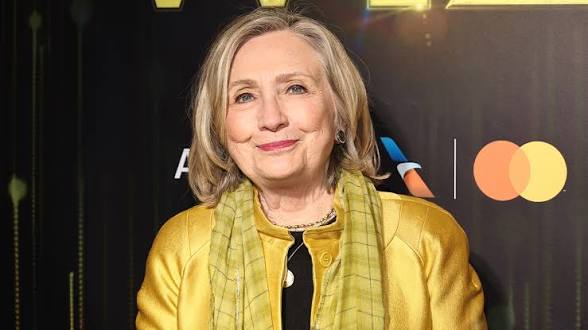
Hillary Clinton remains one of the most recognizable and debated figures in American politics. From her years as First Lady to her time as Secretary of State and her presidential campaigns, Clinton has experienced decades of public attention, political victories, criticism, and controversy.
A recent discussion featuring Fox News personality Kat Timpf has brought renewed attention to Clinton’s political history. Timpf highlighted several moments when she believes Clinton missed the mark, bringing past statements, political decisions, and public appearances back into the conversation.
The discussion reflects a familiar feature of American political commentary: established political figures continue to face questions about their records long after leaving elected office.
Kat Timpf’s commentary also raises a broader question about political accountability. How should voters evaluate a politician’s past decisions, public statements, and changing positions? And why do certain moments continue to shape public perceptions years later?
To understand the discussion, it is important to examine Timpf’s background, Clinton’s political career, and the controversies that have influenced her public image.
Who Is Kat Timpf?

Kat Timpf is an American journalist, comedian, author, and television personality known for her appearances on Fox News.
She has become a familiar face to viewers through her work on Gutfeld! and other political programs. Her commentary often combines humor, political criticism, and a libertarian perspective.
Unlike traditional political commentators who consistently support one party, Timpf has frequently presented herself as an independent thinker. She has criticized politicians from both major American political parties.
Her approach often involves questioning political messaging, challenging public statements, and highlighting inconsistencies in the positions taken by influential figures.
This style has made her commentary particularly noticeable when discussing Hillary Clinton, a politician whose career has attracted strong reactions from Democrats, Republicans, and independent voters.
According to her official biography, Timpf is also the author of books examining comedy, political divisions, and the problems associated with binary thinking.
2x NYT Bestseller, Comedian, Gutfeld! Co-Host
Kat Timpf Revisits Hillary Clinton’s Political Record
The November 27, 2026, Fox News video titled A Few Times Hillary Clinton Missed the Mark renewed attention to Timpf’s criticism of Clinton.
The segment’s central theme is Clinton’s record of public statements and political decisions. It places the former presidential candidate’s past performances under renewed scrutiny.
Although the available video listing does not provide a complete transcript of the discussion, its title makes the subject clear: moments when Clinton’s political judgment or public messaging attracted criticism.
The distinction between political disagreement and factual criticism is important. A television panelist can express an opinion about a politician’s performance, but viewers should also consider the historical record behind that opinion.
Clinton’s career offers several examples that have remained part of American political debate.
These include her response to the 2016 presidential election, questions about her email practices as Secretary of State, her involvement in the Clinton administration’s policies, and the public controversy surrounding the 2012 Benghazi attack.
Each issue has contributed to the political image that follows her today.
Hillary Clinton’s Long Political Career
Hillary Clinton has occupied several important positions in American public life.
She first became widely known nationally as the wife of President Bill Clinton. During his presidency from 1993 to 2001, she served as First Lady and took an active role in policy discussions.
One of her most important early initiatives involved healthcare reform. Although the proposed reform effort failed, it established her as a politically active First Lady.
After leaving the White House, Clinton entered electoral politics.
She won a US Senate seat representing New York in 2000 and took office in January 2001. She later won reelection in 2006.
In 2008, Clinton launched her first major presidential campaign. She competed against Barack Obama for the Democratic nomination but eventually conceded the contest.
Obama later appointed her Secretary of State, a position she held from 2009 to 2013.
In 2016, Clinton became the Democratic Party’s presidential nominee, facing Republican candidate Donald Trump.
Her experience made her one of the most recognizable candidates in modern American political history. However, her campaign also faced significant criticism over its strategy, communication, and handling of controversies.
The 2016 Presidential Election Remains a Major Talking Point
One of the most important chapters in Clinton’s political history is the 2016 presidential election.
Clinton entered the election with considerable political experience. She had served as a senator, Secretary of State, and First Lady.
Many political observers initially considered her a strong candidate.
However, the campaign developed into a highly competitive contest against Donald Trump.
The election highlighted divisions over immigration, trade, healthcare, economic opportunity, national security, and the future direction of American leadership.
Trump ultimately won the Electoral College, despite Clinton receiving more votes nationally.
The result surprised many political observers and became a defining moment in American political history.
Clinton later discussed mistakes made during her campaign. In a 2017 appearance referenced in a Fox News transcript, she acknowledged that she continued to think about the election and regretted certain mistakes.
Fox News
This admission remains relevant to discussions about political accountability.
For critics, the election demonstrated weaknesses in Clinton’s campaign strategy. Supporters, meanwhile, have pointed to the unusual political environment and the challenges of competing against an unconventional candidate.
Timpf’s broader criticism fits into this continuing debate about Clinton’s political judgment and public communication.
Hillary Clinton’s Campaign Communication Challenges
Political communication can determine how voters understand a candidate’s personality, policies, and priorities.
Clinton’s 2016 campaign faced repeated questions about whether its messaging connected with ordinary voters.
Her opponents portrayed her as an establishment politician who represented traditional Washington politics.
Meanwhile, her campaign emphasized experience, policy knowledge, and readiness to lead.
The difference between these two images became an important part of the election.
Clinton’s communication style also attracted attention during public appearances.
In one memorable example, she used the phrase “Pokemon Go to the polls” during the 2016 campaign.
The remark was intended to connect with younger voters through a popular mobile game. However, it became widely mocked in political commentary.
A Fox News transcript from 2019 documents Kat Timpf criticizing Clinton’s attempt at humor during a discussion on Gutfeld!.
Timpf argued that Clinton’s jokes often failed to connect with audiences. Her remarks were clearly presented as comedic political criticism rather than a formal assessment of Clinton’s policy record.
Fox News
The incident illustrates how a short public statement can become part of a politician’s long-term media image.
The Email Controversy During Clinton’s Time as Secretary of State
Another major issue associated with Clinton’s political career involves her use of a private email server while serving as Secretary of State.
The controversy became one of the most persistent challenges during her 2016 presidential campaign.
Clinton used a private email system for official communications during her time at the State Department.
The arrangement attracted scrutiny because government officials are expected to follow rules governing records management, transparency, and the handling of sensitive information.
Critics questioned whether using a private server created unnecessary risks and reduced public transparency.
The issue received extensive media attention and became a recurring subject during the presidential campaign.
Clinton and her representatives defended her actions while acknowledging that using the arrangement had been a mistake.
The controversy also prompted an FBI investigation into the handling of classified information.
In July 2016, then-FBI Director James Comey announced that the bureau would not recommend criminal charges. However, he criticized Clinton and her colleagues for being extremely careless in handling sensitive information.
This distinction is important.
The investigation did not result in criminal charges against Clinton, but the controversy continued to influence public perceptions of her judgment and transparency.
For political commentators, the email issue represents one of the clearest examples of how administrative decisions can become major campaign liabilities.
The Benghazi Controversy and Questions About Accountability
The 2012 attack on the US diplomatic compound in Benghazi, Libya, became another major controversy connected to Clinton’s career.
Four Americans, including US Ambassador Christopher Stevens, died in the September 11, 2012, attack.
At the time, Clinton was serving as Secretary of State under President Barack Obama.
The incident triggered investigations into security arrangements, intelligence failures, and the government’s response.
Republican lawmakers questioned whether the State Department had done enough to protect American personnel in Libya.
Clinton faced particular scrutiny because of her leadership position.
During congressional testimony in 2013, she defended the administration’s response and addressed questions about security decisions.
The controversy continued for years, with congressional investigations examining different aspects of the attack.
Critics argued that the State Department should have taken stronger precautions. Clinton’s defenders maintained that the incident occurred in an extremely dangerous environment and that political attacks sometimes exaggerated her personal responsibility.
The Benghazi controversy remains an important part of discussions about Clinton’s record.
For commentators such as Timpf, revisiting such events offers an opportunity to question the decisions made by powerful political figures.
However, an important distinction remains between documented findings from investigations and political interpretations of those findings.
Clinton’s Position on Criminal Justice and Her Political Past
Clinton’s political positions have also attracted attention because of changes in public policy discussions over time.
In 2015, while preparing for her presidential campaign, she called for changes to the American criminal justice system.
She argued that mass incarceration had created serious problems for families and communities.
However, critics questioned how this position aligned with her earlier support for tougher crime policies during the 1990s.
In a 1994 speech, Clinton supported stronger sentencing measures and additional prison capacity as part of the administration’s approach to crime.
The 1994 Violent Crime Control and Law Enforcement Act, signed by President Bill Clinton, became a major part of later debates about incarceration and criminal justice.
In a 2015 National Review article, Kat Timpf directly challenged Hillary Clinton over this issue.
Timpf questioned the difference between Clinton’s earlier support for tougher sentencing and her later calls for criminal justice reform.
National Review
The article demonstrates that Timpf’s criticism of Clinton did not begin with the latest television discussion.
It also illustrates a broader issue in politics: voters often want candidates to explain how their views have changed and why.
Political positions can evolve as new evidence emerges. However, politicians may face criticism when they do not clearly explain the reasons behind those changes.
Hillary Clinton and the Debate Over Public Image
Public image is an important part of any political career.
A politician’s reputation is shaped by speeches, interviews, policy decisions, campaign performances, and interactions with the media.
Clinton’s public image has been particularly complicated.
Supporters often describe her as experienced, knowledgeable, and committed to public service.
They point to her years in government and her involvement in international diplomacy.
Critics, however, have questioned her political judgment, communication style, and relationship with Washington’s political establishment.
This divide has remained visible long after the 2016 election.
Television personalities frequently revisit Clinton’s past appearances because they offer examples of how political figures handle difficult questions and public criticism.
Timpf’s commentary belongs to this larger tradition of political satire and media analysis.
Her use of humor can make complicated political arguments more accessible to television audiences. At the same time, viewers must distinguish jokes and opinions from independently established facts.
Kat Timpf’s Libertarian Perspective Adds Another Dimension
One reason Timpf’s political commentary attracts attention is her stated independent and libertarian outlook.
She has described the dangers of dividing political discussions into two opposing camps.
Her work often questions the assumption that someone must support every position associated with a particular political party.
This perspective can influence how she approaches established political figures.
Rather than evaluating politicians exclusively through party loyalty, Timpf frequently focuses on specific statements, actions, and inconsistencies.
Her criticism of Clinton reflects this approach.
However, her commentary should not automatically be interpreted as representing every position held by Republicans or Democrats.
Timpf’s political identity is distinct from the traditional party structure.
Her official website describes her interest in challenging binary thinking and encouraging conversations across political disagreements.
2x NYT Bestseller, Comedian, Gutfeld! Co-Host
This perspective also helps explain why her commentary can appeal to viewers who are interested in political humor without necessarily agreeing with every argument she makes.
Why Hillary Clinton Continues to Attract Media Attention
More than a decade after her 2016 presidential campaign, Clinton remains a familiar name in American political discussions.
There are several reasons for this continuing attention.
First, her political influence remains significant. Clinton served in several important government positions and was the first woman nominated for president by a major US political party.
Second, her presidential campaigns remain historically important. Her 2008 and 2016 campaigns continue to generate discussions about gender, political strategy, party divisions, and electoral behavior.
Third, her controversies remain relevant to political debates. Issues involving email practices, Benghazi, criminal justice, and campaign communication continue to provide material for political analysis.
Fourth, modern political media frequently revisits historical moments. Television programs, podcasts, and online platforms can introduce older controversies to new audiences.
The latest Kat Timpf discussion is another example of this pattern.
Rather than focusing exclusively on current political developments, commentators can use historical events to examine how political figures built their reputations.
The Role of Fox News Political Commentary
Fox News has become an influential platform for political discussions, interviews, and opinion-based programming.
Its shows regularly feature hosts, contributors, and panelists who discuss national political developments.
Kat Timpf has appeared in several of these programs, including Gutfeld!.
The format often combines news-related subjects with humor and competing viewpoints.
This approach allows commentators to revisit controversial statements and examine political personalities from different angles.
However, opinion programming is not the same as straight news reporting.
A panelist’s criticism should be evaluated as commentary, especially when the discussion includes jokes, personal opinions, or political interpretations.
The November 27 discussion about Clinton fits this format.
Its headline emphasizes moments when Clinton allegedly missed the mark, inviting audiences to reconsider her public record.
The available listing identifies the topic but does not establish a complete list of examples discussed in the broadcast. Therefore, individual claims should be checked against the original video or relevant historical records.
What the Discussion Means for American Political Debate
The renewed attention to Clinton highlights a larger issue in American politics: how long should politicians remain accountable for their past decisions?
Some voters believe political leaders should be judged primarily on their current positions and future proposals.
Others argue that previous decisions reveal important information about a candidate’s judgment and credibility.
Both perspectives influence political debate.
For example, Clinton’s supporters may emphasize her government experience and policy knowledge.
Her critics may focus on controversies that they believe damaged public trust.
Timpf’s commentary encourages audiences to revisit these questions through a mixture of criticism and humor.
It also demonstrates how political media can keep historical events relevant even when the individuals involved are no longer holding elected office.
The discussion is not simply about Clinton as an individual. It reflects continuing disagreements about leadership, transparency, communication, and political accountability.
Could Clinton’s Political Legacy Change Over Time?
Political legacies are rarely permanent.
Public attitudes can change as historical records become clearer, new political generations emerge, and the country reassesses earlier decisions.
Clinton’s legacy includes both significant achievements and controversial moments.
Her work as a senator and Secretary of State remains part of her public record. Her presidential campaigns also changed conversations about women’s participation in national politics.
At the same time, controversies surrounding her administration and campaigns continue to influence how critics evaluate her career.
New discussions, including Timpf’s latest commentary, may introduce these subjects to younger audiences who did not closely follow the original events.
Ultimately, historical assessments depend on evidence, context, and the ability to distinguish political criticism from established facts.
The latest discussion provides another reminder that major political figures rarely escape public scrutiny.
Conclusion
Kat Timpf’s discussion of Hillary Clinton brings renewed attention to the former Secretary of State’s political record, public statements, and long history in American politics.
From the 2016 presidential election to the email controversy, Benghazi investigations, and debates about criminal justice, Clinton’s career has provided numerous subjects for political commentary.
Timpf’s criticism reflects a broader interest in examining whether influential politicians have consistently matched their public statements with their previous decisions.
Although the November 27, 2026, video listing does not provide a complete transcript, its subject highlights the continuing interest in Clinton’s political history.
Ultimately, the discussion demonstrates why political accountability remains an important part of American public life. Politicians may leave office, but their decisions and public statements can continue shaping their reputations for decades.
Frequently Asked Questions (FAQs)
1. What did Kat Timpf say about Hillary Clinton?
Kat Timpf was featured in a November 27, 2026, Fox News discussion titled A Few Times Hillary Clinton Missed the Mark. The segment revisited criticism of Clinton’s past political statements and public record.
2. Who is Kat Timpf?
Kat Timpf is an American journalist, comedian, author, and television personality. She is known for her appearances on Fox News, particularly the program Gutfeld!.
3. Why does Kat Timpf criticize Hillary Clinton?
Timpf has previously criticized Clinton’s public statements, political positions, and attempts at humor. Her 2015 commentary also questioned Clinton’s changing position on criminal justice.
4. What was Hillary Clinton’s biggest political controversy?
Several controversies have shaped Clinton’s public image, including her private email server, the 2012 Benghazi attack, and her 2016 presidential campaign.
5. Did Hillary Clinton win the 2016 presidential election?
No. Clinton won the national popular vote but lost the Electoral College to Donald Trump, who became the 45th US president.
6. What was the Hillary Clinton email controversy?
The controversy involved Clinton’s use of a private email server for official communications while serving as Secretary of State. The FBI investigated the handling of classified information but did not recommend criminal charges.
7. What was the Benghazi controversy?
The Benghazi controversy followed the September 11, 2012, attack on US diplomatic facilities in Libya, which killed four Americans. Clinton faced questions about diplomatic security and the government’s response.
8. Is Kat Timpf a Republican?
Timpf has described herself as an independent and libertarian rather than a traditional Republican or Democrat.
9. Is Hillary Clinton still influential in American politics?
Clinton remains a prominent political figure whose past campaigns, government service, and public statements continue to influence discussions about American politics.
10. Where can viewers watch Kat Timpf’s discussion of Hillary Clinton?
The discussion was listed as a Fox News video on November 27, 2026. Viewers can look for the title Kat Timpf: A Few Times Hillary Clinton Missed the Mark on Fox News’ official video platforms.
About the Author