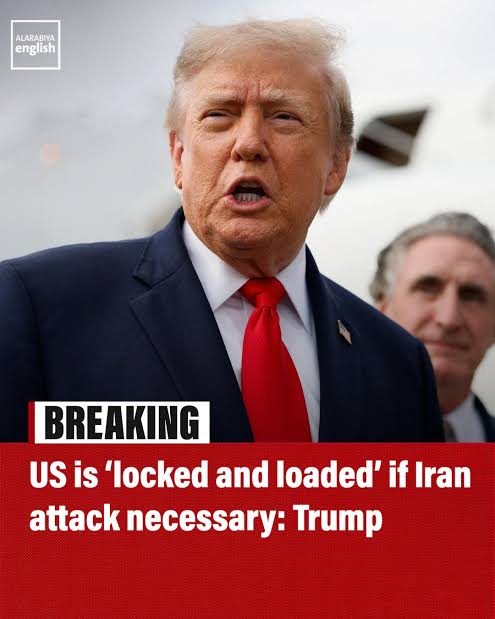
President Donald Trump has issued another strong warning to Iran, declaring that American forces remain “locked and loaded” even as diplomatic efforts continue to bring the conflict to an end. His latest remarks highlight the growing tension between Washington’s military readiness and its attempts to secure a diplomatic agreement with Tehran.
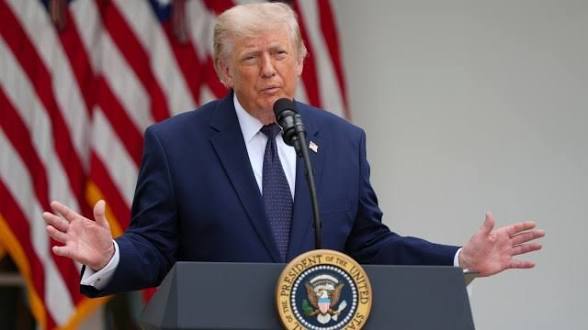
Speaking at the White House on November 9, Trump described Iran as militarily weakened and suggested that further American military action was not immediately necessary. However, he made it clear that the United States could respond if circumstances changed.
The warning came after Trump met Qatar’s Prime Minister, Sheikh Mohammed bin Abdulrahman Al Thani. Qatar has played an important role in regional diplomacy and efforts to advance negotiations between Washington and Tehran.
The meeting raised hopes that diplomatic progress could prevent another round of military escalation. Nevertheless, Trump’s comments demonstrated that the administration is not prepared to abandon its military options.
The situation remains complicated because Iranian officials have challenged Washington’s claims about negotiations. Tehran has also maintained that any agreement must address its conditions and concerns.
As tensions continue, the international community is watching closely. The outcome could affect regional security, global energy markets, international shipping and relations between major world powers.
Trump Warns Iran as Diplomatic Talks Continue
Trump’s latest warning reflects his administration’s strategy of combining diplomatic pressure with military preparedness.
Following his meeting with Qatar’s prime minister, the president suggested that the conflict could be approaching an end. He described Iran as militarily defeated and indicated that maintaining the existing situation might be preferable to launching another major operation.
However, Trump did not rule out further military action.
“If we do have to go back in, we are locked and loaded, and ready to go,” he told reporters.
The statement sent a clear message to Tehran. Washington may prefer diplomacy, but it wants Iran to understand that American military capabilities remain available.
Trump also indicated that military action did not appear necessary at that particular moment. This distinction is important because it suggests that the administration is not announcing an immediate return to large-scale strikes.
Instead, the president appears to be maintaining pressure while leaving room for negotiations.
According to Reuters, Trump said the conflict could end fairly soon while emphasizing that American forces remained prepared for any change in circumstances.
This combination of optimism and warning reflects the uncertainty surrounding the next stage of the US-Iran confrontation.
Qatar Plays an Important Role in Iran Negotiations
Qatar has emerged as an important diplomatic channel during the conflict.
Prime Minister Sheikh Mohammed bin Abdulrahman Al Thani met Trump at the White House to discuss regional developments and possible ways to advance negotiations between Washington and Tehran.
The meeting was particularly significant because Qatar maintains diplomatic relationships across the region. Its position allows it to communicate with different parties and support efforts to prevent further escalation.
Trump described the conversation as excellent and indicated that the discussions had produced positive momentum.
The Qatari prime minister also expressed optimism about the possibility of reaching an agreement and establishing peace in the region.
However, diplomatic progress does not automatically mean that a final agreement is close.
Washington and Tehran continue to disagree over several major issues. These include nuclear restrictions, sanctions, maritime security and the conditions required to end the conflict.
Qatar’s involvement could help narrow those differences. Nevertheless, the success of its diplomatic efforts will depend on whether both sides are willing to make meaningful concessions.
For now, the meeting has provided another opportunity to explore a peaceful solution.
Trump Says Iran Is Militarily Weakened
Another major element of Trump’s remarks was his assessment of Iran’s military position.
The president described Iran as effectively defeated from a military standpoint. His comments suggested that American operations had significantly reduced Tehran’s military capabilities.
The administration has repeatedly argued that its military campaign damaged important Iranian military infrastructure.
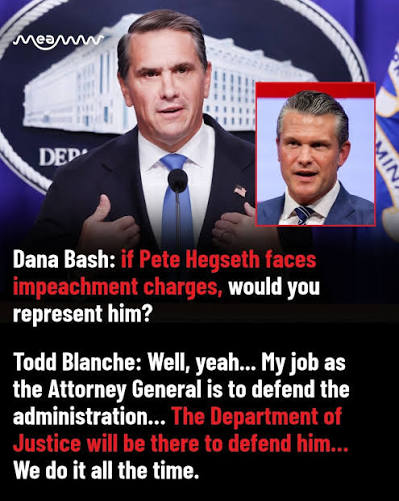
Defense Secretary Pete Hegseth also defended the operations during a Pentagon briefing on November 10.
According to Iran International, Hegseth claimed that American forces had struck more than 13,000 targets during Operation Epic Fury. He also said that more than 80% of Iran’s nuclear industrial base had been destroyed.
These figures represent claims made by the US administration and should not be treated as independently verified assessments.
Hegseth further emphasized that American forces remained prepared to respond if Iran took action that threatened US interests.
His comments reinforced Trump’s message that Washington does not intend to give up its military advantage while negotiations continue.
However, military assessments do not tell the entire story.
Even if a country’s military infrastructure suffers substantial damage, its government may retain the ability to respond through missiles, drones, regional partners and other military capabilities.
That possibility remains an important consideration for American policymakers.
Iran Challenges Washington’s Claims About Talks
While Trump has expressed optimism about diplomatic progress, Iranian officials have offered a different account.
Mohsen Rezaei, secretary of Iran’s Supreme National Security Council, rejected reports suggesting that Tehran was involved in planned negotiations with Washington.
In a statement on social media, Rezaei accused the United States of creating misleading reports about imaginary talks.
His response highlighted the significant gap between the public statements coming from Washington and Tehran.
Iranian officials have also insisted that the United States must address their conditions before meaningful negotiations can move forward.
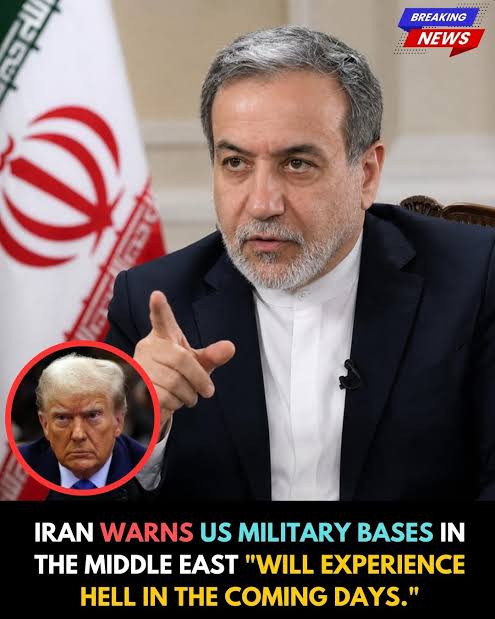
Iran’s parliament speaker, Mohammad Bagher Ghalibaf, has criticized Washington’s approach and accused Israel of encouraging a deeper confrontation.
Foreign Minister Abbas Araghchi has also denied reports of certain proposed meetings involving Iranian and American representatives.
These statements create uncertainty about the actual status of negotiations.
Although Qatar and other regional countries are attempting to encourage diplomatic progress, there is no publicly confirmed final agreement between Washington and Tehran.
The disagreement over whether talks are advancing also makes it difficult to predict how quickly the conflict could end.
The US Naval Blockade Remains a Major Pressure Point
Trump’s warning comes alongside continued American pressure on Iran’s economy and maritime activities.
One important part of Washington’s strategy is maintaining a naval blockade aimed at restricting Iranian oil exports and other economic activity.
The president has described the blockade as a major instrument of American pressure.
For Tehran, restrictions on oil exports represent a serious economic challenge.
Iran depends heavily on energy exports and international trade. Limiting those activities can increase financial pressure on the government.
However, the blockade also creates risks beyond Iran.
The Persian Gulf and Strait of Hormuz are important routes for international energy transportation. Any disruption could affect oil shipments and increase uncertainty in global markets.
Energy-importing countries are particularly sensitive to developments in this region.
A prolonged confrontation could raise transportation costs, increase insurance premiums and create pressure on fuel prices.
Therefore, maintaining the blockade is not simply a military decision. It also carries important economic and diplomatic consequences.
Washington must balance its desire to pressure Tehran against the potential impact on international trade.
Why the Strait of Hormuz Matters
The Strait of Hormuz remains one of the most strategically important waterways in the world.
It connects the Persian Gulf with the Gulf of Oman and the wider international shipping network.
Large quantities of oil and natural gas pass through this narrow waterway.
As a result, any military confrontation affecting the strait could have consequences far beyond the Middle East.
For countries that depend on imported energy, the possibility of disrupted shipments creates serious concerns.
India, China, Japan and several European economies have strong reasons to monitor developments closely.
Even the possibility of renewed attacks can influence energy markets.
Oil traders often react to geopolitical uncertainty before any actual disruption occurs.
Consequently, Trump’s warning and Iran’s response could affect market expectations even if neither country launches another major operation.
A peaceful agreement would help reduce these concerns.
However, continued military pressure and uncertainty over negotiations could keep energy markets sensitive to developments in the region.
Trump Faces Pressure After Midterm Election Losses
The Iran conflict also carries important domestic political consequences for Trump.
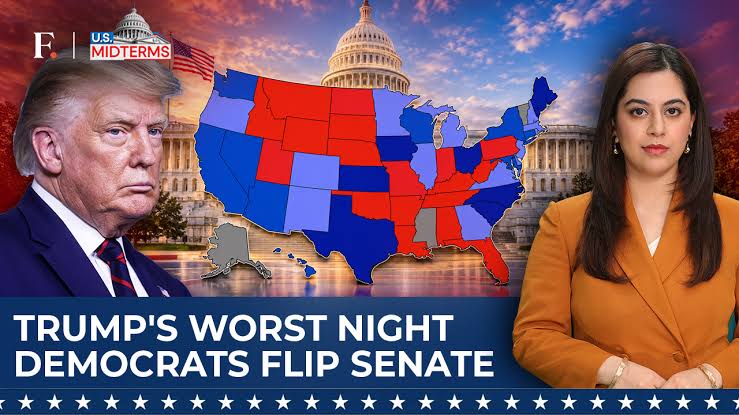
The Republican Party suffered significant losses in the November 3, 2026, midterm elections.
The conflict and its economic consequences have become part of the wider political debate in Washington.
Higher energy costs and concerns about military involvement have contributed to public dissatisfaction.
According to the Associated Press, the Iran conflict became an important issue in the political environment surrounding the election results.
Vice President JD Vance also directly connected the war to the Republican Party’s losses in public comments.
Trump, however, has defended his decision to confront Iran.
He has argued that preventing Tehran from obtaining a nuclear weapon is essential to American national security.
This creates a difficult political challenge.
On one hand, Trump wants to demonstrate strength and protect American interests.
On the other hand, another major military escalation could create additional economic pressure and deepen public opposition.
The president must therefore consider both international security and domestic political consequences.
A diplomatic agreement could offer a way to reduce those pressures without appearing to abandon American demands.
Israel’s Position Adds Another Layer of Complexity
Israel remains an important factor in the broader US-Iran confrontation.
The Israeli government has consistently expressed concern about Iran’s nuclear programme and military capabilities.
Israeli officials have supported strong measures to prevent Tehran from developing nuclear weapons.
However, the possibility of renewed American military operations creates complicated regional calculations.
Some regional governments are concerned that another escalation could draw additional countries into the conflict.
According to reporting by the Financial Times, regional leaders have urged restraint while diplomatic efforts continue.
Israel’s security concerns may not always match the priorities of other Middle Eastern governments.
Countries such as Qatar, Saudi Arabia and the United Arab Emirates have strong reasons to avoid a wider regional war.
They want to protect their economies, infrastructure and international trade relationships.
This creates a challenging diplomatic environment for Washington.
Trump must consider Israel’s security concerns while also managing relationships with Arab partners.
A successful agreement would need to address these competing priorities.
Could the United States Launch Another Attack?
One of the biggest questions following Trump’s statement is whether American forces could return to offensive operations.
At present, Trump has suggested that another major military operation is not necessary.
He has also described renewed strikes as unlikely if diplomatic progress continues.
However, his warning makes clear that the military option remains available.
Several factors could influence the administration’s next decision.
First, Washington will closely monitor Iran’s military activities.
Any action that threatens American forces, regional partners or international shipping could change the situation.
Second, the nuclear programme remains a central concern.
Trump has repeatedly insisted that Iran must not obtain a nuclear weapon.
Third, the administration will evaluate whether diplomatic discussions are producing meaningful results.
If negotiations fail, pressure on Tehran could increase.
Nevertheless, another military operation would carry serious risks.
Iran could retaliate against American military positions or regional infrastructure. Such a response could expand the confrontation and create additional security challenges.
For that reason, military readiness does not necessarily mean that another attack is imminent.
It means Washington wants to preserve its options while attempting to influence Tehran’s decisions.
What Iran Wants From a Possible Agreement
The main challenge facing negotiators is the difference between American and Iranian demands.
Washington wants assurances that Iran will not develop nuclear weapons.
It also wants stronger restrictions and international oversight of Iran’s nuclear activities.
Iran, meanwhile, has demanded changes to American pressure and restrictions.
Its negotiating position includes conditions related to sanctions, military pressure and the broader security situation.
The two sides also disagree over the sequence of possible concessions.
For example, Washington may want nuclear commitments before offering significant sanctions relief.
Tehran may insist that restrictions be removed before making major concessions.
This creates a difficult negotiating problem.
Neither government wants to appear weak domestically.
As a result, even limited diplomatic progress could require considerable political effort.
A potential agreement may also need international monitoring arrangements.
Without credible verification, Washington may question whether Iran is complying with its commitments.
Similarly, Tehran may demand assurances that the United States will not simply return to military action after an agreement is reached.
These concerns demonstrate why negotiations could take considerable time.
Global Oil Markets Watch the US-Iran Standoff
The confrontation is also important for the global economy.
Oil prices are particularly sensitive to developments involving Iran and the Strait of Hormuz.
When traders fear that energy shipments could be disrupted, prices may rise.
When diplomatic progress appears more likely, market concerns can ease.
Brent crude prices moved lower on November 9 as expectations of a possible end to the conflict improved, according to Euronews.
However, a lasting reduction in geopolitical risk will depend on more than optimistic statements.
Markets need evidence that shipping routes are secure and that the parties are moving towards a sustainable agreement.
A renewed military confrontation could reverse that improvement.
Higher oil prices could affect transportation, manufacturing, electricity generation and household budgets.
Developing economies that import large amounts of energy could face additional financial pressure.
For India, the situation deserves particular attention because international oil prices influence domestic economic conditions.
Therefore, a peaceful resolution would benefit not only Washington and Tehran but also countries that depend on stable energy supplies.
What Happens Next?
The coming days could prove important for the future of US-Iran relations.
Trump’s meeting with Qatar’s prime minister has created another opportunity for diplomatic engagement.
However, Iran’s public rejection of reports about planned talks suggests that substantial disagreements remain.
Washington is likely to continue combining economic pressure, military readiness and diplomatic communication.
Tehran, meanwhile, will have to decide whether it sees an agreement as preferable to continued confrontation.
Several developments could shape the next stage:
- Whether Qatar can arrange further diplomatic discussions.
- Whether Washington and Tehran can agree on the conditions for negotiations.
- Whether the American naval blockade remains unchanged.
- Whether Iran provides credible assurances regarding its nuclear programme.
- Whether regional governments can prevent further escalation.
- Whether both sides can establish a framework for a lasting ceasefire.
None of these outcomes is guaranteed.
The most important question is whether both governments can move beyond public warnings and agree on practical steps.
Trump’s statement suggests that the United States wants to negotiate from a position of strength.
However, Iran’s response indicates that Tehran is not prepared to accept Washington’s demands without conditions of its own.
Conclusion: Trump Keeps Military Pressure on Iran
Trump’s latest warning has highlighted the difficult balance between diplomacy and military preparedness.
His message is clear: Washington sees opportunities for ending the conflict, but American forces remain ready if the situation changes.
The meeting with Qatar’s prime minister has provided fresh hope for diplomatic progress. Nevertheless, disagreements over nuclear restrictions, sanctions, maritime security and military pressure remain significant obstacles.
Iran has also challenged American claims about the status of negotiations.
For now, the United States appears interested in maintaining the existing pressure while avoiding an immediate return to large-scale military operations.
Whether this approach produces a lasting agreement remains uncertain.
The stakes extend far beyond Washington and Tehran. Regional security, international shipping, energy prices and global economic stability could all be affected by the next decisions.
Trump’s “locked and loaded” warning may be intended to discourage Iran from taking further action. At the same time, continued diplomatic engagement offers a possible alternative to another dangerous escalation.
The coming days will show whether both sides can turn the current diplomatic momentum into a meaningful agreement.
About the Author