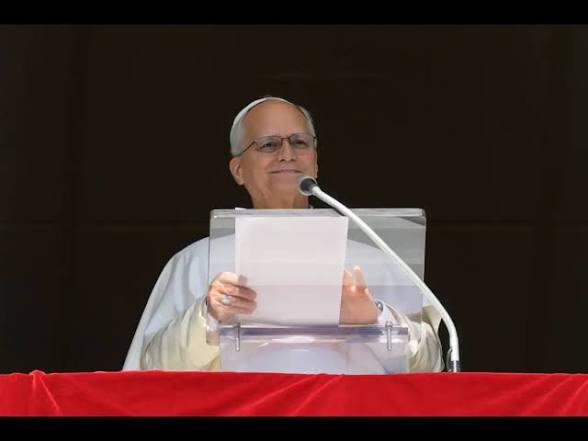
Pope Leo XIV has announced that he will undergo surgery in the coming days after doctors discovered a small, localized nodule in his lung during recent medical examinations. The announcement, made during his Sunday Angelus address on October 11, 2026, has drawn international attention to the health of the 71-year-old pontiff.
According to Vatican News and international media reports, doctors detected the lung nodule at an early stage and recommended removing it. Pope Leo said the operation had already been scheduled and thanked the faithful for their prayers and spiritual support.
Although the news has prompted concern among Catholics and observers worldwide, several important details remain unknown. The Vatican has not publicly identified the nature of the lesion or confirmed whether it is benign or malignant. There is also no confirmed indication that the surgery is an emergency.
The announcement raises questions about the pope’s recovery, his public schedule and his planned international pastoral visit in November.
Pope Leo XIV Announces Upcoming Lung Surgery
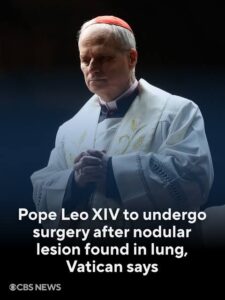
Pope Leo XIV disclosed the medical finding while addressing pilgrims gathered in St. Peter’s Square for his weekly Sunday prayer. He explained that doctors had identified a localized nodule in his lung during recent examinations.
The pontiff said the lesion had been detected at a very early stage and was well localized. Following medical advice, he decided to undergo surgery to remove it.
The announcement offered a rare public update about the pope’s personal health. However, it did not include a detailed medical diagnosis or disclose the exact surgical technique planned by his doctors.
Vatican News reported that the procedure was scheduled for the coming days. The Vatican press office subsequently indicated that the operation would take place during the first days of the week, with an estimated recovery period of approximately one week.
The announcement does not mean that the pope has been diagnosed with cancer. A lung nodule can have several causes, and doctors generally need additional clinical information or tissue examination to determine its nature.
For now, the confirmed information is limited to the discovery of the nodule, the medical recommendation for surgery and the expected recovery period.
What Is Known About the Pope’s Lung Lesion?
A lung nodule is a small area of abnormal tissue in the lung. Doctors may discover such nodules during chest imaging performed for routine examinations or investigations into other medical concerns.
Many lung nodules are benign, meaning they are not cancerous. Others require further investigation because their appearance, size, growth or other clinical features may raise concerns.
The word “lesion” is a broad medical term. It describes an area of tissue that differs from the surrounding tissue and does not, by itself, establish a cancer diagnosis.
In Pope Leo XIV’s case, the Vatican has not publicly disclosed the nodule’s precise size, its imaging characteristics or the results of any biopsy. It has also not announced a confirmed cause.
The pope’s description of the lesion as localized and detected early provides some information about the finding, but it is not enough to determine the final diagnosis.
Does a lung nodule mean cancer?
No. A lung nodule does not automatically indicate cancer.
Doctors assess several factors when evaluating a lung nodule, including its size, shape, location, appearance on imaging and whether it changes over time. A patient’s medical history and other risk factors can also influence the recommended course of action.
In some cases, physicians recommend removing a nodule to establish a definitive diagnosis or address a suspected medical problem. The decision depends on the individual circumstances.
Because the Vatican has not released the pope’s detailed medical findings, it would be premature to conclude that the lesion is malignant.
The results of surgery and any subsequent pathology examination, if performed, would provide more reliable information about its nature.
Why Have Doctors Recommended Surgery?
According to the pope’s announcement, his doctors believe surgical intervention is advisable. He said he had decided to follow their recommendation and that the procedure was already scheduled.
The Vatican has not provided a detailed explanation of the clinical reasoning behind that recommendation.
In general, surgery to remove a lung nodule may serve several purposes. It can allow doctors to examine the tissue directly, establish a diagnosis and remove an area that requires treatment.
However, not every lung nodule requires surgery. Some can be monitored through follow-up imaging, while others need additional testing before doctors determine the most appropriate treatment.
The decision depends on the suspected diagnosis, the nodule’s characteristics and the patient’s overall health.
In the pope’s case, the available public information does not establish which specific factors led his medical team to recommend removal.
It is therefore important to avoid claims that the operation confirms cancer, indicates a life-threatening condition or represents an emergency procedure.
Vatican Health Update: What Officials Have Confirmed
The Vatican’s public communication has provided a limited but important outline of the situation.
Pope Leo XIV has confirmed that a localized lung nodule was discovered during recent medical examinations. He said doctors detected it at an early stage and recommended surgery.
Vatican News reported the announcement on October 11. Other major news organizations, including Reuters and CBS News, also reported the planned operation.
The Vatican press office indicated that surgery would take place in the first days of the week and that recovery was expected to last approximately one week.
However, several questions remain unanswered.
Officials have not publicly confirmed whether the lesion is benign or malignant. They have not released a comprehensive medical report or specified the exact procedure. The potential effect on every scheduled papal engagement has also not been fully clarified.
The operation is expected to take place in Rome, with reports identifying Gemelli Hospital as the likely location. Readers should distinguish that reported expectation from a fully detailed official medical statement.
Further updates from the Vatican will be important in establishing the outcome of the procedure and the pope’s recovery.
How Is Pope Leo XIV’s Health Affecting His Duties?
The pope’s health is significant because the office involves a demanding schedule of public appearances, religious ceremonies, meetings and international travel.
Pope Leo XIV has continued to maintain a busy public schedule. His announcement has therefore attracted attention not only because of the medical finding but also because of its possible implications for upcoming engagements.
The expected recovery period of about one week suggests that officials anticipate a period of recuperation following surgery. Nevertheless, the actual timeline will depend on the procedure and the medical team’s assessment.
Recovery from surgery varies from person to person. Even when a medical problem is identified early, patients may need time to rest and attend follow-up appointments before resuming normal activities.
The Vatican has not announced a complete suspension of the pope’s duties. Any changes to public appearances or scheduled meetings should be assessed using official updates rather than speculation.
The pope’s medical team will ultimately determine when he can safely return to his regular workload.
Will the Surgery Affect Pope Leo XIV’s November Visit?
Pope Leo XIV is scheduled to undertake a pastoral visit to Uruguay, Argentina and Peru in November 2026. Reports have identified the planned trip as an important upcoming event on his calendar.
The announcement of lung surgery has raised questions about whether the operation and recovery period could affect those arrangements.
However, no confirmed cancellation has been announced in the information available on October 11. The pope referred to his upcoming pastoral visit during his Sunday remarks, but that does not guarantee that every part of the itinerary will proceed unchanged.
The final decision will depend on his recovery, medical advice and the Vatican’s assessment of travel arrangements.
International papal visits require extensive preparation. They can involve long journeys, multiple public appearances, meetings with religious and political leaders, and celebrations attended by large crowds.
For that reason, even a short recovery period can require careful scheduling.
The Vatican may provide further details as the operation approaches and doctors assess the pope’s progress. Until then, claims that the November visit has been cancelled or definitively confirmed in its original form should be treated cautiously.
Public Reaction to the Pope’s Health Announcement
News of the planned operation has attracted attention from Catholics and observers around the world.
For many faithful, the pope’s health is a matter of personal concern because of his spiritual leadership and public responsibilities. His request for prayers has also encouraged supporters to express solidarity during the coming days.
Political and religious figures have responded to the announcement. Reuters reported that Italian Prime Minister Giorgia Meloni expressed support for the pontiff as he prepared for the procedure.
The reaction reflects the pope’s international role and the interest surrounding his first publicly announced health concern of this kind during his pontificate.
Nevertheless, public concern should not be confused with evidence of a medical emergency. The confirmed details indicate that the lesion was detected early and that surgery was recommended.
The medical outcome remains unknown, and further conclusions should wait until the Vatican provides additional information.
Pope Leo XIV’s Health Compared With His Predecessor’s
Health updates involving a pope often receive considerable attention because the position carries extensive responsibilities and has global religious significance.
Pope Leo XIV succeeded Pope Francis, who experienced serious health difficulties during the final period of his life. Francis was hospitalized in 2025 after a respiratory crisis that developed into double pneumonia. He died on April 21, 2025, following a stroke.
Those events remain part of the public memory surrounding the papacy. As a result, news of another pope facing a medical procedure can prompt comparisons and heightened concern.
However, the two situations should not be treated as medically equivalent.
The circumstances surrounding Pope Francis’s final hospitalization were different from the limited information currently available about Pope Leo XIV’s lung nodule.
Leo has said that the nodule was detected at an early stage and that doctors recommended removing it. The Vatican has not announced a comparable respiratory crisis or disclosed a diagnosis of cancer.
Past events can explain public interest, but they cannot predict the outcome of the current procedure.
What Happens After Lung Nodule Surgery?
The recovery process following lung surgery depends on the type of procedure, the amount of tissue removed and the patient’s general health.
Medical teams typically monitor breathing, pain, mobility and other indicators after an operation. They may also arrange follow-up appointments to review recovery and discuss laboratory or pathology results when relevant.
Some procedures are less invasive than others. The recovery period can therefore vary considerably, and a general estimate cannot establish precisely how quickly an individual will return to normal activities.
In Pope Leo XIV’s case, the Vatican has indicated an expected recovery period of about one week. This is a reported estimate, not a guarantee that all activities will resume on a particular date.
Doctors may adjust the plan according to the findings during surgery and the patient’s progress afterward.
The most useful updates will be those that provide confirmed information about the procedure, the results and the pope’s readiness to resume his public duties.
Why Accurate Reporting Matters During a Vatican Health Crisis
Major medical announcements involving public figures can generate headlines that move faster than verified information.
Terms such as “emergency surgery,” “cancer scare” and “life-threatening diagnosis” may attract attention, but they can also create a misleading impression if official sources have not confirmed them.
In this case, the verified announcement concerns a localized lung nodule and planned surgery. The Vatican has not confirmed a cancer diagnosis or characterized the operation as an emergency.
Responsible reporting should separate established facts from possible outcomes. It should also explain medical terms in accessible language so that readers understand what is known and what remains uncertain.
This distinction matters because a lung nodule can be benign, and the decision to remove one does not automatically establish that cancer is present.
Readers should look for statements from Vatican News, the Vatican press office and reputable news organizations when checking for updates.
Social media claims should be treated with caution, particularly when they assert a diagnosis or prognosis that has not been publicly confirmed.
What Comes Next for Pope Leo XIV?
The immediate priority is the scheduled operation and the recovery that follows.
The Vatican is expected to remain the central source for confirmed information about the pope’s medical condition and public schedule. Any new statement may clarify the timing of surgery, the outcome and the expected return to normal duties.
For now, the available facts provide reasons for attention without supporting the most alarming interpretations of the headline.
Pope Leo XIV has disclosed a localized lung nodule, said it was detected early and confirmed that doctors recommended surgical removal. Officials have indicated that recovery may take about a week.
The nature of the lesion remains undisclosed. Until more information becomes available, it is not possible to determine whether it is benign or malignant or to predict the long-term implications.
The coming days should provide a clearer picture of the pope’s medical progress and whether his planned November pastoral visit will proceed as scheduled.
For Catholics and others following the story, the most reliable approach is to monitor official updates and avoid drawing conclusions before the medical findings are known.
Frequently Asked Questions (FAQs)
1. Why is Pope Leo XIV undergoing surgery?
Pope Leo XIV announced that doctors discovered a localized nodule in his lung during recent medical examinations. They recommended removing it, and he said the operation was scheduled for the coming days.
2. Has Pope Leo XIV been diagnosed with lung cancer?
No confirmed cancer diagnosis has been announced. The Vatican has not publicly disclosed whether the lung nodule is benign or malignant.
3. Is Pope Leo XIV’s lung surgery an emergency?
The available official reporting describes planned surgery in the coming days. The Vatican has not confirmed that it is an emergency operation.
4. When will Pope Leo XIV undergo surgery?
The pope said the operation was scheduled for the coming days. The Vatican press office indicated that it would take place during the first days of the week following the October 11 announcement.
5. How long will Pope Leo XIV need to recover?
The Vatican has indicated that recovery is expected to take approximately one week. The actual recovery timeline may depend on the procedure and his medical team’s assessment.
6. What is a lung nodule?
A lung nodule is a small area of abnormal tissue in the lung. Many nodules are benign, but doctors may recommend further tests or removal to establish a diagnosis.
7. Will Pope Leo XIV cancel his November 2026 trip?
No confirmed cancellation has been announced in the reports available on October 11. The effect of surgery and recovery on the planned visit to Uruguay, Argentina and Peru remains uncertain.
8. Where is Pope Leo XIV expected to undergo surgery?
News reports have identified Rome’s Gemelli Hospital as the expected location. Readers should follow official Vatican communications for confirmation of the arrangements.
9. Has the Vatican released the pope’s full medical report?
No comprehensive public medical report has been identified in the cited announcements. Officials have shared the discovery of the nodule, the recommendation for surgery and an estimated recovery period.
10. Where can readers find reliable updates about Pope Leo XIV’s health?
Vatican News and official Vatican communications are primary sources. Reputable news organizations, including Reuters and the Associated Press, can also provide updates based on confirmed statements.
About the Author