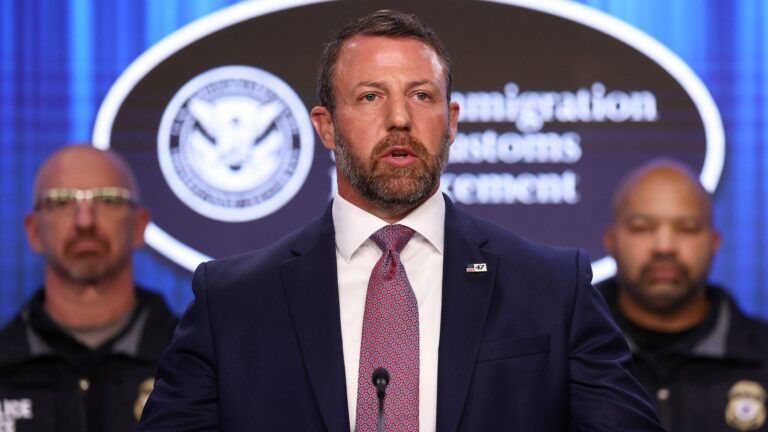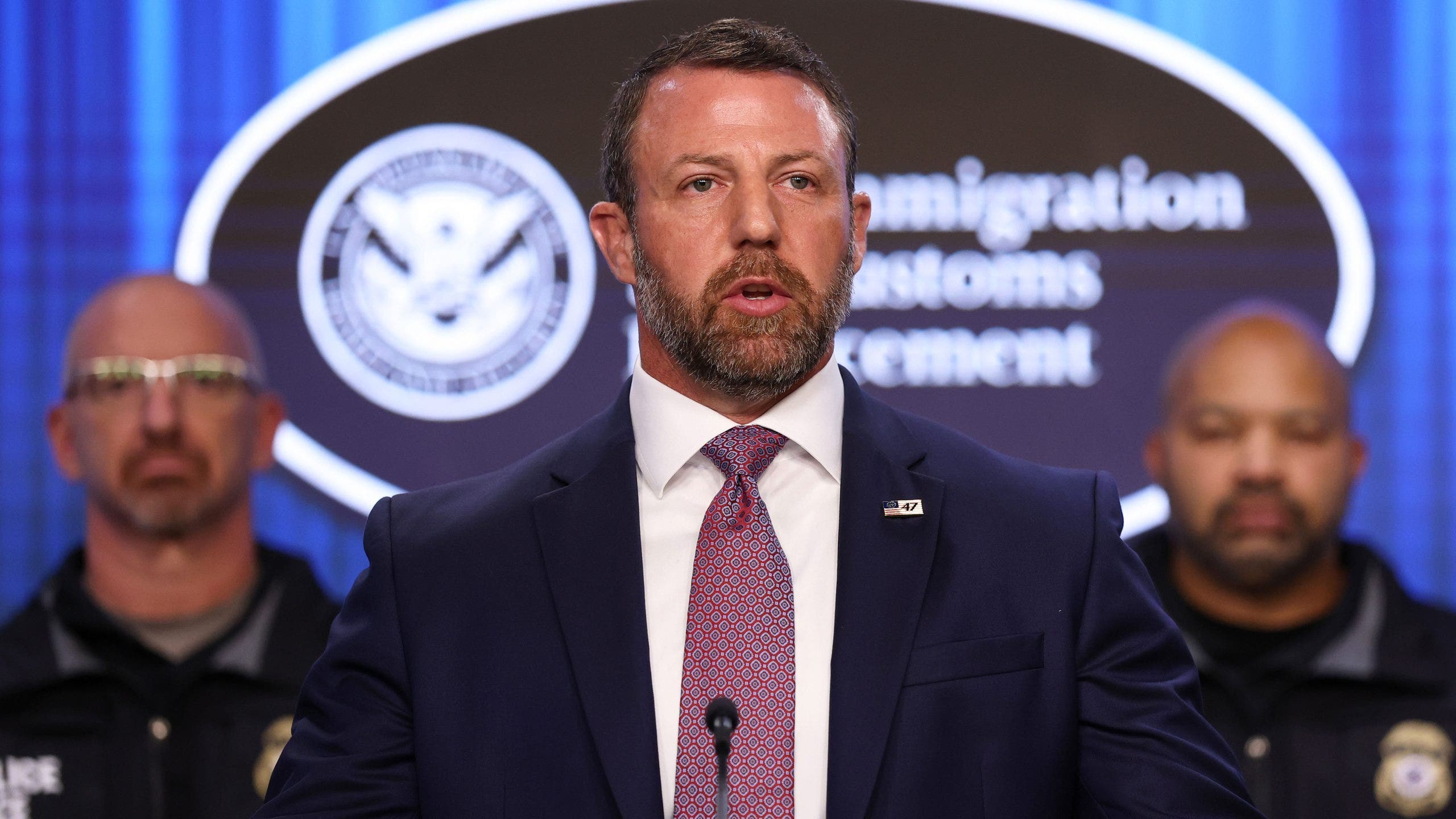
New York City is facing renewed political tension after an Immigration and Customs Enforcement (ICE) officer shot a man in Manhattan’s Marble Hill neighborhood on October 8, 2026. The incident triggered sharp criticism from Mayor Zohran Mamdani and a strong response from Homeland Security Secretary Markwayne Mullin.
The confrontation has intensified the national debate over immigration enforcement, public safety, and the limits of federal authority in cities that restrict cooperation with immigration officials. It has also raised questions about the use of force during arrests, the presence of children during enforcement operations, and the accountability of federal officers.
Mamdani condemned the shooting and called for ICE to end its enforcement activities in New York City. Mullin, meanwhile, defended the agency and accused the mayor of using dangerous rhetoric that could increase hostility toward immigration officers.
According to reporting by Reuters and The Associated Press, the shooting occurred during an attempted arrest involving 28-year-old Oscar Belgal. A five-year-old child was reportedly inside the vehicle, but authorities said the child was unharmed.
The incident has quickly become a flashpoint in the wider political dispute between the Trump administration and New York’s Democratic leadership.
Markwayne Mullin and Zohran Mamdani Clash After ICE Shooting
The disagreement between Mullin and Mamdani reflects two sharply different approaches to immigration enforcement.
Mamdani argues that aggressive federal operations can endanger residents and undermine public confidence in law enforcement. Mullin maintains that ICE officers must be able to carry out federal immigration laws and that local sanctuary policies can make enforcement more difficult.
The dispute escalated after Mamdani publicly condemned ICE’s conduct following the shooting. The mayor described the incident as unacceptable and renewed his call for the agency to be abolished.
Mullin responded by accusing Mamdani of using language that could encourage hostility toward federal officers.
According to Fox News and The Independent, Mullin characterized the mayor’s comments as dangerous and defended the work of ICE personnel. He also questioned how the city would address serious criminal activity if ICE were abolished.
The exchange has placed the shooting at the center of a broader argument over immigration policy, political accountability, and public safety.
However, the political disagreement should not be confused with the investigation itself. Determining whether officers acted lawfully requires evidence about the encounter, the perceived threat, and the circumstances surrounding the use of force.
What Happened During the New York ICE Shooting?
The shooting occurred on October 8 in Marble Hill, a residential neighborhood in northern Manhattan.
According to a briefing by New York City officials, federal immigration agents were conducting a targeted enforcement operation when an officer fired at a man inside a vehicle.
Authorities identified the injured man as Oscar Belgal, a 28-year-old Dominican national. Officials said he was struck in the neck area and taken to a hospital for treatment.
The incident drew particular concern because a five-year-old child was inside the vehicle.
Mayor Mamdani said the child was physically unharmed. The New York Police Department later confirmed that officers located the child and ensured the child was in the care of a family member.
The Department of Homeland Security said the operation targeted a man with a prior criminal conviction and other legal issues. Officials also argued that the encounter involved a threat to officers.
According to federal officials, Belgal refused to leave the vehicle and attempted to flee. They alleged that his actions endangered officers and the child.
However, these claims remain part of the account provided by authorities and must be assessed alongside available video evidence, witness statements, and other investigative findings.
Reuters reported that the shooting occurred during an attempted arrest and that federal officials defended the officer’s actions the following day.
The NYPD also reported recovering shell casings and examining the vehicles involved. Police officials said the department had not participated in the federal operation before the shooting.
These details are important because they help establish the sequence of events. Nevertheless, a complete assessment depends on the evidence collected by investigators.
Mamdani Demands an End to ICE Operations in New York City
Mamdani’s response was immediate and forceful.
The mayor criticized the federal operation and argued that the presence of heavily armed immigration officers in a residential neighborhood had created unnecessary risks.
He also questioned the use of force during an arrest involving a vehicle occupied by a young child.
Mamdani said he had spoken with President Donald Trump and Homeland Security Secretary Markwayne Mullin in an effort to secure the injured man’s release from federal custody. According to the mayor, those discussions did not produce the outcome he wanted.
The mayor subsequently renewed his demand that ICE stop conducting enforcement operations in the city.
His position reflects his broader opposition to the agency’s enforcement methods. Mamdani has argued that immigration operations can frighten immigrant families, discourage residents from seeking assistance, and weaken trust between communities and public institutions.
For supporters of the mayor, the Marble Hill shooting demonstrates why federal immigration tactics require closer scrutiny.
Critics of his approach, however, argue that local leaders cannot simply reject federal enforcement because they disagree with national immigration policy.
This disagreement highlights a central question: how can federal agencies enforce immigration law while respecting public safety and the concerns of local communities?
The answer will depend partly on the legal framework governing cooperation between federal immigration authorities and city agencies.
Mullin Defends ICE Officers and Criticizes Sanctuary Policies
Mullin strongly rejected Mamdani’s criticism of ICE.
Speaking publicly on October 9, the homeland security secretary defended federal officers and argued that they were carrying out their responsibilities under federal law.
He also criticized New York’s sanctuary policies, which limit certain forms of cooperation between city agencies and federal immigration authorities.
Mullin argued that such policies can make enforcement more difficult and potentially create risks for officers and the public.
He further accused Mamdani of directing dangerous rhetoric toward ICE personnel.
The secretary’s position reflects the Trump administration’s wider approach to immigration enforcement. The administration has prioritized arrests and deportations and has repeatedly challenged policies that restrict local cooperation with federal authorities.
From the administration’s perspective, immigration officers need sufficient authority and operational support to carry out lawful arrests.
Nevertheless, defending the agency does not remove the need to examine the circumstances of an individual shooting.
Even when officers are conducting a legitimate operation, their use of force remains subject to applicable legal standards and investigative review.
Likewise, criticism of a federal agency does not automatically establish that an officer acted unlawfully.
The key issue is whether the available evidence supports the accounts provided by the different parties.
Why the Shooting Has Reignited the Sanctuary City Debate
The Marble Hill incident has revived a long-running dispute over sanctuary city policies.
These policies vary by jurisdiction, but they generally restrict certain forms of local cooperation with federal immigration enforcement. They do not automatically prevent federal officers from enforcing federal law within a city.
Supporters say sanctuary policies encourage immigrants to report crimes, cooperate with witnesses, and access essential services without fearing that every interaction with local authorities could lead to immigration detention.
They also argue that local police should concentrate on community safety rather than serve as an extension of the federal immigration system.
Opponents contend that restrictions on cooperation can make it harder to transfer people into federal custody and coordinate responses to individuals accused or convicted of serious offenses.
The Trump administration has repeatedly criticized jurisdictions that limit cooperation with ICE.
Mullin’s response to the shooting fits within this broader political conflict. By criticizing New York’s policies, he placed the incident within a national argument about the responsibilities of local and federal authorities.
However, sanctuary policies alone do not determine whether a shooting was justified.
That question requires a separate examination of the facts, including what officers knew at the time, what threat they reasonably perceived, and whether their actions complied with the law.
The Child Inside the Vehicle Raises Serious Safety Questions
One of the most troubling aspects of the incident is the reported presence of a five-year-old child inside the vehicle.
Although officials said the child was unharmed, the shooting has prompted questions about how officers assess risks to bystanders during enforcement operations.
Federal officials said officers did not know the child was inside the vehicle when shots were fired. Mullin also argued that the driver’s actions placed the child at risk.
Mamdani, by contrast, questioned why officers fired multiple rounds at a vehicle in which a child was present.
These competing accounts underline the importance of establishing exactly what happened during the encounter.
Investigators will need to examine the officers’ positions, the vehicle’s movements, any warnings or commands, and the timing of the gunfire.
They must also consider whether officers had alternatives that could have reduced the danger to everyone at the scene.
The presence of a child does not, by itself, establish whether an officer’s use of force was lawful. Equally, an allegation that a driver attempted to flee does not automatically settle the question.
A careful investigation should establish the facts before assigning responsibility.
The incident also highlights the importance of clear identification during law enforcement operations. Mamdani and local residents raised concerns about officers wearing masks and clothing that did not clearly identify them as immigration agents.
Such concerns can affect how members of the public understand a rapidly developing confrontation.
Video Evidence and the Investigation Will Be Crucial
Video evidence could play a central role in determining what happened in Marble Hill.
New York officials said police body-camera footage documented the response after the shooting. Federal officials also indicated that footage from ICE officers would be released.
These recordings could help establish the sequence of events and clarify conflicting accounts.
Investigators may examine whether the officers clearly identified themselves, whether the driver received instructions, and how the vehicle moved immediately before shots were fired.
They may also compare video with physical evidence, including shell casings and damage to the vehicles.
Witness accounts could provide additional information about what people nearby saw or heard. However, investigators must assess those accounts carefully, particularly when witnesses viewed the incident from different positions.
Transparency will be important because the shooting has already generated intense political disagreement.
If authorities release relevant footage, they should provide sufficient context to explain what it shows and what remains uncertain.
A video clip can clarify important details, but it may not capture every angle or conversation. Therefore, investigators should consider all available evidence rather than rely on a single recording.
The public should also distinguish between an ongoing investigation and a final legal finding.
Until authorities establish the full circumstances, claims about individual responsibility should remain appropriately qualified.
Protests and Community Concerns Grow After the Shooting
The shooting prompted protests and strong reactions from residents and political leaders.
Some demonstrators demanded an end to ICE operations in New York, while others called for greater accountability and restrictions on the agency’s use of force.
Residents of Marble Hill also expressed concern about the effect of federal enforcement activity on a neighborhood where families and children live.
The incident has added to existing fears among some immigrant communities about detention, deportation, and encounters with federal officers.
For many residents, the issue extends beyond one arrest. They want to know whether enforcement operations are being conducted in ways that protect the wider public.
At the same time, federal authorities maintain that immigration laws must be enforced and that officers face difficult decisions during some arrests.
These competing concerns make clear communication particularly important.
Local and federal officials can disagree over policy without encouraging threats or violence against one another. Public statements should focus on evidence, accountability, and the legal issues at stake.
The investigation’s findings will be important in determining whether additional action is warranted.
What the Dispute Means for New York’s Political Future
The confrontation between Mullin and Mamdani could deepen the political divide between the Trump administration and New York City leadership.
Immigration enforcement is already a major national issue. The Marble Hill shooting has given both sides another opportunity to defend their positions.
Mamdani’s criticism is likely to resonate with residents who oppose aggressive immigration operations. His demand for ICE to leave the city also reinforces his broader political stance on immigration enforcement.
Meanwhile, Mullin’s defense of the agency aligns with the administration’s commitment to expanding immigration arrests and challenging sanctuary policies.
The disagreement could also influence discussions about cooperation between city agencies and federal officials.
Local leaders may face pressure to strengthen safeguards around public safety, while federal officials may seek greater cooperation in identifying and detaining people they consider enforcement priorities.
However, the shooting’s longer-term consequences will depend on more than political statements.
The findings of the investigation, any legal proceedings, and the response from city and federal authorities will help shape public opinion.
The incident may also renew calls for clearer operational procedures, improved identification practices, and stronger oversight of federal enforcement activity.
Ultimately, public trust will depend on whether authorities can demonstrate that the law is being enforced fairly and that credible allegations of misconduct receive serious attention.
Could the Shooting Lead to Legal or Policy Changes?
The incident could prompt further legal scrutiny, although specific outcomes remain uncertain.
Investigators will need to establish whether the officer’s use of force complied with applicable law and agency policy. Depending on the evidence, the case could lead to additional administrative review or legal proceedings.
The dispute could also influence broader discussions about federal immigration operations in residential neighborhoods.
Possible areas of debate include the use of plainclothes officers, operational transparency, coordination with local emergency services, and procedures for protecting children and other bystanders.
However, it would be premature to predict a particular legal outcome or assume that the shooting will automatically produce a change in federal policy.
Policy changes generally require decisions by relevant authorities, new rules, legislative action, or court rulings, depending on the issue.
New York’s sanctuary policies may also remain the subject of separate legal disputes.
For now, the immediate priority is to establish what happened during the attempted arrest and determine whether the available evidence supports the competing accounts.
The results could influence both the public debate and any decisions about accountability.
Conclusion: ICE Shooting Intensifies Political Tensions
The New York ICE shooting has exposed deep disagreements over immigration enforcement, public safety, and the responsibilities of federal and local authorities.
Markwayne Mullin has defended ICE officers and criticized Zohran Mamdani’s rhetoric, while the mayor has condemned the operation and demanded an end to the agency’s enforcement activities in New York City.
The incident has also raised serious questions about the use of force during arrests, the protection of children, and the transparency of federal operations.
Although officials have provided preliminary accounts, important questions still require careful examination. Video evidence, witness statements, physical evidence, and investigative findings will be essential to understanding the confrontation.
The political debate is likely to continue. Nevertheless, determining responsibility requires evidence rather than rhetoric.
For New Yorkers, the central concerns remain public safety, lawful enforcement, accountability, and confidence that authorities will investigate the shooting fairly.
As the investigation proceeds, its findings may shape the next stage of the dispute between the Trump administration and New York City’s leadership.
Frequently Asked Questions (FAQs)
1. What happened in the New York ICE shooting?
An ICE officer shot 28-year-old Oscar Belgal during an attempted arrest in Marble Hill, Manhattan, on October 8, 2026. A five-year-old child was inside the vehicle but was reported unharmed.
2. Why are Markwayne Mullin and Zohran Mamdani arguing?
Mamdani condemned the shooting and called for ICE to stop its enforcement operations in New York City. Mullin defended the agency and accused the mayor of using rhetoric that could increase hostility toward federal officers.
3. Who is Markwayne Mullin?
Markwayne Mullin is a Republican politician from Oklahoma who, according to reports published in October 2026, serves as U.S. Homeland Security secretary. The headline’s description of him as a senator is not accurate for the reported period.
4. What is Zohran Mamdani’s position on ICE?
Mamdani opposes ICE’s enforcement methods and has called for the agency to be abolished. Following the Marble Hill shooting, he demanded an end to ICE enforcement operations in New York City.
5. Was the child injured in the shooting?
Officials said the five-year-old child inside the vehicle was physically unharmed. The NYPD reported locating the child and ensuring the child was with a family member.
6. Why did federal agents say they were targeting the man?
Federal authorities described the incident as a targeted enforcement operation. They cited the man’s prior criminal history and said his actions during the encounter endangered officers and the child. These claims must be distinguished from any final investigative findings.
7. What are sanctuary city policies?
Sanctuary policies limit certain forms of cooperation between local authorities and federal immigration officials. Their specific provisions vary by jurisdiction, and they do not automatically prevent federal agencies from enforcing federal immigration law.
8. Is the shooting under investigation?
New York officials provided preliminary information about the incident, while federal authorities took control of the investigation. The available evidence, including video and physical evidence, will be important in determining the circumstances surrounding the shooting.
9. Could the incident change immigration enforcement policies?
The shooting could intensify calls for greater oversight and changes to enforcement procedures. However, any specific policy or legal outcome remains uncertain.
10. Why has the incident attracted national attention?
The shooting has brought together several contentious issues: immigration enforcement, the use of force, sanctuary city policies, child safety, and the relationship between the Trump administration and New York’s Democratic leadership.
About the Author