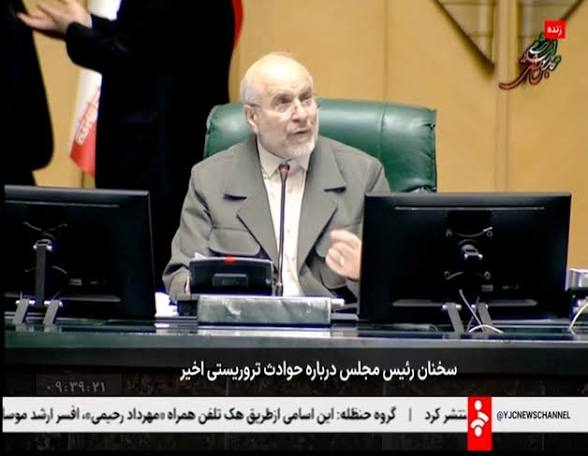
Tensions between Tehran and Washington have entered another critical phase after Iranian parliament speaker and chief negotiator Mohammad Bagher Qalibaf delivered a forceful warning to the United States. Qalibaf said the Strait of Hormuz will not reopen until Washington fulfills commitments that Tehran says were part of an interim agreement.
The statement comes as diplomatic efforts remain stalled and economic pressure on Iran continues to intensify. Tehran is demanding major changes from Washington, including the removal of the U.S. blockade on Iranian ports, the lifting of oil sanctions and the release of frozen Iranian assets abroad.
Qalibaf’s warning is significant because the Strait of Hormuz is one of the world’s most important energy corridors. Any prolonged disruption could affect oil markets, shipping costs and economies far beyond the Middle East.
At the same time, Iran’s leadership appears to be balancing two competing priorities: maintaining a position of strength while keeping the possibility of diplomacy alive.
What Did Qalibaf Say?
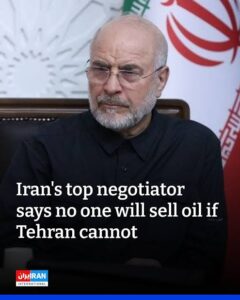
Qalibaf has taken a firm position on the future of the Strait of Hormuz. In remarks broadcast by Iranian state television, he said the waterway would not be opened until the United States implemented its commitments under a memorandum of understanding.
Among Tehran’s demands are the removal of the U.S. naval blockade, the lifting of oil sanctions, the unfreezing of Iranian assets and an end to what Iran describes as American military threats and operations.
The message effectively places the issue of Hormuz at the center of the wider U.S.-Iran dispute.
For Washington, reopening the waterway is an important objective. For Tehran, however, control over access through the strategic passage has become a major bargaining tool.
The result is a diplomatic standoff in which each side is demanding action from the other before making further concessions.
Why the Strait of Hormuz Matters
The Strait of Hormuz connects the Persian Gulf with the Gulf of Oman and the wider Arabian Sea. It is critical to international energy transportation.
Before the current crisis severely disrupted maritime trade, the passage handled a substantial share of global oil and liquefied natural gas shipments. Reuters has reported that the strait previously carried about one-fifth of global oil and LNG flows.
That makes the current confrontation much larger than a disagreement between Washington and Tehran.
If shipping remains restricted, oil importers in Asia and other regions could face higher costs. Energy prices can also influence transportation, manufacturing, food prices and inflation.
Markets have already reacted to uncertainty surrounding Hormuz. Reuters reported that Brent crude recently closed above $91 per barrel as concerns over prolonged disruption increased.
This explains why governments around the world are watching the U.S.-Iran dispute closely.
Tehran’s Main Demands
Qalibaf’s position has highlighted several demands that Tehran considers essential before it changes its position.
1. End the U.S. Naval Blockade
Iran wants the blockade affecting its ports removed. Tehran argues that Washington must first fulfill its obligations before expecting Iran to reopen the strategic waterway.
2. Lift Oil Sanctions
Oil remains one of Iran’s most important sources of revenue. Tehran has repeatedly opposed U.S. restrictions on its energy sector.
Iranian officials argue that sanctions have severely damaged the country’s economy and limited its ability to trade internationally.
3. Unfreeze Iranian Assets
Another major demand involves Iranian funds held abroad. Tehran wants frozen assets released as part of any broader diplomatic settlement.
4. End Military Threats
Iran also wants Washington to stop military operations and threats against the country.
These demands demonstrate why negotiations remain extremely difficult. Both governments appear to believe that economic and strategic pressure can improve their bargaining position.
Why Qalibaf’s Warning Matters
Qalibaf is not simply an opposition politician making a routine statement. He has been involved in Iran’s negotiations with the United States and is a prominent political figure inside Tehran.
His comments therefore provide an important indication of Iran’s negotiating position.
Recent reporting has shown that Iranian officials are increasingly linking national security with economic resilience. Qalibaf has also argued that Iran needs strategies to overcome sanctions and reduce dependence on the U.S.-dominated financial system.
Speaking to Iranian and Iraqi business leaders, Qalibaf emphasized greater regional economic cooperation and the use of national currencies in bilateral trade.
That approach suggests Tehran is preparing for the possibility that sanctions pressure will continue for an extended period.
US-Iran Diplomacy Faces a Major Test
The latest warning comes after an interim agreement between the two countries failed to produce a lasting breakthrough.
The memorandum, signed in June, was intended to create a path toward broader negotiations, including discussions related to Iran’s nuclear program. However, disagreements over the Strait of Hormuz became a major obstacle.
The United States later declared the agreement over, while Iran suspended its participation.
The collapse of the arrangement has deepened mistrust between Washington and Tehran.
Each side accuses the other of failing to meet commitments. That makes it harder for negotiators to establish a new framework.
The central problem is sequencing.
Iran wants sanctions and military pressure reduced before making major concessions. The United States, meanwhile, wants Tehran to take concrete steps before offering significant relief.
Without agreement on who moves first, negotiations can easily become stuck.
Iran Shifts Toward a More Defiant Position
Iranian officials have increasingly warned that Tehran could respond more aggressively if diplomatic efforts fail.
A senior Iranian official told Reuters on August 17 that Iran could escalate tensions around the Strait of Hormuz and potentially launch military action if Washington failed to implement the interim agreement within weeks.
The warning came as Iran described itself as moving away from a defensive posture.
That does not necessarily mean an immediate military confrontation is inevitable. Instead, it indicates that Tehran wants Washington and other governments to understand that continued pressure carries risks.
The challenge is that stronger rhetoric can also make diplomacy more difficult.
Economic Pressure Is Becoming Central
The dispute is no longer only about military power or nuclear negotiations. Economics has become a central part of the confrontation.
The United States is preparing additional sanctions against Iran, with U.S. Treasury Secretary Scott Bessent describing the coming measures as exceptionally severe. Iran has dismissed the pressure as evidence of U.S. desperation.
Iranian leaders argue that sanctions cannot force the country to surrender its strategic interests.
However, the economic consequences are significant.
Iran faces pressure on oil exports, international finance, trade and access to foreign currency. The government therefore needs to balance resistance against the economic needs of its population.
President Masoud Pezeshkian has recently emphasized a diplomatic solution and argued that Iran should seek an end to the conflict from a position of strength.
This indicates that there may be debate within Iran about the best strategy for dealing with Washington.
What Does This Mean for Oil Prices?
The biggest international concern is energy.
A prolonged disruption around the Strait of Hormuz could increase uncertainty for oil traders and energy-consuming countries.
When shipping routes become less predictable, insurers, shipping companies and energy buyers can face higher costs. Those costs can eventually affect consumers.
Recent market movements show that investors are already watching the situation closely. Reuters reported that oil prices climbed as hopes for a U.S.-Iran agreement faded and risks around Hormuz increased.
However, the final impact will depend on how long disruptions last and whether alternative transportation routes can compensate.
If diplomacy resumes, markets could quickly respond with lower risk premiums. If confrontation intensifies, energy prices could face renewed upward pressure.
Could the Crisis Escalate?
The possibility of escalation remains one of the biggest concerns.
Iran has warned that it could take military action if diplomatic efforts fail. Washington, meanwhile, continues to apply economic pressure and has warned Tehran about serious consequences.
The danger is that a limited confrontation could quickly expand.
An incident involving a commercial vessel, military ship or regional ally could create pressure for retaliation. Once military forces become involved, diplomatic channels can become harder to use.
That is why regional mediators and international governments have an interest in keeping communication open.
Pakistan, for example, has been involved in diplomatic efforts aimed at reducing tensions between Washington and Tehran. Pakistan’s army chief is also expected to visit Tehran as part of broader efforts to support de-escalation.
Tehran Wants Leverage, Not Capitulation
Qalibaf’s remarks can also be understood as part of Iran’s broader negotiating strategy.
Tehran wants to demonstrate that it still has tools available despite severe economic pressure.
The Strait of Hormuz is one such tool.
By linking the reopening of the waterway to sanctions relief and other U.S. actions, Iran is attempting to create a direct connection between American economic objectives and the costs of maintaining pressure.
This strategy carries risks for Iran as well.
Keeping a major shipping route restricted can damage regional economies and reduce Iran’s own access to international trade. It can also encourage neighboring countries to seek alternatives and increase diplomatic pressure on Tehran.
Therefore, Iran must decide how long the strategic leverage gained from Hormuz outweighs the economic and political costs.
The Nuclear Issue Remains Important
Although the current dispute has focused heavily on sanctions, military operations and Hormuz, Iran’s nuclear program remains a major part of the wider disagreement.
The June memorandum was intended to provide a framework for further negotiations, including the nuclear issue. However, the agreement broke down before a comprehensive settlement could be achieved.
For Washington, preventing Iran from developing a nuclear weapon remains a key strategic objective.
For Tehran, nuclear rights are closely linked to national sovereignty and security.
Finding common ground will therefore require more than a temporary agreement over shipping.
What Happens Next?
The immediate future depends largely on whether Washington and Tehran can restore meaningful diplomatic communication.
There are several possible outcomes.
First, diplomacy could restart. If both sides agree to return to negotiations, sanctions relief and Hormuz could become part of a new package.
Second, economic pressure could increase. Washington may continue expanding sanctions in an attempt to force Tehran to compromise.
Third, Iran could maintain restrictions around Hormuz. This would increase pressure on international energy markets and raise concerns among regional governments.
Fourth, tensions could escalate militarily. Iran has already warned that it may respond more forcefully if diplomacy fails.
The most stable outcome would be a negotiated arrangement that allows the Strait of Hormuz to return to normal operations while addressing the sanctions and security issues at the heart of the dispute.
Global Implications of the Iran-US Standoff
The consequences of the confrontation extend well beyond Iran and the United States.
Asian economies are particularly sensitive to oil prices because many rely heavily on imported energy.
European governments are also watching the situation because higher energy costs can contribute to inflation.
Gulf countries have an additional concern: regional instability could threaten ports, shipping infrastructure and investment.
China is another important player because it has significant economic interests in the Middle East and is a major buyer of energy.
The longer the crisis continues, the greater the incentive for regional governments to support diplomatic solutions.
Qalibaf’s Ultimatum Could Shape the Next Phase
The latest Iran negotiator warning from Qalibaf shows how far apart Washington and Tehran remain.
His message is clear: Iran does not intend to reopen the Strait of Hormuz simply because the United States demands it. Tehran wants sanctions relief, an end to the blockade and other measures before changing its position.
At the same time, Iran’s leadership is facing enormous economic pressure.
That creates a difficult balancing act.
Tehran needs to demonstrate strength without closing the door to diplomacy. Washington needs to maintain pressure without creating an escalation that could damage global energy markets.
For now, both sides appear unwilling to surrender their central demands.
The coming weeks could therefore be crucial.
If negotiators find a compromise, the crisis could move toward de-escalation. If talks remain frozen and pressure continues to rise, the risk of further confrontation around the Strait of Hormuz will remain high.
Conclusion
Iran negotiator Mohammad Bagher Qalibaf’s latest warning has underscored the seriousness of the standoff between Tehran and Washington.
Iran is demanding the removal of the U.S. blockade, the lifting of oil sanctions, the release of frozen assets and an end to military pressure before reopening the Strait of Hormuz.
The dispute is now a combination of diplomacy, economics, military strategy and energy security.
For the United States, sanctions are intended to pressure Tehran toward a broader settlement. For Iran, resistance is being presented as necessary to protect national sovereignty and security.
The Strait of Hormuz remains the most immediate pressure point.
With global energy markets already reacting to uncertainty, the stakes are enormous. The next stage will depend on whether Washington and Tehran can move away from ultimatums and return to practical negotiations.
Until then, Qalibaf’s warning signals that Tehran intends to negotiate from a position of defiance rather than surrender.
FAQs
What did Iran negotiator Qalibaf warn the US about?
Iranian negotiator Mohammad Bagher Qalibaf said the Strait of Hormuz would not reopen until the United States fulfills commitments that Tehran says were included in the interim agreement.
What does Iran want from the United States?
Iran has demanded the removal of the U.S. blockade on Iranian ports, the lifting of oil sanctions, the release of frozen Iranian assets and an end to U.S. military threats and operations.
Why is the Strait of Hormuz important?
The Strait of Hormuz is a crucial energy and shipping route connecting the Persian Gulf with international waters. Before the current disruption, it carried roughly one-fifth of global oil and LNG flows.
Could Iran and the US return to negotiations?
A return to negotiations remains possible, although major disagreements over sanctions, security, Hormuz and Iran’s nuclear program continue to make diplomacy difficult.
How could the Iran-US dispute affect oil prices?
A prolonged disruption around Hormuz could increase concerns about energy supplies and push oil prices higher. Recent market movements have already reflected increased geopolitical risk.
Is Iran threatening military escalation?
Iranian officials have warned that Tehran could escalate if the United States fails to implement the interim agreement and diplomacy breaks down.
What is the main issue between Iran and the United States?
The dispute involves several interconnected issues, including sanctions, Iran’s nuclear program, military operations, the Strait of Hormuz and the terms of a potential peace agreement.
What happens if the Strait of Hormuz remains closed?
A prolonged closure or severe disruption could increase shipping costs, create energy-supply concerns and put upward pressure on global oil prices.
Why is Qalibaf’s statement important?
Qalibaf is a senior Iranian political figure and negotiator. His statement therefore provides an important indication of Tehran’s current negotiating position.
What could reduce tensions between Tehran and Washington?
A negotiated agreement involving sanctions relief, security guarantees, restoration of maritime access and renewed discussions over Iran’s nuclear program could provide a possible path toward de-escalation.
About the Author