Explosive Warning: Karoline Leavitt Declares ‘This Is A Full-Blown Communist Revolution’
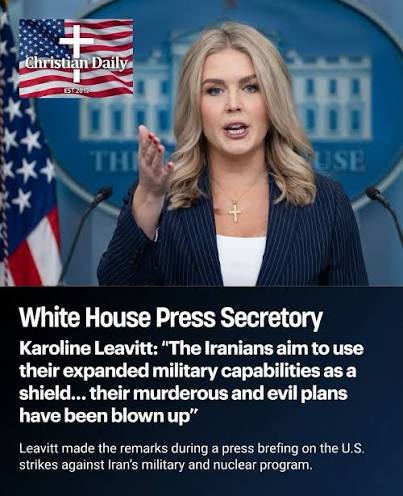
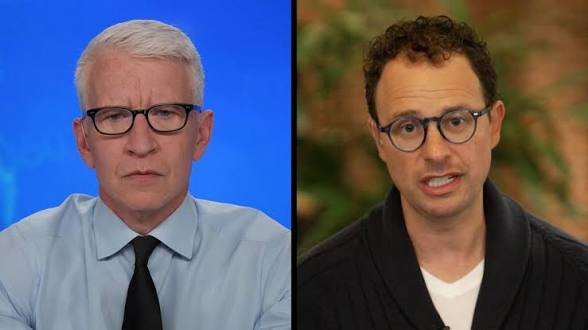
A recent political firestorm erupted after White House Press Secretary Karoline Leavitt described rising progressive political activity in the United States as a “full-blown communist revolution.” The statement, made during a televised interview, immediately triggered intense debate across political media, social platforms, and academic commentary.
According to reporting from multiple outlets, Leavitt argued that modern progressive policies being promoted by sections of the Democratic Party represent a radical ideological shift away from traditional American political values, including private property, policing systems, and prison institutions.
Her comments quickly became a flashpoint in America’s ongoing ideological divide, raising questions about political rhetoric, democratic norms, and the boundaries of public discourse in an election-heavy climate.
What Karoline Leavitt Actually Said
During her appearance on national television, Leavitt sharply criticized what she described as extreme left-wing policy proposals gaining traction within parts of the Democratic Party.
She claimed that these groups are not simply progressive but represent a deeper ideological break from historical American political identity.
Leavitt stated that:
- The modern Democratic movement is “not the party of JFK”
- Certain policy proposals reflect “radical Marxist ideas”
- The political climate represents a “full-blown communist revolution” in Washington
She further described what she called the “Three Ps”:
- Prison
- Police
- Private property
According to her argument, opposition to these institutions signals a fundamental rejection of traditional governance systems.
Political Context Behind the Statement
The statement did not emerge in isolation. It comes amid escalating political tension in the United States ahead of major electoral cycles, where both parties are intensifying messaging to energize their base voters.
Leavitt and other Republican figures have increasingly used strong ideological framing—particularly terms like “communism,” “radical left,” and “Marxism”—to characterize progressive policies.
Recent commentary from her earlier interviews also framed upcoming elections as a choice between “communism and common sense,” reflecting a broader communication strategy centered on ideological contrast.
This framing is designed to:
- Mobilize conservative voters
- Draw clear ideological boundaries
- Link progressive policies to global historical communism narratives
Why the Word “Communism” Is Politically Powerful
The use of the term “communist revolution” carries significant historical weight in American political culture.
For decades, “communism” has been associated with:
- The Cold War rivalry with the Soviet Union
- Anti-authoritarian democratic identity
- Economic fears about state control
- Cultural resistance to centralized governance
Because of this, the term is often used rhetorically rather than literally in modern political discourse.
Political communication experts note that such language serves as a “shortcut” to convey alarm or urgency without requiring detailed policy explanation.
Reactions From Political Opponents
Critics of Leavitt’s statement argue that her characterization is exaggerated and politically strategic rather than factual.
Opponents generally make three main counterarguments:
1. Misrepresentation of Policy Positions
Most progressive policy proposals cited in political debates—such as police reform, prison reform, or public services expansion—do not align with historical definitions of communism, which typically involve abolition of private property and centralized economic control.
2. Political Polarization Strategy
Some analysts suggest that framing opponents as “communists” increases polarization and reduces space for policy negotiation.
3. Historical Inaccuracy
Historians point out that modern American political systems remain firmly capitalist, with bipartisan support for private enterprise.
Supporters’ Interpretation of Leavitt’s Warning
Supporters of Leavitt argue that her comments reflect legitimate concern over shifting political ideologies.
They interpret her statement as a warning about:
- Expanding government control in certain policy areas
- Increasing skepticism toward law enforcement institutions
- Growing support for socialist-leaning policies among younger voters
From this perspective, “communist revolution” is used metaphorically to describe a perceived ideological shift rather than an actual political takeover.
Media Amplification and Viral Spread
The phrase quickly gained traction online, particularly on social media platforms where political soundbites are often amplified without full context.
Short clips of the interview circulated widely, leading to:
- Viral debates on X (formerly Twitter)
- Commentary videos on YouTube
- Polarized reactions across news forums
This amplification effect is typical of modern political communication, where a single phrase can dominate news cycles within hours.
Historical Comparison: Political Rhetoric in America
Strong ideological language is not new in American politics.
Examples include:
- Cold War-era anti-communist rhetoric
- 1960s civil rights political debates
- Post-9/11 security framing
- Modern “culture war” language
In each era, political figures have used strong terminology to define opponents and rally supporters.
Leavitt’s statement fits into this long tradition of high-intensity political messaging.
Impact on Public Discourse
The statement contributes to a broader trend of increasing political polarization in the United States.
Key impacts include:
1. Reduced Middle Ground
Moderate political positions become harder to maintain when rhetoric shifts toward extremes.
2. Increased Media Friction
News outlets amplify opposing interpretations of the same statement.
3. Voter Emotional Response
Emotion-driven reactions often replace policy-based evaluation.
Academic Perspective on “Revolution” Language
Political science research suggests that terms like “revolution” are often used metaphorically in democratic systems.
Revolutionary language typically signals:
- Rapid social change
- Structural policy shifts
- Cultural transformation narratives
However, in stable democracies, these terms rarely describe literal revolutionary conditions.
Instead, they function as rhetorical framing devices.
Public Response and Social Media Reaction
Public reaction has been sharply divided:
- Supporters praised the statement as “truth-telling”
- Critics called it “fear-mongering”
- Neutral observers focused on its rhetorical intensity
Hashtags related to the statement trended briefly across social media platforms, highlighting the speed of political narrative spread in the digital era.
Broader Political Implications
The controversy highlights several broader themes:
1. Election Strategy
Both parties increasingly rely on ideological framing to define opponents.
2. Media Fragmentation
Different audiences consume entirely different interpretations of the same statement.
3. Identity Politics
Political identity is becoming more emotionally and culturally driven.
Conclusion
Karoline Leavitt’s “full-blown communist revolution” remark has become another example of how modern political language is shaped by urgency, ideology, and media amplification.
While supporters view it as a warning about ideological drift, critics see it as exaggerated rhetoric that contributes to polarization.
Regardless of interpretation, the statement reflects a political environment where strong language often defines public debate more than policy detail.
FAQs
1. What did Karoline Leavitt mean by “communist revolution”?
She used the phrase to describe what she sees as a radical ideological shift in modern progressive politics.
2. Is there evidence of a communist revolution in the US?
No mainstream political analysis supports the idea of an actual communist revolution in the United States.
3. Why did the statement go viral?
The phrase is emotionally charged and politically provocative, making it highly shareable online.
4. What policies was she referring to?
She referenced debates around policing, prisons, and private property-related policies.
5. How did critics respond?
Critics argue the statement is exaggerated and used for political messaging rather than factual description.
6. Is this kind of language common in US politics?
Yes, strong ideological rhetoric has been used historically across multiple political eras.
How useful was this post?
Click on a star to rate it!
Average rating 0 / 5. Vote count: 0
No votes so far! Be the first to rate this post.
About the Author

usa5911.com
Administrator
Hi, I’m Gurdeep Singh, a professional content writer from India with over 3 years of experience in the field. I specialize in covering U.S. politics, delivering timely and engaging content tailored specifically for an American audience. Along with my dedicated team, we track and report on all the latest political trends, news, and in-depth analysis shaping the United States today. Our goal is to provide clear, factual, and compelling content that keeps readers informed and engaged with the ever-changing political landscape.