Jail Time Ahead: DOJ Takes On Virginia As Explosive ICE Battle Erupts
The legal battle between the U.S. Department of Justice (DOJ) and the Commonwealth of Virginia has erupted into one of the most closely watched immigration disputes in America. At the center of the controversy are newly enacted Virginia laws that restrict how federal immigration officers conduct operations and limit cooperation between local authorities and U.S. Immigration and Customs Enforcement (ICE).
The DOJ argues that Virginia’s new laws violate the U.S. Constitution by attempting to regulate federal law enforcement activities. State officials, meanwhile, maintain that the legislation is designed to improve transparency, accountability, and public trust.
The lawsuit has already ignited intense political debate, with immigration advocates, law enforcement officials, constitutional scholars, and elected leaders weighing in on what could become a landmark court battle.
Why the DOJ Is Suing Virginia
The Justice Department filed its lawsuit in federal court after Virginia enacted legislation that:
Prohibits many federal law enforcement officers from concealing their identities during official operations.
Restricts federal officers from wearing face coverings during many enforcement actions.
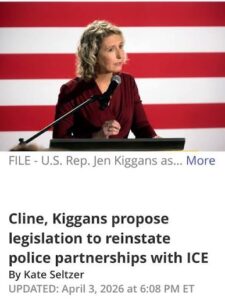
Limits agreements between local law enforcement agencies and ICE unless specific state conditions are met.
According to the DOJ, these measures unlawfully interfere with federal immigration enforcement.
Federal officials argue that under the Constitution’s Supremacy Clause, states cannot dictate how federal agencies perform their duties. The lawsuit seeks to block enforcement of the new Virginia laws before they take full effect.
The Constitutional Argument
The DOJ’s central legal argument is relatively straightforward.
Federal officials contend that immigration enforcement is primarily a federal responsibility. Because ICE agents enforce federal law, individual states cannot impose operational requirements that conflict with federal policy.
The lawsuit states that requiring agents to remove masks or disclose identifying information could expose officers to harassment, intimidation, or threats while carrying out dangerous assignments. Federal officials also argue that restricting local cooperation agreements could make immigration enforcement less effective.
Why Virginia Passed the Laws
Virginia lawmakers supporting the legislation argue that residents deserve greater transparency when law enforcement officers conduct immigration operations.
Supporters have expressed concerns that masked officers without visible identification can create confusion during enforcement actions and reduce public confidence.
State officials also argue that local governments should retain authority over whether and how they cooperate with federal immigration enforcement agencies.
These competing views highlight the broader national debate over immigration policy and the balance of power between state and federal governments.
Could Anyone Actually Face Jail Time?
The headline raises an important question.
At this stage, the lawsuit itself does not seek criminal penalties or jail sentences for Virginia officials. Instead, the DOJ is asking the federal court to declare the state laws unconstitutional and prevent them from being enforced.
However, legal disputes over federal authority sometimes raise questions about what happens if court orders are ignored. In such situations, courts can impose civil or contempt sanctions, but any suggestion of “jail time” would depend on future court proceedings and is not part of the DOJ’s current complaint.
ICE Cooperation at the Center of the Fight
One of the most significant issues involves so-called cooperation agreements between ICE and local law enforcement.
These agreements allow certain local agencies to assist federal immigration authorities under defined circumstances.
Virginia’s new law places restrictions on these partnerships unless agencies comply with state-imposed requirements.
The DOJ argues these restrictions interfere with federal operations by making immigration enforcement more difficult and requiring additional federal resources.
Political Reactions
The lawsuit has quickly become another flashpoint in America’s ongoing immigration debate.
Supporters of the DOJ argue:
Federal immigration laws must be enforced consistently nationwide.
States cannot dictate how federal officers perform their duties.
Officer safety requires flexibility regarding protective equipment such as face coverings.
Supporters of Virginia’s legislation argue:
Communities deserve transparency during enforcement operations.
Local governments should retain control over their own law enforcement partnerships.
Accountability strengthens public trust.
The sharply divided reactions illustrate how immigration policy continues to shape political discussions across the country.
What Happens Next?
The case will proceed through the federal court system, where judges will consider several key constitutional questions:
Can Virginia regulate aspects of federal law enforcement operations?
Does the Supremacy Clause prevent states from imposing these requirements?
Are the challenged laws compatible with long-standing constitutional principles?
The outcome could influence how other states approach immigration-related legislation in the future.
How useful was this post?
Click on a star to rate it!
Average rating 0 / 5. Vote count: 0
No votes so far! Be the first to rate this post.
About the Author

usa5911.com
Administrator
Hi, I’m Gurdeep Singh, a professional content writer from India with over 3 years of experience in the field. I specialize in covering U.S. politics, delivering timely and engaging content tailored specifically for an American audience. Along with my dedicated team, we track and report on all the latest political trends, news, and in-depth analysis shaping the United States today. Our goal is to provide clear, factual, and compelling content that keeps readers informed and engaged with the ever-changing political landscape.