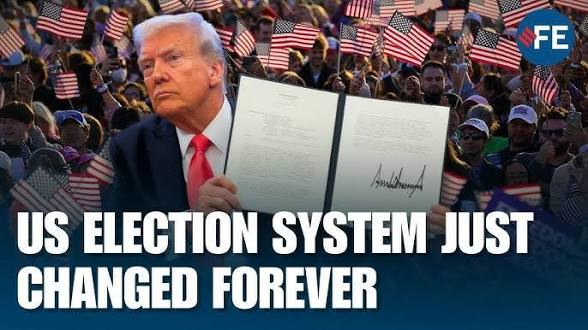
The political battle over mail-in voting in the United States has reached a new boiling point after President Donald Trump signed a sweeping executive order aimed at tightening federal oversight of absentee and mail-in ballots ahead of the 2026 midterm elections.
The controversial order has triggered immediate legal threats, fierce partisan debate, and widespread public reaction across the country. Supporters argue the move is necessary to restore confidence in elections and strengthen voter verification systems. Critics, however, claim the order represents a federal overreach that could disenfranchise millions of eligible voters.
As courts prepare for major constitutional challenges, the issue of election security has once again become one of the most divisive topics in American politics.
What Is Trump’s Mail-In Voting Order?
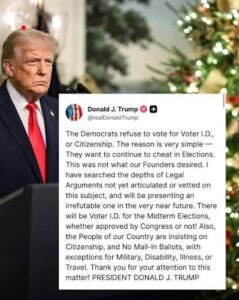
President Donald Trump signed the executive order in March 2026, directing federal agencies to implement stricter controls on mail-in voting systems nationwide. The order includes several major provisions designed to reshape how absentee ballots are distributed and verified.
Key components of the executive order include:
- Creating federal lists of verified U.S. citizens eligible to vote
- Requiring the U.S. Postal Service to send ballots only to approved voters
- Mandating secure ballot envelopes with tracking barcodes
- Expanding federal coordination with state election officials
- Prioritizing investigations into alleged ballot fraud
The White House described the order as an “election integrity initiative” intended to strengthen public trust in federal elections.
Trump defended the move by arguing that mail-in voting systems remain vulnerable to fraud and administrative abuse, despite repeated studies showing voter fraud in U.S. elections is extremely rare.
Why Mail-In Voting Remains So Controversial
Mail-in voting became a major political flashpoint during the 2020 presidential election and has remained central to America’s election debate ever since.
Democrats generally support expanded absentee voting access, arguing it improves participation among working-class voters, seniors, military personnel, and people with disabilities. Republicans, meanwhile, have increasingly focused on election security concerns and stricter verification standards.
Trump has repeatedly criticized mail-in ballots, claiming they create opportunities for fraud, even though multiple investigations and court rulings have found no evidence of widespread election manipulation through mailed ballots.
The new executive order has revived these long-standing tensions at a politically sensitive moment, with the 2026 midterms approaching rapidly.
Legal Challenges Begin Immediately
Within hours of the order being signed, Democratic attorneys general, civil rights organizations, and voting rights groups signaled plans for aggressive legal action.
Critics argue the Constitution grants states — not the president — primary authority over election administration. Legal experts have questioned whether the executive branch can impose nationwide mail-voting standards without congressional approval.
A federal judge recently declined to immediately block the order but noted that additional lawsuits could proceed once implementation begins.
Judge Carl Nichols ruled that legal challenges were currently “premature” because federal agencies had not fully enforced the new policies yet. However, he left open the possibility of future injunctions if the administration moves ahead aggressively.
That ruling has intensified political tensions instead of calming them.
Democrats Call the Order a “Power Grab”
Many Democratic leaders have accused Trump of attempting to centralize election control before a critical midterm cycle.
Several blue-state governors and attorneys general described the executive order as unconstitutional and politically motivated. California officials were among the first to promise court action, calling the move an “illegal power grab.”
Senate Democratic leaders also warned that federal voter databases could create inaccuracies and potentially block legitimate voters from receiving ballots.
Voting rights advocates argue the proposed federal eligibility lists could mistakenly exclude eligible citizens due to outdated records, citizenship verification errors, or bureaucratic delays.
Critics further warn that limiting ballot distribution through centralized approval systems could disproportionately impact:
- Minority voters
- Rural communities
- Elderly Americans
- College students
- Overseas military personnel
Civil liberties groups say the legal battle may eventually reach the U.S. Supreme Court.
Republicans Defend Election Integrity Push
Republican lawmakers and conservative activists have strongly backed the executive order, arguing that election confidence remains critically important after years of political polarization.
Supporters claim standardized verification systems and ballot tracking measures could help reduce administrative errors and improve transparency.
Conservative commentators have also argued that requiring verified voter rolls is a reasonable security measure similar to protections used in banking or federal identification systems.
Trump allies insist the order is not about suppressing votes but ensuring ballots only go to legally eligible voters.
Some Republican officials have pointed to public polling showing many Americans support stronger voter identification and verification requirements.
The administration has repeatedly framed the issue as one of “honest elections” and “restoring trust.”
USPS Role Raises New Questions
One of the most controversial aspects of the executive order involves the role of the U.S. Postal Service.
Under the proposed system, USPS would coordinate with state election officials and federal databases to determine who receives mail ballots.
Critics argue this could place enormous pressure on postal systems while potentially creating confusion during election seasons.
Election experts have warned that large-scale voter verification systems are complex and could result in delayed ballot deliveries or administrative disputes.
Postal unions and election administrators have also expressed concerns about operational burdens and implementation timelines.
The issue became even more heated after reports emerged that federal authorities had seized election-related materials in several jurisdictions during broader investigations tied to election security claims.
Public Reaction Explodes Online
Social media platforms quickly erupted after the executive order was announced.
Conservative users praised the move as a long-overdue effort to protect election integrity. Many argued that secure voting systems are essential to preserving democracy.
Progressive activists, meanwhile, accused Trump of attempting voter suppression ahead of the midterms.
Online discussions across Reddit, X, YouTube, and political forums reflected deep national divisions over mail-in voting.
Some users questioned whether the federal government has constitutional authority over state election systems, while others argued stricter safeguards are necessary regardless of political consequences.
The debate also reignited broader conversations about misinformation, election trust, and political polarization in modern America.
Could the Executive Order Actually Survive in Court?
Constitutional scholars remain sharply divided over the executive order’s legal future.
Most election experts believe courts will closely examine whether the administration exceeded presidential authority.
Historically, election administration has largely remained under state control, with Congress setting broader federal election standards.
Legal analysts say the administration may argue the order relies on existing federal authority tied to citizenship databases, postal regulations, and election security coordination.
However, opponents are expected to challenge nearly every major provision.
Possible legal arguments include:
- Violations of states’ constitutional authority
- Federal overreach into election administration
- Risks of voter disenfranchisement
- Equal protection concerns
- Administrative law violations
Several parallel lawsuits are already moving through federal courts.
Election Security vs. Voting Access
At the heart of the controversy lies a larger national debate: how should America balance election security with voter accessibility?
Supporters of stricter rules argue that even small vulnerabilities can damage public confidence in elections.
Opponents counter that aggressive restrictions can discourage participation and create barriers for lawful voters.
Research on vote-by-mail systems has identified some cybersecurity and administrative vulnerabilities, though experts generally note that widespread fraud remains extremely uncommon.
Election security specialists often emphasize that maintaining public trust requires both secure systems and broad accessibility.
That balance remains politically difficult in an era of intense partisan division.
Impact on the 2026 Midterms
The executive order could become one of the defining political issues of the 2026 midterm elections.
Democrats are already using the issue to energize voters concerned about voting rights and democratic norms.
Republicans, meanwhile, are framing the debate around election integrity and public trust.
If implementation proceeds before November, election administrators across multiple states may face significant logistical and legal uncertainty.
Some states may refuse cooperation entirely, potentially setting up direct constitutional confrontations between federal and state authorities.
Political strategists on both sides believe the issue could heavily influence voter turnout and campaign messaging nationwide.
America’s Election Debate Is Far From Over
The controversy surrounding Trump’s mail-in voting order reflects deeper divisions about democracy, federal authority, and public trust in institutions.
For supporters, the executive order represents a bold attempt to strengthen election integrity and prevent administrative weaknesses.
For opponents, it signals an alarming expansion of presidential power into constitutionally protected state election systems.
As lawsuits intensify and courts weigh constitutional questions, the battle over mail-in voting is likely to dominate American politics throughout 2026.
The final outcome could reshape not only how Americans vote but also how future elections are governed across the country.
FAQs
What is Trump’s mail-in voting order?
It is a 2026 executive order signed by President Donald Trump that seeks to tighten mail-in voting rules, create verified voter eligibility lists, and impose new ballot security standards.
Why is the order controversial?
Critics argue the president does not have constitutional authority to control state election systems and warn the order could suppress lawful voters.
Has the order been blocked by courts?
Not yet. A federal judge declined to immediately block the order but allowed future legal challenges once implementation begins.
What changes would the order make?
The order would require verified voter lists, secure ballot envelopes, federal coordination with states, and stricter controls over who receives absentee ballots.
Do experts believe mail-in voting fraud is widespread?
Most studies and election investigations have found that widespread mail-in voting fraud is extremely rare in the United States.
Could the Supreme Court decide the case?
Yes. Because the dispute involves constitutional questions about federal and state election powers, many experts believe the issue could eventually reach the U.S. Supreme Court.
About the Author