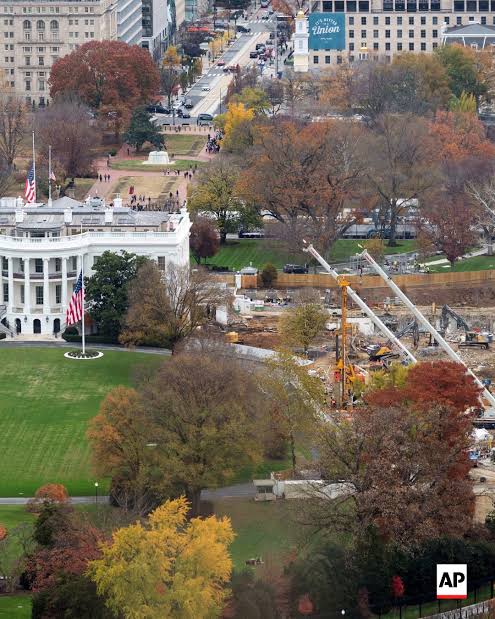
The White House East Wing litigation has rapidly become one of the most controversial political and legal disputes in Washington. What began as a renovation and modernization effort has transformed into a fierce courtroom showdown involving constitutional authority, congressional oversight, historic preservation, and national security concerns.
At the center of the dispute is the Trump administration’s plan to replace the historic East Wing of the White House with a massive ballroom and expanded security infrastructure. The project, reportedly valued at hundreds of millions of dollars, has triggered lawsuits, judicial intervention, and growing political backlash from lawmakers and preservation groups.
Now, as the legal battle intensifies, pressure is mounting on the administration from courts, Congress, and public critics. Recent security incidents near the White House have further escalated the debate, with the Department of Justice arguing that the project is critical for national security.
The White House East Wing litigation is no longer just about construction. It has become a defining clash over presidential authority, federal property laws, and the limits of executive power in America.
What Is the White House East Wing Litigation?

The White House East Wing litigation refers to a series of lawsuits and court battles surrounding the demolition and reconstruction of the East Wing of the White House.
The administration proposed a massive modernization project that includes:
- A new state-of-the-art ballroom
- Enhanced security infrastructure
- Expanded event facilities
- Reinforced protective systems
- Modernized executive spaces
Supporters argue the project is necessary to improve presidential security and modernize aging facilities. Critics, however, claim the administration bypassed Congress and violated historic preservation laws.
The National Trust for Historic Preservation filed one of the most prominent lawsuits, arguing that demolishing the historic East Wing and replacing it with a privately funded ballroom exceeded presidential authority.
The case quickly gained national attention after federal courts intervened and congressional Democrats joined the legal fight.
Why the East Wing Matters
The East Wing is not just another government building. It holds major symbolic and historical significance within the White House complex.
Traditionally, the East Wing houses:
- Offices for the First Lady and staff
- Visitor operations
- Social offices
- Public access coordination
- Event management spaces
Because the White House is both a residence and a historic national landmark, any major structural changes face intense legal and political scrutiny.
Historic preservation groups argue that demolishing the East Wing without congressional authorization sets a dangerous precedent for future presidents. Critics say no administration should have unilateral authority to fundamentally reshape iconic federal property.
The Administration’s Defense
The administration insists the project is legal, necessary, and fully justified under existing executive authority.
Officials argue the East Wing project:
- Enhances national security
- Modernizes outdated infrastructure
- Improves emergency response capabilities
- Protects visiting dignitaries
- Creates safer indoor event spaces
The Department of Justice has repeatedly defended the project in federal court, arguing that delaying construction could create serious security vulnerabilities.
According to court filings, the administration believes the ballroom and expanded facilities are essential to providing secure, controlled environments for major events currently held in temporary outdoor structures.
After recent shootings near White House security checkpoints, DOJ attorneys intensified those arguments, saying the incidents prove the urgent need for stronger protective infrastructure.
Federal Courts Step In
The legal battle escalated dramatically when U.S. District Judge Richard Leon ruled that the administration likely lacked authority to proceed with the project without congressional approval.
The judge issued an injunction halting construction, stating that Congress retains constitutional authority over federal property and major White House structural changes.
However, the legal situation quickly became more complicated.
A federal appeals court later temporarily paused the injunction, allowing construction to continue while the broader constitutional questions are reviewed.
The appeals court also ordered lower courts to reconsider how national security concerns should factor into the case.
This has created a legal gray area:
- Construction continues in some form
- The constitutional dispute remains unresolved
- Congress has not formally approved the project
- Preservation groups continue pushing for a permanent halt
The result is a rapidly intensifying legal confrontation with potentially historic consequences.
Congressional Pressure Mounts
Political pressure on the administration has increased significantly in recent weeks.
Roughly 150 Democratic lawmakers filed legal briefs arguing the administration cannot demolish or rebuild White House structures without direct congressional approval.
Lawmakers contend that:
- Congress exclusively controls federal property
- Large-scale White House construction requires appropriations
- Private funding cannot bypass constitutional procedures
- Executive authority has limits
Several lawmakers described the project as an unprecedented expansion of presidential power.
The administration, meanwhile, argues that presidents historically possess broad authority to maintain, renovate, and modernize White House facilities.
This constitutional disagreement now sits at the heart of the White House East Wing litigation.
National Security Becomes Central Argument
One of the most important developments in the litigation has been the administration’s increasing emphasis on national security.
Following multiple security incidents near the White House, DOJ lawyers argued that the ballroom project is not merely cosmetic or ceremonial. Instead, they say it forms part of an integrated protective infrastructure plan.
Officials claim the project includes:
- Bullet-resistant materials
- Reinforced structural defenses
- Improved crowd control systems
- Secure hosting environments
- Advanced emergency response capabilities
Supporters say modern threats require modern infrastructure.
Critics, however, accuse the administration of using security fears to justify legally questionable actions.
Preservation groups argue that security concerns do not override constitutional requirements or congressional authority.
The courts must now decide how much weight national security arguments should carry in disputes involving executive construction authority.
Historic Preservation Concerns
Historic preservation organizations remain deeply opposed to the project.
The National Trust for Historic Preservation argues the East Wing demolition violated:
- Historic preservation procedures
- Environmental review requirements
- Congressional oversight standards
- Federal administrative law
Critics say the White House is one of America’s most important historic symbols and should not undergo major structural changes without transparent public review.
Legal filings also accuse the administration of moving too quickly and bypassing standard review processes.
The preservation debate has energized historians, architects, and legal scholars nationwide.
Some experts warn that allowing unilateral presidential reconstruction of the White House could permanently weaken preservation protections for historic federal sites.
Public Reaction and Political Fallout
The controversy has sparked fierce public debate online and across political media.
Supporters view the project as:
- A modernization effort
- A security upgrade
- A privately funded improvement
- A practical expansion of White House facilities
Opponents see it as:
- Executive overreach
- Destruction of historic property
- Circumvention of Congress
- Politically motivated architecture
Social media reactions have been intense, particularly regarding unusual court filings and DOJ arguments surrounding national security. Online critics mocked portions of the legal filings, while supporters defended the administration’s urgency.
The litigation has also become a larger symbol in America’s ongoing debate over presidential power and constitutional limits.
Could the Supreme Court Get Involved?
Legal experts increasingly believe the White House East Wing litigation could eventually reach the Supreme Court.
Key constitutional questions include:
- Can presidents unilaterally rebuild parts of the White House?
- Does Congress hold exclusive authority over federal property?
- Can private funding bypass appropriations requirements?
- How should courts balance national security and historic preservation?
Because the dispute touches separation of powers issues, the case could have major long-term constitutional implications.
If the Supreme Court agrees to hear the case, it could establish new precedent regarding executive authority over federal property and presidential infrastructure projects.
Construction Continues Amid Legal Chaos
Despite ongoing litigation, construction activity has continued in various phases.
Reports indicate parts of the ballroom structure have already risen above ground while court proceedings continue.
This creates a complicated legal and practical problem:
- If courts ultimately rule against the administration, what happens to partially completed construction?
- Would Congress retroactively approve the project?
- Could demolition orders follow?
- Would taxpayers bear future costs?
The longer construction proceeds, the harder it becomes to reverse the project politically and financially.
That reality adds urgency to the ongoing court battle.
Why This Legal Battle Matters Nationally
The White House East Wing litigation matters far beyond architecture or renovations.
The dispute touches several critical national issues:
- Presidential authority
- Congressional oversight
- Historic preservation
- National security
- Separation of powers
- Federal property law
The case could redefine how future presidents manage White House infrastructure and other federal facilities.
It also highlights the growing legal tensions surrounding executive power in modern American politics.
Regardless of political affiliation, constitutional scholars agree the case could shape future interpretations of presidential authority for decades.
The Road Ahead
The litigation remains highly active, with additional hearings and appeals expected in coming weeks.
Several possible outcomes remain on the table:
- Courts permanently halt construction
- Congress formally authorizes the project
- The administration wins on executive authority grounds
- A negotiated settlement emerges
- The Supreme Court intervenes
For now, both sides appear determined to continue fighting.
The administration insists the project is essential for national security and operational modernization. Opponents argue constitutional limits cannot be ignored, regardless of security concerns.
As legal pressure intensifies and political scrutiny grows, the White House East Wing litigation is becoming one of the most closely watched constitutional disputes in the country.
Conclusion
The White House East Wing litigation has evolved into a major constitutional and political confrontation that extends far beyond a building project.
What started as a modernization plan has transformed into a national debate about executive authority, congressional power, historic preservation, and security policy.
With courts divided, lawmakers increasingly involved, and construction continuing amid legal uncertainty, the battle shows no signs of slowing down.
Whether the administration ultimately prevails or the courts intervene permanently, the outcome will likely shape future presidential powers and White House governance for years to come.
For now, Washington remains locked in a legal showdown where history, politics, and constitutional law collide directly at the heart of America’s most iconic residence.
FAQs
What is the White House East Wing litigation?
The White House East Wing litigation refers to ongoing lawsuits challenging the administration’s demolition and reconstruction of the East Wing for a large ballroom and security expansion project.
Why is the East Wing project controversial?
Critics argue the administration lacked congressional approval and violated historic preservation laws before demolishing the East Wing.
Who filed the lawsuits?
The National Trust for Historic Preservation filed major legal challenges against the project, joined by congressional Democrats through legal briefs.
What does the administration say about the project?
The administration argues the project is necessary for national security, modernization, and improved protection for the president and visitors.
Has construction stopped?
Construction was temporarily halted by a federal judge, but an appeals court later allowed work to continue while litigation proceeds.
Could the Supreme Court hear the case?
Yes. Legal experts believe the constitutional issues surrounding executive authority and congressional oversight could eventually reach the Supreme Court.
Why are national security arguments important in the case?
The Department of Justice claims the project enhances White House security and became even more necessary after recent security incidents near the White House.
What could happen next?
Possible outcomes include congressional approval, permanent court injunctions, continued construction, or eventual Supreme Court review.
About the Author