Presidential Records Act Ruling: Legal Showdown, White House Pressure
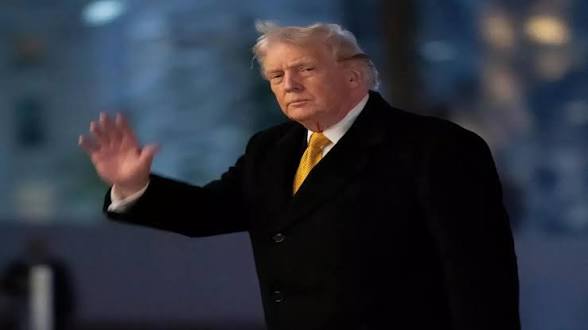
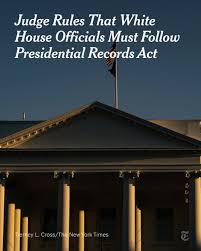
The latest Presidential Records Act ruling has ignited a fierce legal and political confrontation in Washington. A federal judge recently ordered White House officials and executive branch staff to comply with the Presidential Records Act (PRA), rejecting arguments from the Department of Justice that the law may be unconstitutional.
The ruling has quickly become one of the most discussed legal developments in American politics. Supporters say the decision protects government transparency and historical accountability. Critics argue it could deepen constitutional tensions between Congress and the executive branch.
The controversy centers around whether presidents must preserve official White House records for the American public or whether the executive branch has broad authority to decide how those records are handled.
The debate has intensified under the administration of Donald Trump, whose Justice Department recently declared the Presidential Records Act unconstitutional.
As lawsuits grow and watchdog groups increase pressure, the White House now faces mounting scrutiny over transparency, executive authority, and the preservation of presidential history.
What Is the Presidential Records Act?
The Presidential Records Act, commonly known as the PRA, became law in 1978 following the Watergate scandal and the resignation of Richard Nixon.
The law fundamentally changed how presidential documents are treated in the United States.
Before the PRA, presidents often considered White House records their personal property. After Watergate, Congress decided that presidential records should belong to the American people rather than individual presidents.
The PRA requires presidents and their staffs to:
- Preserve official records related to government business
- Maintain communications tied to presidential duties
- Transfer those records to the National Archives after leaving office
- Protect documents from unauthorized destruction
The law applies to records created after January 20, 1981.
For decades, administrations from both political parties generally complied with the statute without major constitutional challenges.
That changed dramatically in 2026.
Why the Presidential Records Act Became Controversial Again
The controversy exploded after the Department of Justice’s Office of Legal Counsel issued a memo arguing that the Presidential Records Act exceeds congressional authority and interferes with executive power.
The memo claimed the law violates constitutional separation-of-powers principles.
According to the DOJ opinion:
- Congress lacks authority to control presidential records
- The executive branch should independently manage its own documents
- Mandatory record preservation requirements interfere with presidential autonomy
This position shocked legal scholars, historians, and transparency advocates because the law had remained largely accepted for nearly half a century.
Critics warned that weakening the PRA could allow future administrations to destroy records, hide communications, or avoid public accountability.
The legal theory immediately triggered lawsuits from watchdog groups and historical organizations.
Federal Judge Rejects DOJ Argument
In a major legal setback for the administration, U.S. District Judge John Bates ruled that White House officials must comply with the Presidential Records Act.
The court issued a preliminary injunction ordering executive branch staff to preserve official records and avoid relying on the DOJ opinion declaring the PRA unconstitutional.
Judge Bates wrote that Congress has authority under the Constitution’s Property Clause to regulate presidential records.
The ruling emphasized several important points:
- The PRA has existed for nearly 50 years
- Multiple administrations followed the law without objection
- Record preservation does not create an unreasonable burden
- Transparency laws help protect public trust
The decision applies broadly across White House offices and executive branch personnel, though it does not directly apply to President Trump or Vice President JD Vance.
Still, legal analysts say the ruling represents a major judicial rebuke of the administration’s constitutional argument.
Why the White House Is Under Pressure
The White House now faces pressure from multiple directions.
Legal Pressure
Several lawsuits have been filed by watchdog organizations, historians, and transparency groups seeking to force compliance with the PRA.
Groups involved include:
- American Oversight
- American Historical Association
- Freedom of the Press Foundation
These organizations argue that weakening records laws threatens democratic accountability.
Political Pressure
Opponents of the administration say the legal fight raises broader concerns about transparency and executive power.
Critics argue that public records are essential for:
- Historical research
- Congressional oversight
- National security investigations
- Public accountability
The debate has become particularly intense because of past controversies involving classified documents and record handling connected to Donald Trump’s earlier presidency.
Public Pressure
The issue has also exploded online, where many Americans are debating whether presidents should control their own records or whether those records belong to the public.
Social media discussions have focused heavily on fears of government secrecy and executive overreach.
Trump Administration Defends Its Position
Despite the court ruling, the administration has defended its approach.
White House officials insist they are maintaining record retention procedures while also challenging the constitutionality of the law itself.
Administration lawyers argue that the presidency occupies a unique constitutional position that Congress cannot excessively regulate.
Supporters of the DOJ opinion say:
- Presidents need operational flexibility
- Congress cannot micromanage executive communications
- The Constitution protects executive independence
Some conservatives also argue that modern digital communication makes recordkeeping rules outdated and overly burdensome.
However, critics reject those claims and say technology actually makes preservation easier than ever.
Why Historians and Legal Experts Are Concerned
Many historians view the Presidential Records Act as one of the most important post-Watergate reforms in American government.
Legal scholars warn that weakening the PRA could have long-term consequences for democracy.
Concerns include:
- Loss of historical records
- Reduced government transparency
- Greater secrecy in policymaking
- Difficulty investigating misconduct
- Weakening public oversight
Experts note that presidential records often become critical evidence in future investigations, historical studies, and national security reviews.
Some legal analysts fear that if the PRA is struck down entirely, future administrations may create systems allowing selective preservation or destruction of records.
That possibility has alarmed archivists and historians nationwide.
How the Ruling Could Affect Future Presidents
The current legal showdown could reshape the presidency for decades.
If courts ultimately uphold the Presidential Records Act, future administrations will likely continue following strict preservation requirements.
If the law is weakened or overturned, presidents may gain far greater control over official documents.
Potential long-term impacts include:
Expanded Executive Power
A ruling against the PRA could significantly increase presidential autonomy over government records.
Reduced Public Access
Future presidential archives could become harder for journalists, historians, and the public to access.
More Legal Battles
Congress and future administrations could face recurring constitutional disputes over transparency laws.
New Legislation
Lawmakers may attempt to strengthen records laws if courts narrow the PRA’s authority.
The issue is now viewed as a defining constitutional battle involving executive power and democratic accountability.
Public Reaction Across America
The ruling has triggered intense reactions nationwide.
Transparency advocates praised the court’s decision as a victory for accountability and constitutional balance.
Meanwhile, critics of federal oversight accused the judiciary of interfering with executive authority.
Online reactions have been especially divided.
Some Americans believe strict record preservation is necessary after past controversies involving presidential documents.
Others argue the White House should maintain flexibility without heavy congressional restrictions.
The debate reflects broader national disagreements over government power, institutional trust, and constitutional interpretation.
Could the Case Reach the Supreme Court?
Legal experts believe the dispute could eventually reach the U.S. Supreme Court.
The constitutional questions are significant because they involve:
- Separation of powers
- Congressional authority
- Executive independence
- Federal recordkeeping obligations
If appellate courts issue conflicting rulings, Supreme Court review becomes increasingly likely.
A future Supreme Court decision could determine the long-term future of presidential transparency laws in America.
For now, the federal injunction remains one of the most important judicial developments in the ongoing fight over presidential records and executive authority.
The Bigger Constitutional Debate
At its core, the Presidential Records Act controversy is about more than documents.
The fight touches on fundamental questions:
- Who owns presidential records?
- How much oversight should Congress have?
- Can presidents decide which historical records survive?
- What protections exist against government secrecy?
Supporters of the PRA argue transparency protects democracy.
Opponents argue the presidency must remain constitutionally independent.
The courts will now play a central role in deciding where that balance should exist.
Conclusion
The latest Presidential Records Act ruling has intensified one of the biggest constitutional battles in modern American politics.
A federal judge’s decision ordering White House officials to comply with the PRA has placed renewed pressure on the administration while reigniting debates over executive power, transparency, and democratic accountability.
As legal challenges continue, the outcome could shape how presidential records are handled for generations.
Whether the courts ultimately strengthen or weaken the Presidential Records Act, the case already represents a defining moment in America’s ongoing struggle over government transparency and constitutional power.
FAQs
What is the Presidential Records Act?
The Presidential Records Act is a 1978 law requiring presidents and their staffs to preserve official government records and transfer them to the National Archives after leaving office.
Why is the Presidential Records Act controversial?
The controversy began after the Department of Justice argued the law is unconstitutional and interferes with executive branch authority.
What did the federal judge rule?
Judge John Bates ruled that White House officials must comply with the Presidential Records Act and preserve presidential records.
Does the ruling apply directly to President Trump?
The ruling applies to many White House and executive branch officials but does not directly apply to Donald Trump or JD Vance.
Why are historians concerned about the case?
Historians fear weakening the PRA could allow destruction of important government records and reduce public accountability.
Could the Supreme Court hear the case?
Yes. Legal experts believe the constitutional issues involved could eventually lead to Supreme Court review.
How useful was this post?
Click on a star to rate it!
Average rating 0 / 5. Vote count: 0
No votes so far! Be the first to rate this post.
About the Author

usa5911.com
Administrator
Hi, I’m Gurdeep Singh, a professional content writer from India with over 3 years of experience in the field. I specialize in covering U.S. politics, delivering timely and engaging content tailored specifically for an American audience. Along with my dedicated team, we track and report on all the latest political trends, news, and in-depth analysis shaping the United States today. Our goal is to provide clear, factual, and compelling content that keeps readers informed and engaged with the ever-changing political landscape.