Hantavirus Wales Alert: Cruise Outbreak Fears, Health Monitoring, Public Concern Grows
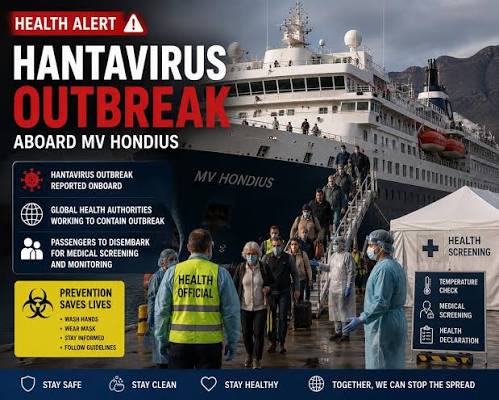
A growing international health scare involving hantavirus has sparked concern across Wales and several other countries after passengers linked to the cruise ship MV Hondius were placed under medical monitoring. Health agencies are attempting to reassure the public while also increasing surveillance efforts as fears surrounding the rare virus continue to spread online and through news coverage.
The outbreak, connected to a multi-country cruise voyage, has already resulted in confirmed infections and multiple deaths, leading global health authorities to intensify contact tracing and quarantine procedures. Public Health Wales is now monitoring a small number of individuals potentially exposed to the virus, adding to anxiety surrounding the incident.
Although officials insist the risk to the wider public remains low, the situation has revived memories of early pandemic-era uncertainty. Cruise travel, international movement, and concerns over possible person-to-person transmission have all contributed to heightened public attention.
What Is Hantavirus?
Hantavirus refers to a family of viruses primarily spread through rodents, especially via exposure to infected urine, saliva, or droppings. In severe cases, the infection can lead to hantavirus pulmonary syndrome (HPS), a potentially deadly respiratory illness.
Most hantavirus infections worldwide are linked to environmental exposure rather than human transmission. However, the Andes virus strain involved in the current outbreak is unusual because it has demonstrated limited person-to-person spread in past outbreaks.
Symptoms may include:
- Fever
- Muscle aches
- Fatigue
- Chills
- Headaches
- Shortness of breath
- Severe respiratory complications
Health experts say symptoms can appear anywhere from one to eight weeks after exposure, making long monitoring periods necessary.
The MV Hondius Cruise Outbreak Explained
The current international concern centers on the Dutch-flagged cruise ship MV Hondius. The vessel departed from Ushuaia, Argentina, before reports emerged of severe respiratory illness among passengers.
According to the World Health Organization, at least 11 cases linked to the cruise ship have been identified, including three deaths. Several infections were laboratory-confirmed as Andes virus.
Passengers onboard represented multiple nationalities, triggering an international public health response involving Europe, North America, Australia, and the United Kingdom. Authorities launched extensive tracing operations after some travelers had already returned home before the outbreak was fully understood.
The outbreak quickly attracted global media attention because cruise ships are often viewed as high-risk environments for infectious disease transmission due to confined spaces and prolonged close contact between passengers.
Why Wales Is Monitoring the Situation Closely
Public Health Wales confirmed that a small number of Welsh residents are being monitored following potential exposure linked to the cruise outbreak.
Officials have not reported confirmed cases in Wales, but precautionary observation measures are underway. Health teams are reportedly maintaining communication with individuals who may have had close contact with infected passengers or shared travel routes connected to the cruise.
The situation reflects broader UK-wide monitoring efforts. Similar tracing operations are underway in Scotland and England, where health authorities are also following potentially exposed travelers.
Experts stress that monitoring does not automatically mean infection. Instead, it is part of standard infectious disease containment procedures aimed at early detection and rapid response.
Public Fear and Social Media Reaction
Public concern surrounding the outbreak has grown rapidly online. Social media discussions have compared the cruise ship situation to the early stages of COVID-19, even though health officials repeatedly emphasize the differences between the two events.
Several factors are fueling anxiety:
- Cruise ship association with outbreaks
- International passenger movement
- Reports of fatalities
- Uncertainty about human transmission
- Long incubation periods
Health agencies are attempting to balance transparency with reassurance. Officials from the WHO and CDC say the virus does not spread nearly as easily as COVID-19 and that the overall public risk remains low.
Still, public attention remains intense due to the emotional impact of recent global pandemic experiences.
International Health Response Intensifies
The outbreak has triggered a coordinated international response involving the World Health Organization, national health ministries, the CDC, and European health agencies.
Authorities have implemented:
- Passenger monitoring
- Voluntary quarantines
- Contact tracing
- Airport screening
- Medical observation protocols
- International information sharing
The CDC stated that dozens of people in the United States are currently being monitored after possible exposure.
Australia also quarantined returning passengers connected to the cruise ship after arranging special transportation procedures.
WHO officials continue to classify the overall global public risk as low while warning that additional cases may still emerge because of the virus’s incubation timeline.
How Dangerous Is the Andes Virus?
The Andes strain of hantavirus is considered one of the more concerning hantavirus variants because it has occasionally shown evidence of human-to-human transmission.
However, infectious disease experts caution against panic.
Unlike highly airborne respiratory viruses, Andes virus generally requires prolonged close contact for transmission. Most hantavirus infections remain linked to rodent exposure rather than casual human interaction.
The mortality rate can be serious in severe cases, especially when respiratory symptoms progress rapidly. WHO reports linked to the cruise outbreak estimate a fatality ratio above 25 percent among identified cases, though experts note outbreak data may evolve as additional mild cases are identified.
Medical specialists say early detection and supportive care significantly improve survival chances.
Cruise Ships and Disease Transmission Concerns
Cruise ships have once again become central to discussions about infectious disease preparedness. The enclosed nature of ships, combined with shared facilities and international passenger mixing, creates conditions that can amplify outbreaks.
Experts say the MV Hondius incident highlights the importance of:
- Improved onboard medical readiness
- Faster outbreak reporting
- Better isolation procedures
- International coordination
- Passenger communication systems
Reports suggest the ship’s onboard medical facilities lacked advanced respiratory treatment capabilities, complicating early response efforts.
As a result, governments coordinated evacuation operations and quarantine arrangements across several countries.
Are Authorities Prepared?
The outbreak has also reignited debates about global pandemic readiness and public health infrastructure. Some analysts argue the response demonstrates lessons learned from COVID-19, while others believe communication delays exposed ongoing weaknesses.
Health officials are now prioritizing:
- Clear messaging
- Transparent updates
- Public reassurance
- International collaboration
- Rapid testing access
Reuters reported that authorities are attempting to avoid the communication failures seen during previous global health emergencies while still treating the situation seriously.
Public trust remains a critical factor as misinformation spreads online.
What People in Wales Should Know
For residents in Wales, health authorities currently emphasize that there is no evidence of widespread community transmission. Monitoring efforts are precautionary and targeted.
Experts recommend basic precautions such as:
- Following public health updates
- Reporting symptoms after relevant travel exposure
- Practicing good hygiene
- Avoiding misinformation from unreliable sources
Individuals who recently traveled internationally or had contact with potentially exposed passengers may be contacted by health officials directly.
Medical professionals stress that ordinary day-to-day activities in Wales are not considered high risk.
Why the Story Has Captured Global Attention
The hantavirus cruise outbreak has become a major international headline because it combines several emotionally charged elements:
- A deadly virus
- Cruise ship isolation
- International evacuation operations
- Quarantine measures
- Pandemic-era fears
- Uncertainty surrounding transmission
Media coverage has intensified public interest, especially as governments across multiple continents coordinate responses simultaneously.
Despite widespread concern, infectious disease experts continue to emphasize that the current outbreak does not resemble the scale or transmission behavior associated with COVID-19.
The Role of the WHO and CDC
The World Health Organization and the U.S. Centers for Disease Control and Prevention remain heavily involved in the response effort.
Their priorities include:
- Monitoring exposed passengers
- Coordinating laboratory testing
- Tracking international travel links
- Advising governments on quarantine
- Communicating risk levels
WHO continues to describe the risk to the global population as low while acknowledging that cruise passengers face a more moderate risk level because of prolonged close exposure conditions.
The CDC similarly says the threat to the general public remains extremely low at this stage.
Could More Cases Appear?
Yes. Health agencies have openly acknowledged that additional cases may emerge due to the virus’s incubation period.
Monitoring windows lasting up to 42 days are being used in several countries. This approach allows officials to quickly isolate and treat anyone who begins developing symptoms after exposure.
Researchers are also studying the outbreak closely to better understand transmission patterns aboard cruise ships and confined travel environments.
While the number of cases remains relatively limited, authorities are taking no chances because of the virus’s severe potential outcomes.
Conclusion
The Hantavirus Wales Alert reflects a wider international effort to contain and monitor a rare but serious outbreak linked to the MV Hondius cruise ship. While the overall public risk remains low according to health officials, the combination of fatalities, international travel, and lingering pandemic fears has fueled growing public concern.
Authorities in Wales and across the world continue to monitor potentially exposed individuals carefully while reassuring communities that widespread transmission is not occurring. Experts say vigilance, accurate information, and calm public communication remain essential as the situation develops.
For now, officials emphasize preparedness over panic — but the outbreak serves as another reminder of how quickly health concerns can become global headlines in an interconnected world.
FAQs
What is hantavirus?
Hantavirus is a virus primarily spread through infected rodents and can cause severe respiratory illness known as hantavirus pulmonary syndrome.
Why is Wales monitoring people?
A small number of Welsh residents may have been exposed through links to the MV Hondius cruise ship outbreak, prompting precautionary health monitoring.
Is hantavirus spreading widely in Wales?
No. Health officials say there is currently no evidence of widespread community transmission in Wales.
Can hantavirus spread between humans?
Most hantavirus strains do not spread easily between humans. However, the Andes virus strain involved in the cruise outbreak has shown limited human-to-human transmission in rare situations.
How dangerous is the virus?
The virus can become serious and even fatal in severe cases, particularly if respiratory symptoms worsen rapidly.
What symptoms should people watch for?
Symptoms include fever, fatigue, muscle aches, headaches, chills, and breathing difficulties.
Is this another COVID-style outbreak?
Health experts say no. Officials stress that hantavirus spreads much less easily than COVID-19 and poses a much lower public risk.
Why are cruise ships vulnerable to outbreaks?
Cruise ships involve close contact, shared facilities, and extended travel periods, which can increase transmission risks for infectious diseases.
What are authorities doing now?
Health agencies are conducting contact tracing, monitoring exposed individuals, organizing quarantines, and coordinating internationally.
Should people in Wales be worried?
Officials currently advise caution but not panic. The overall risk to the general public remains low according to health authorities.
How useful was this post?
Click on a star to rate it!
Average rating 0 / 5. Vote count: 0
No votes so far! Be the first to rate this post.
About the Author

usa5911.com
Administrator
Hi, I’m Gurdeep Singh, a professional content writer from India with over 3 years of experience in the field. I specialize in covering U.S. politics, delivering timely and engaging content tailored specifically for an American audience. Along with my dedicated team, we track and report on all the latest political trends, news, and in-depth analysis shaping the United States today. Our goal is to provide clear, factual, and compelling content that keeps readers informed and engaged with the ever-changing political landscape.